
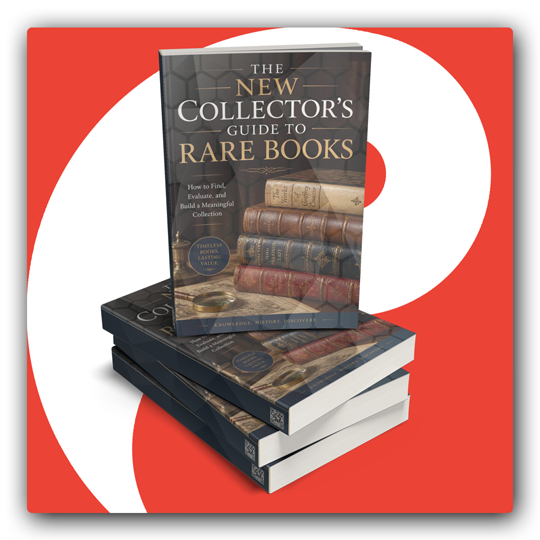
The New Collector’s Guide to Rare Books PLR eBook is a comprehensive, beginner-friendly guide to identifying first editions, evaluating condition, researching signatures, understanding value, buying safely, preserving books, and building a meaningful collection. With Private Label Rights, you can edit, rebrand, repurpose, and sell the customized eBook according to the included license terms.
The New Collector’s Guide to Rare Books PLR Ebook – 46K Words
Original price was: $27.00.$9.99Current price is: $9.99.
50 in stock
Sale!
Full Description
📚 The New Collector’s Guide to Rare Books PLR eBook
Help Beginners Discover Valuable Books, Evaluate Collectible Copies, and Build a Meaningful Collection With Confidence
A Ready-Made 50,279-Word Rare-Book Collecting Guide You Can Edit, Rebrand, Publish, Repurpose, and Sell as Your Own
🔥 EDIT IT. BRAND IT. PUBLISH IT. SELL IT.
Rare books are more than old objects sitting on shelves.
They can preserve history, literature, art, ideas, craftsmanship, personal stories, and connections to important people and events.
But entering the rare-book market can feel intimidating for a new collector.
Beginners quickly encounter unfamiliar terms such as:
✅ First edition
✅ First printing
✅ Issue and state
✅ Provenance
✅ Association copy
✅ Dust-jacket restoration
✅ Collation
✅ Sophistication
✅ Presentation copy
✅ Bibliographic points
Without reliable guidance, a new collector may overpay for an ordinary copy, misunderstand a seller’s description, purchase an incomplete book, trust a questionable signature, or accidentally damage an important item through improper storage.
The New Collector’s Guide to Rare Books gives beginners a clear, practical, and responsible introduction to the world of collectible books.
This comprehensive Private Label Rights eBook contains more than 50,279 words of professionally structured content, twenty detailed chapters, practical checklists, worksheets, frequently asked questions, a glossary, and a structured 30-day action plan.
Instead of spending months researching, outlining, writing, editing, and organizing a complete rare-book guide, you receive a ready-made content foundation that can be customized for your brand and audience.
🤔 Rare-Book Collecting Can Be Confusing and Expensive
A listing may describe a book as “rare,” “first edition,” “signed,” or “investment quality.”
But those words do not automatically prove value.
A new collector may not know:
✅ Whether the edition statement is accurate
✅ Whether the book is truly a first printing
✅ Whether important pages or plates are missing
✅ Whether the dust jacket belongs to the book
✅ Whether a signature is authentic
✅ Whether a binding is original
✅ Whether restoration has been disclosed
✅ Whether the asking price reflects real comparable sales
✅ Whether the book has been exposed to mold, insects, or moisture
✅ Whether the seller accepts returns
These uncertainties can lead to:
❌ Overpaying
❌ Buying incomplete books
❌ Trusting inaccurate listings
❌ Purchasing forged or printed signatures
❌ Damaging books through poor storage
❌ Confusing age with rarity
❌ Treating asking prices as confirmed market value
❌ Building a collection with no focus or documentation
The New Collector’s Guide to Rare Books replaces guesswork with a structured learning system.
Readers learn how to examine evidence, ask better questions, describe uncertainty honestly, and make purchasing decisions that fit their budget and collecting goals.
📘 Introducing The New Collector’s Guide to Rare Books
A Complete Beginner’s Guide to Editions, Condition, Authenticity, Valuation, Buying, Preservation, and Collection Planning
This eBook guides readers from their first interest in collectible books through research, purchasing, cataloging, preservation, selling, and long-term collection management.
Readers will learn how to:
✅ Understand what makes a book collectible
✅ Choose a focused collecting area
✅ Learn the physical anatomy of a book
✅ Understand editions, printings, issues, and states
✅ Research first-edition claims
✅ Evaluate condition and completeness
✅ Examine bindings and dust jackets
✅ Understand restoration and conservation
✅ Research provenance and association
✅ Evaluate signatures and inscriptions
✅ Use bibliographies and library catalogs
✅ Compare auction records and dealer listings
✅ Set realistic purchasing limits
✅ Buy from dealers, fairs, auctions, shops, and online sellers
✅ Avoid common scams and misleading listings
✅ Store and handle books responsibly
✅ Create a detailed collection catalog
✅ Plan insurance, security, and disaster protection
✅ Sell or trade books more confidently
✅ Build a meaningful collection over time
The content is written in clear, beginner-friendly language without assuming previous experience in bibliography, conservation, bookselling, or appraisal.
🎯 What Readers Will Learn
Inside The New Collector’s Guide to Rare Books, readers will discover:
✅ Why an old book is not automatically rare
✅ How supply, demand, importance, and condition influence collectibility
✅ Why completeness can be more important than age
✅ How author, subject, period, place, and format can define a collection
✅ How to write a personal collection statement
✅ What leaves, pages, signatures, gatherings, boards, and endpapers are
✅ How title pages, half titles, colophons, plates, maps, and inserts affect completeness
✅ How editions differ from impressions and printings
✅ What an issue or state may reveal
✅ Why publisher practices differ
✅ How number lines and edition statements work
✅ Why first-edition identification often requires reference books
✅ How to describe uncertainty responsibly
✅ How dealers describe condition
✅ How structural damage differs from cosmetic wear
✅ How to check whether a book is complete
✅ Why dust jackets can dramatically affect value
✅ How original and later bindings differ
✅ Why undisclosed restoration can be a concern
✅ What provenance means
✅ How association copies gain importance
✅ How presentation copies differ from ordinary signed copies
✅ Why inscriptions, bookplates, stamps, and annotations matter
✅ How to build a provenance file
✅ How to compare handwriting and signature context
✅ Why certificates alone may not guarantee authenticity
✅ How facsimiles, autopens, and printed signatures differ
✅ How to use library catalogs and specialist bibliographies
✅ How to compare multiple research sources
✅ Why asking prices are not the same as completed sales
✅ How to research comparable copies
✅ How condition, provenance, and scarcity affect market value
✅ How to set a personal maximum price
✅ How auction buyer’s premiums affect the total cost
✅ What questions to ask a dealer or seller
✅ Which photographs to request when buying online
✅ How to inspect a book after delivery
✅ How to recognize common online listing red flags
✅ How modern first editions differ from antiquarian books
✅ Why debut novels, jackets, and review copies attract collectors
✅ How illustrated, children’s, scientific, travel, and fine-press books differ
✅ How to store books in a stable environment
✅ How light, moisture, heat, insects, and mold affect books
✅ How protective enclosures support preservation
✅ How to catalog purchases and keep receipts
✅ When an appraisal or specialist opinion may be appropriate
✅ How to plan insurance and security
✅ How to choose a suitable selling method
✅ How fees affect net proceeds
✅ Why legal ownership and ethical sourcing matter
✅ How to plan for inheritance, donation, or future sale
💼 A High-Value PLR Product for Your Digital Business
Creating a complete rare-book collecting guide from scratch requires extensive research across multiple specialist areas.
You would need to:
❌ Research bibliography and book anatomy
❌ Explain editions, issues, and states
❌ Cover condition and completeness
❌ Research bindings and dust jackets
❌ Explain provenance and signatures
❌ Cover authentication limitations
❌ Research valuation and comparable sales
❌ Explain auctions, dealers, fairs, and online buying
❌ Include preservation and storage guidance
❌ Cover collection records and insurance
❌ Address ethical and legal considerations
❌ Create practical checklists and worksheets
❌ Write more than 50,000 words
The New Collector’s Guide to Rare Books PLR eBook gives you a substantial, ready-made content foundation that can be personalized for your audience.
You can add your branding, create a new cover, include your own examples, add affiliate recommendations where appropriate, and transform the material into a professional digital product according to the supplied PLR license.
🛠️ With the Included PLR Rights, You Can:
✅ Add your name, pen name, business name, or brand
✅ Add your logo, website, and contact details
✅ Change the title and subtitle
✅ Create a completely new cover
✅ Edit, rewrite, shorten, or expand the content
✅ Rearrange, combine, or remove chapters
✅ Add your own collecting examples
✅ Add regional booksellers, libraries, and resources
✅ Include suitable products, services, or affiliate links
✅ Publish and sell the customized finished eBook
✅ Use it as a lead magnet
✅ Offer it as a customer bonus
✅ Add it to a paid membership
✅ Include it in an online course
✅ Turn chapters into articles
✅ Create an educational email series
✅ Develop printable checklists and worksheets
✅ Create collection catalogs and valuation logs
✅ Turn sections into video or podcast lessons
✅ Create workshops and presentations
✅ Repurpose glossary terms into social media posts
✅ Bundle it with books, history, antiques, writing, or reselling products
The customized finished product may be sold according to the supplied license terms.
The underlying Private Label Rights may not be transferred or resold unless a separate reseller license specifically permits that use.
📚 Inside the Complete 20-Chapter Guide
📖 Chapter 1: What Makes a Book Rare or Collectible?
Understand rarity, demand, cultural importance, condition, completeness, and copy-specific value.
🎯 Chapter 2: Choosing a Collecting Focus
Build a collection around an author, subject, period, place, format, or personal interest.
📘 Chapter 3: Learning the Anatomy of a Book
Understand pages, leaves, gatherings, boards, spines, endpapers, title pages, plates, and jackets.
🔍 Chapter 4: Editions, Printings, Issues, and States
Learn the differences between important bibliographic terms and why precision matters.
🥇 Chapter 5: Identifying First Editions
Research number lines, publisher practices, edition statements, points of issue, and specialist references.
🔎 Chapter 6: Condition, Completeness, and Grading
Evaluate structural problems, cosmetic wear, missing material, and condition descriptions.
🧵 Chapter 7: Bindings, Dust Jackets, and Restoration
Understand original bindings, later bindings, jacket importance, repair, restoration, and conservation.
📝 Chapter 8: Provenance, Associations, and Inscriptions
Explore ownership history, presentation copies, important associations, bookplates, and annotations.
✍️ Chapter 9: Signatures and Authenticity
Compare signed, inscribed, printed, facsimile, and questionable signatures more carefully.
🗂️ Chapter 10: Researching Bibliographic Evidence
Use library catalogs, bibliographies, auction archives, dealer catalogs, and research notes.
💰 Chapter 11: Understanding Value and Comparables
Compare copies, evaluate scarcity, consider condition, and set a realistic buying limit.
🏛️ Chapter 12: Buying From Dealers, Fairs, and Auctions
Learn how different buying channels work, including commissions, premiums, negotiation, and inspection.
💻 Chapter 13: Buying Rare Books Online Safely
Evaluate listings, request photographs, examine seller policies, and recognize common warning signs.
📚 Chapter 14: Collecting Modern First Editions
Explore debut novels, literary milestones, review copies, jackets, signatures, and modern collecting depth.
🎨 Chapter 15: Antiquarian and Specialty Books
Discover illustrated, children’s, fine-press, scientific, travel, map, and other specialist collecting areas.
🛡️ Chapter 16: Preservation, Handling, and Storage
Protect books from harmful light, humidity, heat, insects, mold, water, and poor shelving.
🗃️ Chapter 17: Cataloging, Insurance, and Security
Create collection records, photograph books, retain provenance, and plan for insurance and emergencies.
🔄 Chapter 18: Selling, Trading, and Deaccessioning
Choose suitable sales channels, write honest descriptions, calculate costs, and sell without unnecessary regret.
⚖️ Chapter 19: Ethics and Responsible Collecting
Consider lawful ownership, cultural property, disclosure, institutional marks, and responsible stewardship.
🌟 Chapter 20: Building a Meaningful Collection
Develop knowledge, refine your focus, plan purchases, and prepare for inheritance, donation, or future sale.
🎁 More Than Twenty Chapters
This comprehensive PLR eBook also includes:
✅ Frequently asked questions for new collectors
✅ A glossary of essential rare-book terminology
✅ A practical 30-day new-collector action plan
✅ A pre-purchase checklist
✅ An acquisition-record worksheet
✅ A collection-catalog template
✅ An annual collection-review worksheet
✅ Condition and completeness reminders
✅ Chapter summaries
✅ Practical warnings and examples
✅ Action checklists
✅ Further-reading and professional-resource guidance
These resources help readers organize their research, purchases, records, and long-term collection plans.
🌟 Why This PLR eBook Stands Out
🔍 Evidence Before Hype
The guide encourages readers to examine what a book actually shows.
Readers learn to:
✅ Consult reliable references
✅ Compare multiple sources
✅ Request supporting photographs
✅ Verify important claims
✅ Describe uncertainty honestly
It does not encourage readers to trust impressive sales language without evidence.
📖 Condition and Completeness Explained Clearly
Readers learn how to separate:
✅ Cosmetic wear
✅ Structural damage
✅ Missing pages or plates
✅ Restoration
✅ Replacement elements
✅ Original features
This helps them evaluate books more carefully.
💰 Market-Aware but Responsible
The content explains:
✅ Comparable sales
✅ Asking prices
✅ Auction premiums
✅ Dealer pricing
✅ Restoration costs
✅ Insurance considerations
It does not promise that rare books will increase in value or provide guaranteed investment returns.
🛡️ Preservation and Stewardship Matter
Collecting does not end after the purchase.
The guide also covers:
✅ Safe handling
✅ Shelving
✅ Protective enclosures
✅ Environmental stability
✅ Mold and pest prevention
✅ Records
✅ Insurance
✅ Security
✅ Disaster planning
✅ Future ownership
👶 Written for Complete Beginners
Specialist terminology is introduced gradually and explained in practical language.
Readers do not need previous experience in bookselling, bibliography, conservation, appraisal, or auction buying.
♻️ Easy to Customize and Repurpose
The organized chapters, glossary, checklists, and worksheets can be transformed into:
✅ Articles
✅ Email lessons
✅ Courses
✅ Videos
✅ Checklists
✅ Collection planners
✅ Lead magnets
✅ Membership resources
✅ Niche collecting guides
👥 Who Is This PLR Product For?
The New Collector’s Guide to Rare Books PLR eBook is ideal for:
✅ PLR store owners
✅ Digital-product creators
✅ Book bloggers
✅ Literature websites
✅ Writing publishers
✅ History content creators
✅ Antique and vintage bloggers
✅ Booksellers and resellers
✅ Membership-site owners
✅ Online course creators
✅ Libraries and reading communities
✅ Book clubs
✅ Newsletter publishers
✅ Collectibles affiliate marketers
✅ Personal-finance content creators
✅ Entrepreneurs building hobby or vintage-product bundles
🎓 Who Is the Reader Version For?
The customized reader edition is suitable for:
✅ Complete rare-book beginners
✅ Book lovers starting their first collection
✅ Readers interested in first editions
✅ Writers collecting important literary works
✅ History enthusiasts
✅ Vintage and antique collectors
✅ Resellers learning how to evaluate books
✅ People buying signed books
✅ Collectors who need better records and storage
✅ Families managing inherited book collections
✅ Anyone who wants to collect books with greater knowledge and purpose
♻️ Turn One PLR eBook Into an Entire Product Collection
You can repurpose the content into:
✅ A branded rare-book collecting eBook
✅ A 20-part collecting article series
✅ A 30-day beginner email course
✅ A first-edition identification guide
✅ A rare-book condition checklist
✅ A signed-book research guide
✅ A book-fair buying guide
✅ An online buying safety checklist
✅ A collection-catalog workbook
✅ A preservation and storage planner
✅ A rare-book glossary lead magnet
✅ A modern first-edition mini-guide
✅ A collection valuation log
✅ An inheritance-planning workbook
✅ Video and podcast lessons
✅ Educational social media posts
✅ A premium books and antiques bundle
One comprehensive PLR eBook can become the foundation of an entire book-collecting content and product collection.
⏳ Save Months of Research and Writing
With The New Collector’s Guide to Rare Books PLR eBook, you receive:
✅ More than 50,279 words of organized content
✅ Twenty comprehensive chapters
✅ Rare-book collecting fundamentals
✅ Edition and printing guidance
✅ Condition and completeness education
✅ Binding and dust-jacket information
✅ Provenance and signature guidance
✅ Bibliographic research methods
✅ Valuation and comparable-sales education
✅ Dealer, auction, fair, and online-buying guidance
✅ Preservation and storage information
✅ Cataloging and insurance planning
✅ Selling and ethical collecting guidance
✅ Frequently asked questions
✅ A rare-book glossary
✅ A structured 30-day action plan
✅ Practical worksheets and checklists
Your next steps are simple:
1️⃣ Review and update the content
2️⃣ Add your branding
3️⃣ Customize the examples and resources
4️⃣ Design a professional cover
5️⃣ Publish your finished product
6️⃣ Start promoting and selling it
❓ Frequently Asked Questions
What Does PLR Mean?
Private Label Rights allow you to edit, customize, rebrand, publish, and sell the finished content according to the supplied license terms.
Can I Change the Title and Author Name?
Yes. You may add your name, pen name, company, or brand to the customized version.
Can I Create a New Cover?
Yes. You may change the cover, fonts, colors, layout, title, subtitle, and overall branding.
Can I Edit or Remove Chapters?
Yes. You may rewrite, expand, shorten, combine, rearrange, or remove sections according to the included PLR license.
Can I Sell the Customized eBook?
Yes. You may sell the finished reader product according to the supplied license terms.
Can My Customers Resell the PLR Rights?
No, not automatically.
The underlying PLR rights may only be transferred when a separate reseller license specifically grants that permission.
Can I Turn Chapters Into Articles?
Yes. The content may be adapted into articles, emails, lessons, videos, checklists, presentations, and other finished educational products.
Does the Guide Promise That Rare Books Will Increase in Value?
No.
It explains market research, costs, risks, and uncertainty without making guaranteed investment or profit claims.
Does It Include Preservation Advice?
Yes.
It covers environmental conditions, shelving, handling, protective enclosures, mold, insects, water damage, records, insurance, and professional assistance.
Is the Guide Only About Expensive Books?
No.
The guide encourages focused collecting at different budgets and emphasizes knowledge, coherence, documentation, and personal meaning.
Does It Authenticate Books or Signatures?
No.
It explains research methods, warning signs, documentation, and when specialist opinions may be appropriate. It does not replace professional authentication.
Does It Include Practical Resources?
Yes.
The eBook includes chapter checklists, a glossary, a 30-day plan, acquisition records, pre-purchase questions, catalog templates, and annual review worksheets.
🚀 Build Your Own Branded Rare-Book Product Today
Rare-book collecting attracts people interested in:
📚 Literature
✍️ Writing
🏛️ History
🎨 Art and illustration
🕰️ Antiques
🔍 Research
💰 Collectibles
But beginners need more than lists of famous expensive books.
They need a structured guide that explains how editions, condition, completeness, provenance, authenticity, value, preservation, and long-term planning work together.
The New Collector’s Guide to Rare Books PLR eBook gives you the content foundation needed to serve this audience without writing more than 50,000 words from scratch.
🔥 Get The New Collector’s Guide to Rare Books PLR eBook Today
Your PLR package includes:
✅ More than 50,279 words of beginner-friendly content
✅ Twenty detailed chapters
✅ Rare-book and collecting fundamentals
✅ Edition and first-printing guidance
✅ Condition and completeness education
✅ Bindings, jackets, and restoration information
✅ Provenance and signature research guidance
✅ Bibliographic research methods
✅ Market-comparable and valuation education
✅ Dealer, auction, fair, shop, and online-buying guidance
✅ Preservation and storage planning
✅ Cataloging, insurance, and security guidance
✅ Selling and ethical collecting information
✅ Frequently asked questions
✅ A glossary of rare-book terms
✅ A practical 30-day action plan
✅ Acquisition, cataloging, and review worksheets
✅ Editable and customizable content
✅ Private Label Rights subject to the included license
📚 Stop Starting From Scratch
Get The New Collector’s Guide to Rare Books PLR eBook Today
✏️ EDIT IT.
🎨 BRAND IT.
📘 PUBLISH IT.
💰 SELL IT.
♻️ REPURPOSE IT.
Turn the fascinating world of rare books into a professional, evergreen digital product that helps new collectors buy more carefully, protect their books, and build meaningful collections.
⚠️ Important Disclaimer
This product is provided for general educational and informational purposes only.
It does not provide a formal appraisal, authentication, conservation plan, legal opinion, tax advice, insurance valuation, investment advice, or guaranteed financial outcome.
Book values, market demand, auction results, legal requirements, preservation standards, and collecting practices may change over time.
Readers should consult qualified booksellers, bibliographers, conservators, appraisers, insurers, legal professionals, or other specialists when appropriate.
PLR buyers are responsible for reviewing, verifying, updating, editing, localizing, and customizing the content before publication, distribution, or sale.
All usage permissions are subject to the specific terms and restrictions contained in the supplied Private Label Rights license.
🎁 Exclusive Bonuses Included!
When you grab this PLR eBook, you’ll also receive a ready-to-use sales page, a cheat sheet, and a high-quality promotional image—everything you need to sell it quickly and effortlessly!
🔥 LIMITED TIME OFFER! 🔥
Grab this complete PLR eBook for only $9.99— exclusively for the first 50 buyers! Don’t miss your chance to own this 20-chapter guide and claim full PLR rights at this unbeatable price.
License Details:
 You Can:
- Sell the product and retain 100% of the profits.
- Edit, customize, rebrand, and modify the content to suit your business.
- Divide the content into smaller reports, guides, or digital products.
- Bundle the product with other PLR products or resources.
- Include the product in a paid monthly membership site.
- Repurpose the content into videos, audio content, PDFs, or other formats.
- Use excerpts from the content in blog posts, emails, lead magnets, or free downloads.
- Transfer PLR, Resale Rights, or Master Resell Rights to others, where permitted by the applicable license.
 You Cannot:
- Sell the product for less than the minimum advertised price of $9.99.
- Give the product away for free.
- Offer 100% affiliate commissions on the product.
- Include the product in an existing paid membership that was established before your purchase without paying the applicable additional licensing fee.
PLEASE PAY ATTENTION TO THE LICENSE TERMS MENTIONED ABOVE
If you want to use the content in a way that is not specifically stated within the License, please ask if you can before you do so.
Related products
-
Sale!
Altcoins Unlocked PLR Ebook – 18k Words
Original price was: $17.00.$9.99Current price is: $9.99. -
Sale!

Abs Diet Sculpt Your Core with Nutrition and Fitness PLR Ebook – 14k Words
Original price was: $27.00.$9.99Current price is: $9.99. -
Sale!
Mastering Amazon FBA From Beginner to Bestseller PLR Ebook – 15K Words
Original price was: $17.00.$9.99Current price is: $9.99.
Reviews