
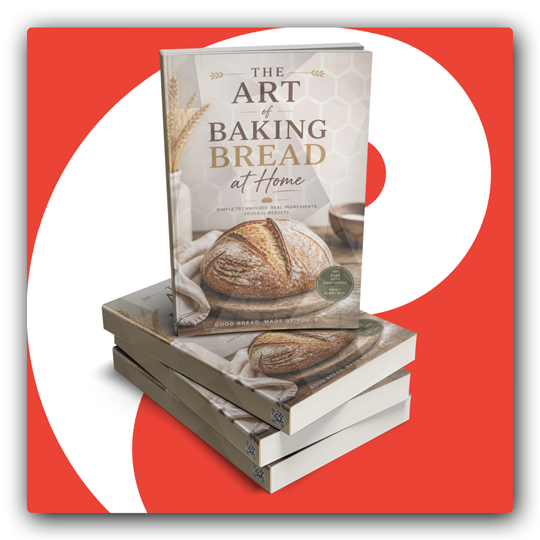
🍞 The Art of Baking Bread at Home PLR eBook is a complete beginner-friendly guide covering ingredients, dough development, fermentation, shaping, scoring, yeast breads, sourdough, whole grains, troubleshooting, storage, and food safety. With 20 detailed chapters, practical worksheets, a 30-day action plan, a 12-week development plan, and Private Label Rights included, you can edit, rebrand, publish, sell, or repurpose the content for your audience.
The Art of Baking Bread at Home PLR Ebook – 55K Words
Original price was: $27.00.$9.99Current price is: $9.99.
50 in stock
Sale!
Full Description
🍞 The Art of Baking Bread at Home PLR eBook
Turn the Timeless Skill of Bread Making Into a Digital Product You Can Edit, Rebrand, Publish, and Sell
Comprehensive beginner guide • 20 detailed chapters • Yeast and sourdough techniques • Practical worksheets • 30-day action plan • 12-week development plan • Private Label Rights included
🥖 Help Beginners Bake Better Bread With Confidence
Few things are as satisfying as removing a golden, fragrant loaf of homemade bread from the oven.
Bread baking can be relaxing, creative, practical, and rewarding. It can help people prepare fresh food at home, develop a useful lifelong skill, experiment with flavors, and create something meaningful to share with family and friends.
However, the process can feel confusing when someone is just starting.
Beginners often struggle with:
✅ Sticky or overly dry dough
✅ Dense, heavy loaves
✅ Dough that refuses to rise
✅ Confusing fermentation times
✅ Pale or overly thick crusts
✅ Bread that spreads instead of rising
✅ Gummy or underbaked interiors
✅ Collapsed sourdough loaves
✅ Recipes that assume too much prior knowledge
✅ Uncertainty about flour, yeast, hydration, and temperature
The problem is rarely a lack of ability.
Most beginners simply need clear explanations, realistic expectations, and a logical learning sequence.
The Art of Baking Bread at Home provides that foundation.
This professionally structured PLR eBook guides complete beginners through ingredients, tools, dough development, fermentation, shaping, scoring, baking, troubleshooting, sourdough, whole grains, gluten-free approaches, storage, food safety, and long-term skill development.
As the PLR buyer, you can edit the content, add your branding, publish it under your name or business, sell the finished eBook, use it as a lead magnet, include it in a course, or repurpose it into an entire bread-baking content library according to the included license.
🚀 Create a High-Value Baking Product Without Writing It From Scratch
Producing a complete beginner bread-baking guide requires extensive research, recipe knowledge, planning, testing, writing, editing, formatting, troubleshooting, and food-safety review.
With The Art of Baking Bread at Home PLR eBook, much of that work has already been completed for you.
You receive a detailed educational foundation that can be customized for:
✅ Food and recipe websites
✅ Homemaking brands
✅ Cooking blogs
✅ Digital-product stores
✅ Self-sufficiency businesses
✅ Membership platforms
✅ Online cooking courses
✅ Email-marketing campaigns
✅ Baking workshops
✅ Lead-generation offers
✅ Home-living resource libraries
🌟 Why This PLR eBook Stands Out
Many beginner baking products are simply collections of recipes.
They tell readers what to mix but do not explain what the dough is doing, why timing changes, how ingredients interact, or how to correct a disappointing result.
The Art of Baking Bread at Home goes much further.
It teaches readers how to:
✅ Understand dough rather than blindly follow a timer
✅ Recognize fermentation signs
✅ Adjust for temperature and flour differences
✅ Use baker’s percentages
✅ Develop gluten through kneading or folding
✅ Shape dough with purpose
✅ Manage steam and oven heat
✅ Diagnose common bread problems
✅ Build a sustainable baking routine
✅ Learn from every loaf
The result is more than a recipe book.
It is a complete beginner bread-baking education resource that readers can study, practise, revisit, and apply in an ordinary home kitchen.
🎯 What Readers Will Learn
Inside this comprehensive guide, readers will discover:
✅ How flour, water, yeast, salt, time, and temperature work together
✅ How to choose appropriate flour for different breads
✅ How hydration affects dough texture and crumb
✅ How to measure ingredients accurately by weight
✅ How baker’s percentages simplify recipe adjustments
✅ How to mix, knead, stretch, and fold dough
✅ How to recognize sufficient dough development
✅ How bulk fermentation differs from final proofing
✅ How to judge dough readiness instead of relying only on time
✅ How to divide, preshape, and shape loaves
✅ How scoring controls expansion
✅ How steam affects crust development
✅ How to use a home oven more effectively
✅ How to bake a dependable everyday yeast loaf
✅ How no-knead and rustic breads work
✅ How enriched doughs differ from lean doughs
✅ How to prepare rolls, pizza, focaccia, and flatbreads
✅ How whole grains and seeds affect texture
✅ How to start and maintain a sourdough culture
✅ How to bake a sourdough loaf from beginning to end
✅ How gluten-free bread structure differs from wheat bread
✅ How to troubleshoot dense, gummy, dry, pale, or collapsed loaves
✅ How to cool, store, freeze, and serve bread safely
✅ How to follow a 30-day action plan and 12-week learning program
🏷️ Private Label Rights Included
This is a complete PLR eBook, giving you the opportunity to transform professionally written content into a customized baking product for your audience.
Subject to the included license, you can:
✅ Edit or rewrite the content
✅ Add your name or pen name
✅ Add your business name and logo
✅ Change the title and subtitle
✅ Design a completely new cover
✅ Add your website and contact details
✅ Apply your brand colors and visual style
✅ Rearrange, remove, shorten, or expand sections
✅ Add your own recipes
✅ Include original photographs and illustrations
✅ Add personal baking tips and stories
✅ Recommend tools, ingredients, or suppliers
✅ Insert affiliate links where appropriate
✅ Publish and sell the customized eBook
✅ Use it as a lead magnet
✅ Add it to a paid membership
✅ Include it as a course or workshop bonus
✅ Turn chapters into blog posts
✅ Create email lessons or newsletters
✅ Develop printable worksheets and checklists
✅ Produce presentations or video scripts
✅ Build social-media content
✅ Bundle it with related food, cooking, or homemaking products
The customized finished product may be sold according to the included license.
The underlying Private Label Rights may not automatically be transferred, resold, or passed to customers unless a separate reseller license expressly permits that use.
📖 Inside the 20-Chapter Guide
Chapter 1: Beginning the Home Bread-Baking Journey
Introduces the baking process, realistic expectations, beginner goals, and the value of learning one loaf at a time.
Chapter 2: Understanding Flour, Water, Yeast, and Salt
Explains the essential ingredients and how each one affects flavor, structure, fermentation, and texture.
Chapter 3: Tools, Equipment, and an Efficient Workspace
Covers essential baking tools, optional equipment, workspace organization, cleaning, and food safety.
Chapter 4: The Science of Dough in Plain Language
Explains gluten, fermentation, gas production, starch, browning, moisture, and staling without unnecessary technical language.
Chapter 5: Measuring, Baker’s Percentages, and Formula Control
Shows readers how to weigh ingredients, understand ratios, scale recipes, and maintain accurate baking records.
Chapter 6: Mixing, Kneading, Folding, and Dough Development
Covers major dough-development methods and how to recognize strength without overworking the dough.
Chapter 7: Fermentation, Proofing, and Reading the Dough
Explains bulk fermentation, final proofing, temperature, timing, and visual signs of readiness.
Chapter 8: Dividing, Preshaping, and Final Shaping
Shows how to handle fermented dough, create surface tension, and shape loaves and rolls.
Chapter 9: Scoring, Steam, and Oven Management
Explains scoring patterns, steam methods, oven preparation, browning, and determining when bread is fully baked.
Chapter 10: Mastering a Reliable Everyday Yeast Loaf
Guides readers through a dependable base loaf that can be adapted as their confidence grows.
Chapter 11: No-Knead and Rustic Artisan Breads
Explores long fermentation, simple handling, rustic shapes, and flexible beginner-friendly methods.
Chapter 12: Enriched Doughs, Rolls, and Celebration Breads
Covers doughs made with butter, eggs, milk, sugar, and other enriching ingredients.
Chapter 13: Whole-Grain, Seeded, and High-Fiber Breads
Explains how whole grains and seeds influence hydration, fermentation, flavor, and loaf volume.
Chapter 14: Flatbreads, Focaccia, Pizza Dough, and Rolls
Introduces versatile doughs that can be adapted to different schedules, meals, and home ovens.
Chapter 15: Starting and Maintaining a Sourdough Culture
Shows readers how to create, feed, store, evaluate, and troubleshoot a sourdough starter.
Chapter 16: Baking a Sourdough Loaf From Start to Finish
Guides readers through levain preparation, fermentation, shaping, proofing, scoring, and baking.
Chapter 17: Gluten-Free and Alternative-Grain Bread Basics
Explains gluten-free structure, binders, hydration, cross-contact awareness, and alternative grains.
Chapter 18: Diagnosing Common Bread Problems
Helps readers identify and correct dense crumb, poor rise, spreading, tunneling, gumminess, dryness, and crust problems.
Chapter 19: Cooling, Storing, Freezing, and Serving Bread Safely
Covers proper cooling, storage methods, freezing, reheating, freshness, mold awareness, and leftover bread.
Chapter 20: Building a Sustainable Baking Practice
Helps readers develop a realistic weekly routine, improve gradually, reduce waste, and continue learning.
🧠 A Complete Skill-Building Structure
Each chapter is designed to move readers from understanding to practical action.
The content includes:
✅ Clear beginner introductions
✅ Focused teaching sections
✅ Practical examples
✅ Realistic baking scenarios
✅ Applied practice exercises
✅ Helpful tips
✅ Common mistakes to avoid
✅ Concise chapter summaries
✅ Action checklists
This structure allows the manuscript to work as:
✅ A standalone eBook
✅ A beginner baking course foundation
✅ A workshop workbook
✅ A series of long-form articles
✅ An email-learning program
✅ A membership resource
✅ A practical home-baking reference guide
🛡️ Built for Responsible Publication
Food content should be useful, enjoyable, and safe.
The manuscript includes responsible reminders concerning:
✅ Raw flour
✅ Raw eggs
✅ Hot ovens and cookware
✅ Steam burns
✅ Sharp scoring blades
✅ Food allergies
✅ Ingredient cross-contact
✅ Mold and spoilage
✅ Perishable fillings
✅ Safe cooling and storage
✅ Local cottage-food and selling regulations
The content avoids:
✅ Fake testimonials
✅ Invented scientific studies
✅ Guaranteed baking results
✅ Unsupported health claims
✅ Unrealistic income promises
✅ Claims that homemade bread treats or prevents disease
Buyers can add original recipes and brand-specific content while retaining a responsible educational foundation.
📋 Supporting Resources Included
The eBook includes practical resources that help readers organize their baking and apply what they learn.
These resources include:
✅ Frequently asked questions
✅ Plain-language bread-making glossary
✅ 30-day beginner action plan
✅ 12-week skill-development plan
✅ Weekly baking planner
✅ Bread formula worksheet
✅ Baker’s percentage worksheet
✅ Recipe-scaling page
✅ Dough-observation log
✅ Fermentation tracking sheet
✅ Bread troubleshooting worksheet
✅ Recipe-testing journal
✅ Ingredient and equipment checklist
✅ Cost and small-selling worksheet
✅ Food-safety review checklist
✅ Further-reading and reliable-resource list
🌈 Why Readers Will Value This eBook
This guide does not expect beginners to create perfect loaves immediately.
Instead, it teaches them to observe, adjust, and improve.
Readers learn that bread outcomes may change because of:
✅ Kitchen temperature
✅ Flour type
✅ Ingredient temperature
✅ Yeast activity
✅ Dough hydration
✅ Fermentation length
✅ Shaping technique
✅ Oven accuracy
✅ Humidity
✅ Recipe substitutions
The guide helps readers evaluate these variables calmly instead of assuming that one imperfect loaf means they cannot bake.
This realistic approach can make bread baking feel more accessible, manageable, and rewarding.
👥 Who Is the Reader Version For?
The customized reader edition may appeal to:
✅ Complete bread-baking beginners
✅ Home cooks wanting dependable homemade bread
✅ Busy people seeking flexible baking schedules
✅ Hobby bakers exploring artisan loaves
✅ Beginners interested in sourdough
✅ Families making pan breads and rolls
✅ Pizza and flatbread enthusiasts
✅ Homemaking and self-reliance readers
✅ People seeking a practical creative hobby
✅ Readers interested in reducing food waste
✅ Home bakers considering small-scale selling
✅ Anyone who wants to understand dough more confidently
💻 Who Is This PLR Product For?
This PLR eBook is ideal for:
✅ PLR product sellers
✅ Digital-product publishers
✅ Food and recipe bloggers
✅ Cooking coaches
✅ Baking instructors
✅ Course creators
✅ Homemaking brands
✅ Self-sufficiency websites
✅ Membership-site owners
✅ Newsletter publishers
✅ Email marketers
✅ Lead-generation businesses
✅ Cooking and lifestyle influencers
✅ Recipe membership platforms
✅ Digital-product bundle creators
🔄 Turn One PLR eBook Into Multiple Products
The content can be repurposed into:
✅ A branded beginner bread-baking eBook
✅ A 20-part educational article series
✅ A 30-day bread-baking email challenge
✅ A 12-week beginner baking course
✅ A sourdough starter mini guide
✅ A bread troubleshooting checklist
✅ A home-baking planner
✅ A printable recipe-testing journal
✅ A baker’s percentage workbook
✅ A beginner baking webinar
✅ A bread-making workshop
✅ A social-media education series
✅ Podcast or video lesson scripts
✅ A food-membership resource library
✅ A cooking-course bonus
✅ A homemaking digital-product bundle
✅ A small-scale baking planner
One comprehensive PLR eBook can provide months of content for your website, online store, mailing list, membership, course, blog, or social-media channels.
✨ Customize It for Your Brand
You are not limited to publishing the eBook exactly as supplied.
You can create a more distinctive edition by:
✅ Choosing a new title and subtitle
✅ Designing a fresh cover
✅ Adding your brand colors and logo
✅ Including original bread photographs
✅ Adding step-by-step illustrations
✅ Inserting your own recipes
✅ Adding regional bread variations
✅ Recommending preferred tools and ingredients
✅ Including affiliate product links
✅ Adding personal baking stories
✅ Creating branded worksheets
✅ Including links to your course or membership
✅ Adding local supplier information
✅ Updating food-safety resources
✅ Combining it with complementary recipe collections
The more thoughtfully you customize the content, the more unique and valuable your finished product can become.
❓ Frequently Asked Questions
Is this a PLR eBook?
Yes. This product includes Private Label Rights, allowing the licensed buyer to edit, customize, rebrand, publish, sell, and repurpose the finished content according to the included license.
Is the manuscript editable?
Yes. The eBook is supplied in editable Microsoft Word DOCX format.
Does the eBook contain 20 chapters?
Yes. It follows a complete beginner journey through ingredients, technique, fermentation, bread styles, troubleshooting, and long-term development.
Can I change the title and cover?
Yes. You may rename the eBook, change the subtitle, design a new cover, and apply your own visual branding.
Can I add my name or business as the author?
Yes. You may add your name, pen name, business, logo, website, and contact information according to the license.
Can I sell the customized eBook?
Yes. The completed customized product may be sold subject to the included PLR license.
Can my customers resell the PLR rights?
Not unless a separate reseller license expressly permits you to transfer or resell the underlying rights.
Is this only a recipe book?
No. It is a complete skill-building guide covering ingredients, dough science, technique, troubleshooting, safety, planning, and multiple bread styles.
Can I add my own recipes?
Yes. You can add original recipes, photographs, illustrations, tips, worksheets, and bonuses.
Any added recipe should be tested before publication.
Does it include sourdough?
Yes. The eBook explains how to start and maintain a sourdough culture and how to produce a complete sourdough loaf.
Does it cover gluten-free bread?
Yes. It provides a beginner introduction to gluten-free structure, ingredients, cross-contact, and alternative grains.
Can chapters be used separately?
Yes. Subject to the license, chapters may be adapted into blog posts, email lessons, videos, presentations, workshops, social posts, or course modules.
Should the content be reviewed before publication?
Yes.
Ingredients, food-safety guidance, allergen requirements, labeling laws, cottage-food regulations, and business rules can change or vary by region.
Appropriate culinary, legal, food-safety, and editorial review is recommended before publication.
📝 Simple Customization Workflow
Follow these steps to transform the manuscript into a finished product:
✅ Review the included PLR license
✅ Decide how the customized product will be used
✅ Add a new title, subtitle, and cover
✅ Insert your author or business name
✅ Add your logo, website, and contact details
✅ Adapt the introduction and examples
✅ Add original recipes and photographs
✅ Review food-safety and allergen information
✅ Verify local food-selling requirements
✅ Proofread the completed manuscript
✅ Test any recipes you add
✅ Export and publish the finished product
📦 What You Receive
Your package includes:
✅ The complete The Art of Baking Bread at Home PLR eBook
✅ 20 comprehensive chapters
✅ Beginner-friendly bread-baking education
✅ Ingredient and dough-development guidance
✅ Yeast and sourdough techniques
✅ Shaping, scoring, and oven-management instruction
✅ Multiple bread styles
✅ Troubleshooting support
✅ Food-safety reminders
✅ Frequently asked questions
✅ Bread-making glossary
✅ 30-day action plan
✅ 12-week skill-development plan
✅ Practical worksheets and planners
✅ Editable DOCX format
✅ Private Label Rights documentation
🚀 Build a Valuable Bread-Baking Product Without Starting From a Blank Page
Writing a complete bread-baking guide could require weeks or months of research, recipe planning, testing, writing, photography, editing, and organization.
With The Art of Baking Bread at Home PLR eBook, you receive a detailed foundation that can be adapted to your brand and audience.
Use it to launch a new digital product, grow your email list, support a baking course, create a workshop, strengthen a membership, or develop months of valuable food content.
Edit it.
Brand it.
Publish it.
Sell it.
Repurpose it.
Turn one comprehensive guide into an entire bread-baking product line.
🛒 Get The Art of Baking Bread at Home PLR eBook Today
Start with a professionally structured, beginner-friendly bread-baking resource and transform it into a valuable branded product for your audience.
GET INSTANT ACCESS TODAY
⚠️ Important Disclaimer
This product is provided for general educational and informational purposes only.
It does not provide medical, dietary, nutritional, allergy, food-safety, business, or legal advice.
Bread making may involve hot ovens, heated cookware, boiling water, steam, sharp knives, scoring blades, electrical appliances, raw flour, raw eggs, dairy products, allergens, and other potential hazards.
Readers should follow appropriate food-safety practices, ingredient instructions, equipment manuals, allergy precautions, and local regulations.
Raw flour and raw dough should not be consumed. Moldy or spoiled bread and ingredients should be discarded appropriately.
People with allergies, intolerances, celiac disease, dietary restrictions, medical conditions, or other health concerns should seek advice from appropriately qualified professionals.
Anyone selling food products must verify current local requirements concerning food handling, licensing, inspections, allergen declarations, labeling, packaging, home-food businesses, taxation, and insurance.
PLR buyers are responsible for reviewing, testing, fact-checking, updating, customizing, and publishing the content in accordance with applicable laws, food-safety standards, platform policies, audience needs, and the included license.
No baking, health, business, sales, or income result is promised or guaranteed.
🎁 Exclusive Bonuses Included!
When you grab this PLR eBook, you’ll also receive a ready-to-use sales page, a cheat sheet, and a high-quality promotional image—everything you need to sell it quickly and effortlessly!
🔥 LIMITED TIME OFFER! 🔥
Grab this complete PLR eBook for only $9.99— exclusively for the first 50 buyers! Don’t miss your chance to own this 20-chapter guide and claim full PLR rights at this unbeatable price.
License Details:
 You Can:
- Sell the product and retain 100% of the profits.
- Edit, customize, rebrand, and modify the content to suit your business.
- Divide the content into smaller reports, guides, or digital products.
- Bundle the product with other PLR products or resources.
- Include the product in a paid monthly membership site.
- Repurpose the content into videos, audio content, PDFs, or other formats.
- Use excerpts from the content in blog posts, emails, lead magnets, or free downloads.
- Transfer PLR, Resale Rights, or Master Resell Rights to others, where permitted by the applicable license.
 You Cannot:
- Sell the product for less than the minimum advertised price of $9.99.
- Give the product away for free.
- Offer 100% affiliate commissions on the product.
- Include the product in an existing paid membership that was established before your purchase without paying the applicable additional licensing fee.
PLEASE PAY ATTENTION TO THE LICENSE TERMS MENTIONED ABOVE
If you want to use the content in a way that is not specifically stated within the License, please ask if you can before you do so.
Related products
-
Sale!

The Ultimate Guide to Anime Collectibles PLR Ebook – 13K Words
Original price was: $27.00.$9.99Current price is: $9.99. -
Sale!

Aquaponics Mastery – The Complete Guide to Sustainable Food Production PLR Ebook – 12K Words
Original price was: $27.00.$9.99Current price is: $9.99. -
Sale!

The Ultimate Guide to Aquarium Supplies PLR Ebook – 11K Words
Original price was: $27.00.$9.99Current price is: $9.99.
Reviews