
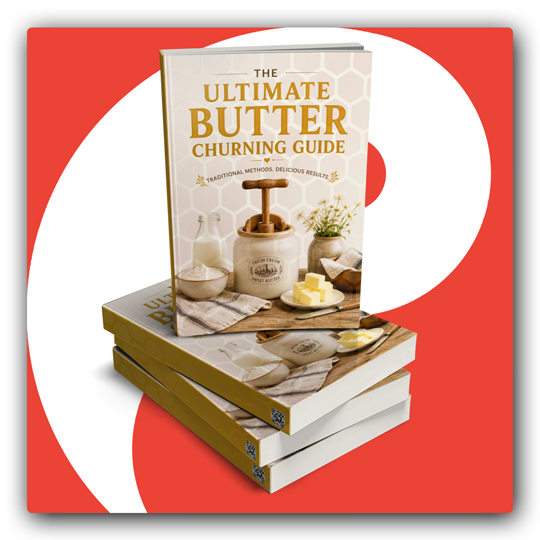
🧈 The Ultimate Butter Churning Guide PLR eBook is a practical, beginner-friendly resource covering cream selection, equipment, food safety, sweet cream and cultured butter, washing, salting, troubleshooting, flavored butter, storage, baking, larger batches, and commercial considerations. With 20 detailed chapters, useful worksheets, a 30-day mastery plan, and Private Label Rights included, you can edit, rebrand, publish, sell, bundle, or repurpose the content for cooking, homesteading, and traditional-skills audiences.
The Ultimate Butter Churning Guide PLR Ebook – 50K Words
Original price was: $27.00.$9.99Current price is: $9.99.
50 in stock
Sale!
Full Description
🧈 The Ultimate Butter Churning Guide PLR eBook
Turn a Traditional Kitchen Skill Into a Digital Product You Can Edit, Rebrand, Publish, and Sell
20 comprehensive chapters • Beginner-friendly instructions • Sweet cream and cultured butter • Troubleshooting guidance • 30-day mastery plan • Private Label Rights included
🥛 Help Readers Make Better Homemade Butter With Confidence
Butter making may appear simple.
Add cream to a jar or mixer, agitate it long enough, and wait for butter to form.
However, beginners quickly discover that several things can go wrong:
✅ The cream refuses to separate
✅ The butter becomes soft or greasy
✅ The grains remain too small
✅ Liquid leaks from the finished butter
✅ The flavor tastes stale or unpleasant
✅ Cultured cream develops incorrectly
✅ Salt is added unevenly
✅ The butter absorbs refrigerator odors
✅ A large batch produces inconsistent results
✅ Online preservation advice conflicts with food-safety guidance
The Ultimate Butter Churning Guide provides a clearer and more responsible learning path.
This comprehensive PLR eBook guides readers through the science, ingredients, equipment, preparation, churning, washing, working, salting, flavoring, storage, troubleshooting, cooking, scaling, and commercial considerations involved in making homemade butter.
It combines the enjoyment of a traditional kitchen craft with practical sanitation, temperature control, recordkeeping, storage, and food-safety principles.
As the PLR buyer, you can edit the manuscript, add your branding, publish it under your name or business, sell the customized eBook, use it as a lead magnet, include it in a course or membership, or repurpose it into an entire collection of cooking and homesteading content according to the included license.
✨ Create a Valuable Traditional-Skills Product Without Writing It From Scratch
Developing a complete butter-making guide requires more than supplying a basic recipe.
A useful product must explain:
✅ What happens inside cream during churning
✅ Which cream produces better results
✅ How temperature affects separation
✅ How different churning tools perform
✅ When the cream has broken properly
✅ How to collect and wash butter grains
✅ How to remove excess moisture
✅ How to distribute salt evenly
✅ How cultured butter differs from sweet cream butter
✅ How to diagnose common problems
✅ How to prepare flavored and compound butters
✅ How to use traditional churning buttermilk
✅ How to refrigerate and freeze butter properly
✅ How homemade butter behaves in cooking and baking
✅ How to scale batches consistently
✅ Which requirements may apply before selling dairy products
With The Ultimate Butter Churning Guide PLR eBook, the educational foundation has already been created for you.
Instead of starting with a blank document, you can focus on branding, design, audience adaptation, original recipes, bonus resources, professional review, positioning, and promotion.
🎯 What Readers Will Learn
Inside this beginner-friendly guide, readers will discover how to:
✅ Understand how cream changes into butter
✅ Recognize the stages of churning
✅ Choose suitable pasteurized cream
✅ Compare fat percentages and processing methods
✅ Understand how freshness and additives may affect results
✅ Select jars, mixers, food processors, or traditional churns
✅ Prepare equipment and work surfaces hygienically
✅ Choose a manageable batch size
✅ Control cream temperature
✅ Make sweet cream butter step by step
✅ Prepare cultured butter responsibly
✅ Wash butter grains properly
✅ Work the butter without making it greasy
✅ Remove excess moisture
✅ Add salt evenly
✅ Adjust texture and flavor
✅ Diagnose cream that refuses to break
✅ Correct very small butter grains
✅ Reduce watery or leaking butter
✅ Recognize possible spoilage or off flavors
✅ Create herb, garlic, spice, citrus, and sweet compound butters
✅ Use traditional churning buttermilk in suitable recipes
✅ Refrigerate and freeze finished butter
✅ Package and label batches
✅ Use homemade butter in cooking and baking
✅ Keep batch records
✅ Calculate approximate yield
✅ Manage larger batches more consistently
✅ Understand farmstead and seasonal cream differences
✅ Research licensing and labeling before selling butter
✅ Reduce waste and use byproducts responsibly
✅ Follow a structured 30-day butter-making plan
🔬 Understand What Happens Inside the Cream
Cream is an emulsion containing fat dispersed through liquid.
During churning, repeated agitation damages the protective membranes surrounding the fat droplets.
The fat begins to join together while liquid separates.
Readers learn to recognize the major stages:
✅ Liquid cream
✅ Whipped cream
✅ Stiff whipped cream
✅ Grainy or curdled-looking cream
✅ Butter grains and separated liquid
✅ Gathered butter
✅ Washed and worked finished butter
Understanding these stages can help beginners avoid stopping too early, overworking the batch, or assuming the cream has failed when it is still progressing normally.
🧼 Food Safety Comes First
Butter making is enjoyable, but it involves a perishable dairy ingredient.
The guide promotes responsible practices such as:
✅ Using suitable pasteurized cream
✅ Washing hands thoroughly
✅ Cleaning and sanitizing equipment
✅ Avoiding cross-contamination
✅ Keeping ingredients appropriately chilled
✅ Using clean water when washing butter
✅ Monitoring cultured cream carefully
✅ Refrigerating finished butter promptly
✅ Discarding batches with suspicious odors, colors, textures, or contamination
✅ Following current local food-safety guidance
The eBook does not claim that salt, culturing, decorative packaging, or traditional methods automatically make homemade butter shelf-stable.
It does not recommend untested home-canning methods for butter.
For ordinary home use, refrigeration or freezing remains the practical storage approach presented in the guide.
🏷️ Private Label Rights Included
This is a complete PLR eBook, allowing you to transform professionally written butter-making content into a customized digital product.
Subject to the included license, you can:
✅ Edit or rewrite the manuscript
✅ Add your name or pen name
✅ Add your company or publishing brand
✅ Insert your logo and contact information
✅ Change the title and subtitle
✅ Create a completely new cover
✅ Apply your preferred colors, fonts, and layout
✅ Rearrange, remove, shorten, or expand chapters
✅ Add your own butter recipes
✅ Include original photographs
✅ Create branded batch sheets
✅ Add printable kitchen checklists
✅ Include regional ingredient information
✅ Link to your products or services
✅ Recommend suitable kitchen tools
✅ Include appropriate affiliate links
✅ Publish and sell the customized eBook
✅ Use it as a premium lead magnet
✅ Add it to a membership website
✅ Include it as a course or workshop bonus
✅ Use selected chapters as class handouts
✅ Turn chapters into blog articles
✅ Create newsletters and email lessons
✅ Produce videos, podcasts, or presentations
✅ Develop worksheets, recipe cards, and checklists
✅ Build educational social-media content
✅ Bundle it with cooking or homesteading products
The customized finished product may be sold according to the terms of the included license.
The underlying Private Label Rights may not automatically be transferred, resold, or passed to customers unless a separate reseller or transferable-rights license expressly permits that use.
📖 Inside the 20-Chapter Guide
Chapter 1: Butter Churning Basics
Explains how agitation changes cream into whipped cream, butter grains, separated liquid, and finished butter.
Chapter 2: From Farm Churns to Modern Kitchens
Explores butter-making traditions, historical tools, regional styles, and the development of modern equipment.
Chapter 3: Food Safety First
Covers pasteurization, sanitation, cold control, clean water, cross-contamination, and responsible ingredient handling.
Chapter 4: Choosing the Right Cream
Explains fat percentage, freshness, processing, additives, flavor, and how cream selection may affect yield and texture.
Chapter 5: Butter Churning Equipment
Compares mason jars, hand mixers, stand mixers, food processors, churns, paddles, strainers, and storage containers.
Chapter 6: Preparing the Cream
Shows readers how to manage temperature, resting time, batch size, equipment setup, and workspace preparation.
Chapter 7: Step-by-Step Sweet Cream Butter
Provides a complete beginner process from measuring the cream to storing the finished butter.
Chapter 8: Cultured Butter
Introduces fermentation, starter options, timing, flavor development, sanitation, and responsible temperature control.
Chapter 9: Washing, Working, and Salting
Explains how to rinse butter grains, remove liquid, control moisture, improve texture, and distribute salt.
Chapter 10: Controlling Moisture, Texture, Color, and Flavor
Helps readers evaluate softness, firmness, water content, seasonal color, salt level, aroma, and mouthfeel.
Chapter 11: Troubleshooting Common Butter Problems
Addresses cream that will not churn, greasy butter, tiny grains, leaking moisture, weak flavor, and inconsistent batches.
Chapter 12: Flavored and Compound Butters
Shows readers how to create savory, sweet, herb, spice, garlic, citrus, and specialty butter combinations.
Chapter 13: Traditional Churning Buttermilk
Explains how the separated liquid differs from cultured store-bought buttermilk and how it may be used in suitable recipes.
Chapter 14: Packaging, Refrigeration, Freezing, and Freshness
Covers wrapping, containers, labeling, odor protection, freezer storage, thawing, and quality monitoring.
Chapter 15: Cooking and Baking With Homemade Butter
Explains how moisture, salt, texture, and flavor may affect frying, sauces, bread, cakes, pastry, and everyday cooking.
Chapter 16: Scaling Up
Introduces larger batches, equipment limits, yield records, consistency, workflow, sanitation, and quality checks.
Chapter 17: Farmstead and Homestead Butter
Explores cream separation, seasonal variation, animal diet, milk handling, and the responsibilities associated with farm-produced dairy.
Chapter 18: Selling Homemade Butter
Introduces licensing, approved facilities, labeling, refrigeration, batch records, insurance, testing, and food-business responsibilities.
Chapter 19: Cost, Waste Reduction, and Sustainability
Helps readers consider ingredient cost, energy, packaging, water use, byproducts, batch size, and realistic economics.
Chapter 20: Build Your Personal Butter-Making System
Guides readers through documenting methods, comparing batches, refining techniques, and following a 30-day mastery plan.
📋 Practical Supporting Resources Included
The eBook contains useful resources designed to help readers apply what they learn.
These include:
✅ Detailed table of contents
✅ Plain-language butter-making glossary
✅ Practical examples and scenarios
✅ Beginner tips throughout
✅ Important safety warnings
✅ Common mistakes to avoid
✅ Chapter summaries
✅ Action checklists
✅ Equipment selection checklist
✅ Cream comparison worksheet
✅ Batch setup guide
✅ Sweet cream butter process checklist
✅ Cultured butter preparation planner
✅ Washing and working checklist
✅ Salt calculation notes
✅ Moisture and texture review
✅ Butter troubleshooting chart
✅ Compound butter planning sheet
✅ Traditional buttermilk use guide
✅ Storage and labeling checklist
✅ Cooking and baking adjustment notes
✅ Yield and cost worksheet
✅ Larger-batch planning sheet
✅ Farmstead production considerations
✅ Food-business research checklist
✅ Batch record template
✅ Tasting and quality notes
✅ Complete 30-day butter-churning mastery plan
✅ Frequently asked questions
🌟 Why This PLR eBook Is Different
Many butter-making resources present the craft as a single recipe.
The Ultimate Butter Churning Guide covers the complete process.
The content combines:
✅ Traditional skills
✅ Ingredient selection
✅ Food science
✅ Equipment guidance
✅ Temperature control
✅ Step-by-step methods
✅ Culturing principles
✅ Texture control
✅ Troubleshooting
✅ Storage
✅ Cooking applications
✅ Batch records
✅ Scaling
✅ Sustainability
✅ Commercial awareness
The guide avoids:
❌ Claims that raw dairy is automatically safe
❌ Untested home-canning instructions
❌ Claims that salt makes butter shelf-stable
❌ Guaranteed storage periods for every batch
❌ Ignoring sanitation during culturing
❌ Suggesting that home production rules apply to commercial sales
❌ Promising that homemade butter will always cost less
❌ Treating all cream as identical
Instead, readers receive a practical framework that encourages observation, cleanliness, careful storage, repeatable methods, and responsible decision-making.
👥 Who Is the Reader Version For?
The customized reader edition may appeal to:
✅ Complete butter-making beginners
✅ Home cooks
✅ Bakers
✅ Homesteaders
✅ Farmstead-food enthusiasts
✅ Traditional-skills audiences
✅ Food-history readers
✅ DIY food hobbyists
✅ Cooking students
✅ Families exploring homemade foods
✅ Kitchen experimenters
✅ Small food producers researching butter production
✅ Readers interested in reducing food waste
✅ Anyone who wants to understand butter beyond a simple recipe
💻 Who Is This PLR Product For?
This PLR eBook is ideal for:
✅ PLR store owners
✅ Digital-product sellers
✅ Homesteading bloggers
✅ Cooking publishers
✅ Recipe websites
✅ Traditional-skills brands
✅ Farm and rural-lifestyle publishers
✅ Membership-site owners
✅ Course creators
✅ Workshop instructors
✅ Newsletter publishers
✅ Food-content marketers
✅ Culinary educators
✅ Kitchen-product affiliates
✅ Small-farm resource publishers
✅ Sustainable-living brands
🔄 Turn One PLR eBook Into Multiple Products
The content can be repurposed into:
✅ A branded butter-making eBook
✅ A 20-part cooking blog series
✅ A 30-day butter-making email course
✅ A printable butter-making workbook
✅ A sweet cream butter mini guide
✅ A cultured butter guide
✅ A butter troubleshooting chart
✅ A compound butter recipe collection
✅ A batch-record printable pack
✅ A homemade dairy kitchen bundle
✅ A traditional-skills course
✅ A homesteading membership resource
✅ A live butter-making workshop
✅ A food-safety checklist
✅ A kitchen equipment comparison guide
✅ A farmstead butter mini-course
✅ Recipe cards and tasting sheets
✅ Podcast or video lesson scripts
✅ Social-media cooking tips
✅ A cooking-course bonus
One comprehensive PLR eBook can provide months of useful content for your website, digital store, mailing list, course, workshop, membership, or social-media channels.
✨ Customize It for Your Brand
You are not limited to publishing the eBook exactly as supplied.
You can make your finished product more distinctive by:
✅ Choosing a new title and subtitle
✅ Designing a fresh cover
✅ Adding your logo and brand colors
✅ Including original butter-making photographs
✅ Adding your own recipes
✅ Creating branded batch records
✅ Including regional cream information
✅ Adding cooking and baking ideas
✅ Recommending suitable equipment
✅ Including appropriate affiliate links
✅ Linking to your course or membership
✅ Adding printable labels
✅ Creating recipe-card bonuses
✅ Including interviews with dairy professionals
✅ Developing beginner and advanced editions
Potential customized editions could include:
✅ Homemade Butter Made Simple
✅ The Beginner’s Guide to Churning Butter
✅ Butter Making for Homesteaders
✅ Sweet Cream and Cultured Butter at Home
✅ The Traditional Butter-Making Handbook
✅ The 30-Day Butter-Churning Challenge
✅ Farmhouse Butter Making for Beginners
✅ From Cream to Butter
Thoughtful customization can make the finished product more useful, recognizable, and valuable to a specific audience.
💰 Commercial Uses
Subject to the included PLR license, the customized product may be used to:
✅ Sell as a standalone digital eBook
✅ Grow a cooking or homesteading email list
✅ Promote a kitchen course
✅ Support a butter-making workshop
✅ Add value to a traditional-skills membership
✅ Generate leads for a food-education business
✅ Bundle with recipe books
✅ Include with kitchen printables
✅ Support affiliate kitchen-tool promotions
✅ Create a paid cooking masterclass
✅ Add as a bonus to a homesteading program
✅ Build a homemade-food product collection
✅ Develop a long-term educational content campaign
❓ Frequently Asked Questions
Is this a PLR eBook?
Yes. The product includes Private Label Rights, allowing the licensed buyer to edit, customize, rebrand, publish, sell, and repurpose the finished content according to the included license.
Is the manuscript editable?
Yes. It is supplied in Microsoft Word DOCX format for straightforward editing and rebranding.
Does the eBook include all 20 chapters?
Yes. It covers butter science, ingredients, equipment, safety, churning, culturing, troubleshooting, storage, cooking, scaling, and commercial considerations.
Is it suitable for beginners?
Yes. Important terminology and techniques are explained in clear, practical language.
Can I change the title and cover?
Yes. You may rename the eBook, change the subtitle, create a new cover, and apply your branding according to the license.
Can I add my name or business as the author?
Yes. You may add your name, pen name, company, logo, website, and contact information.
Can I sell the customized eBook?
Yes. You may sell the completed customized product subject to the terms of the included PLR license.
Can my customers receive PLR rights?
Not automatically. A separate reseller or transferable-rights license would be required.
Can chapters be reused separately?
Yes. Subject to the license, chapters may be adapted into articles, emails, videos, presentations, lessons, worksheets, recipes, and social content.
Does the eBook cover cultured butter?
Yes. It explains the process while emphasizing suitable ingredients, sanitation, temperature management, and responsible fermentation guidance.
Does the guide recommend raw cream?
No. The safety baseline uses pasteurized cream and encourages readers to follow current public-health and food-safety guidance.
Does it teach home-canned butter?
No. The guide does not present untested canned butter as a safe shelf-stable product.
Can I use the content for a course?
Yes. The chapter structure, checklists, worksheets, glossary, FAQs, and 30-day plan provide a strong foundation for lessons or workshops.
Does it include information about selling butter?
Yes. It introduces the categories of licensing, facility, refrigeration, labeling, insurance, batch-record, and food-business requirements that should be researched.
Should the content be reviewed before publication?
Yes. Food-safety, dairy-business, labeling, licensing, storage, and jurisdiction-specific information should be checked and updated before publishing a customized edition.
📝 Simple Customization Workflow
Use this process to transform the manuscript into a finished butter-making product:
✅ Review the included PLR license
✅ Define the intended audience
✅ Decide how the product will be used or sold
✅ Choose a new title and subtitle if needed
✅ Design a branded cover
✅ Add your author or company information
✅ Insert your logo, website, and contact details
✅ Adapt examples for your audience
✅ Add original recipes and photographs
✅ Include branded worksheets or batch records
✅ Link to related products or services
✅ Review all food-safety statements
✅ Update local dairy-business information
✅ Obtain appropriate professional review
✅ Proofread and publish the customized product
📦 What You Receive
Your package includes:
✅ The complete The Ultimate Butter Churning Guide PLR eBook
✅ 20 comprehensive chapters
✅ Beginner-friendly butter-making guidance
✅ Butter science and cream-selection education
✅ Equipment comparisons
✅ Food-safety and sanitation guidance
✅ Sweet cream butter instructions
✅ Cultured butter education
✅ Washing, working, and salting techniques
✅ Moisture and texture guidance
✅ Troubleshooting solutions
✅ Compound butter ideas
✅ Traditional buttermilk uses
✅ Storage and freezing guidance
✅ Cooking and baking applications
✅ Scaling and batch-record systems
✅ Farmstead considerations
✅ Food-business awareness
✅ Sustainability and cost guidance
✅ Complete 30-day mastery plan
✅ Practical worksheets and checklists
✅ Frequently asked questions
✅ Plain-language glossary
✅ Editable DOCX format
✅ Private Label Rights documentation
🚀 Build a Valuable Traditional-Skills Product Without Starting From a Blank Page
Writing a comprehensive butter-churning guide could require weeks or months of research, recipe testing, planning, writing, editing, organizing, formatting, and resource creation.
With The Ultimate Butter Churning Guide PLR eBook, you receive a substantial foundation that can be customized for your brand and audience.
Use it to launch a digital product, grow your mailing list, promote a cooking course, support a homesteading membership, teach a workshop, or create months of useful traditional-food content.
Edit it.
Customize it.
Brand it.
Review it.
Publish it.
Sell it.
Repurpose it into an entire butter-making and homesteading content collection.
🛒 Get The Ultimate Butter Churning Guide PLR eBook Today
Start with a professionally structured, beginner-friendly butter-making resource and transform it into a customized digital product for home cooks, bakers, homesteaders, food hobbyists, traditional-skills audiences, and culinary beginners.
GET INSTANT ACCESS TODAY
⚠️ Important Food-Safety Disclaimer
This product is provided for general educational and informational purposes only.
It does not provide medical, dietary, microbiological, regulatory, legal, food-business, or individualized food-safety advice.
Dairy products are perishable and may support the growth of harmful microorganisms when ingredients, equipment, temperatures, fermentation, handling, or storage are not managed properly.
Readers should use suitable ingredients, maintain clean equipment and work surfaces, follow current food-safety guidance, refrigerate finished products promptly, and discard any batch showing signs of spoilage or contamination.
This guide does not recommend untested home-canning methods for butter and does not claim that salt, culturing, packaging, or traditional preparation automatically makes homemade butter shelf-stable.
Food-production, dairy-processing, licensing, labeling, refrigeration, facility, insurance, testing, transport, and sales requirements vary between jurisdictions and may change over time.
Anyone planning to sell butter or other dairy products should verify current local requirements and obtain advice from appropriately qualified food-safety, regulatory, legal, insurance, and business professionals.
PLR buyers are responsible for reviewing, fact-checking, updating, customizing, and localizing the content before publication.
No food-safety, health, storage-life, product-quality, business, sales, ranking, revenue, profit, or income outcome is promised or guaranteed.
🎁 Exclusive Bonuses Included!
When you grab this PLR eBook, you’ll also receive a ready-to-use sales page, a cheat sheet, and a high-quality promotional image—everything you need to sell it quickly and effortlessly!
🔥 LIMITED TIME OFFER! 🔥
Grab this complete PLR eBook for only $9.99— exclusively for the first 50 buyers! Don’t miss your chance to own this 20-chapter guide and claim full PLR rights at this unbeatable price.
License Details:
 You Can:
- Sell the product and retain 100% of the profits.
- Edit, customize, rebrand, and modify the content to suit your business.
- Divide the content into smaller reports, guides, or digital products.
- Bundle the product with other PLR products or resources.
- Include the product in a paid monthly membership site.
- Repurpose the content into videos, audio content, PDFs, or other formats.
- Use excerpts from the content in blog posts, emails, lead magnets, or free downloads.
- Transfer PLR, Resale Rights, or Master Resell Rights to others, where permitted by the applicable license.
 You Cannot:
- Sell the product for less than the minimum advertised price of $9.99.
- Give the product away for free.
- Offer 100% affiliate commissions on the product.
- Include the product in an existing paid membership that was established before your purchase without paying the applicable additional licensing fee.
PLEASE PAY ATTENTION TO THE LICENSE TERMS MENTIONED ABOVE
If you want to use the content in a way that is not specifically stated within the License, please ask if you can before you do so.
Related products
-
Sale!

Mastering the Bow – The Complete Guide to Archery PLR Ebook – 13K Words
Original price was: $27.00.$9.99Current price is: $9.99. -
Sale!

Clear Skin Blueprint – The Ultimate Guide to Understanding and Treating Acne PLR Ebook – 15k Words
Original price was: $27.00.$9.99Current price is: $9.99. -
Sale!

Aromatherapy Mastery – The Complete Guide to Essential Oils PLR Ebook – 13K Words
Original price was: $27.00.$9.99Current price is: $9.99.
Reviews