
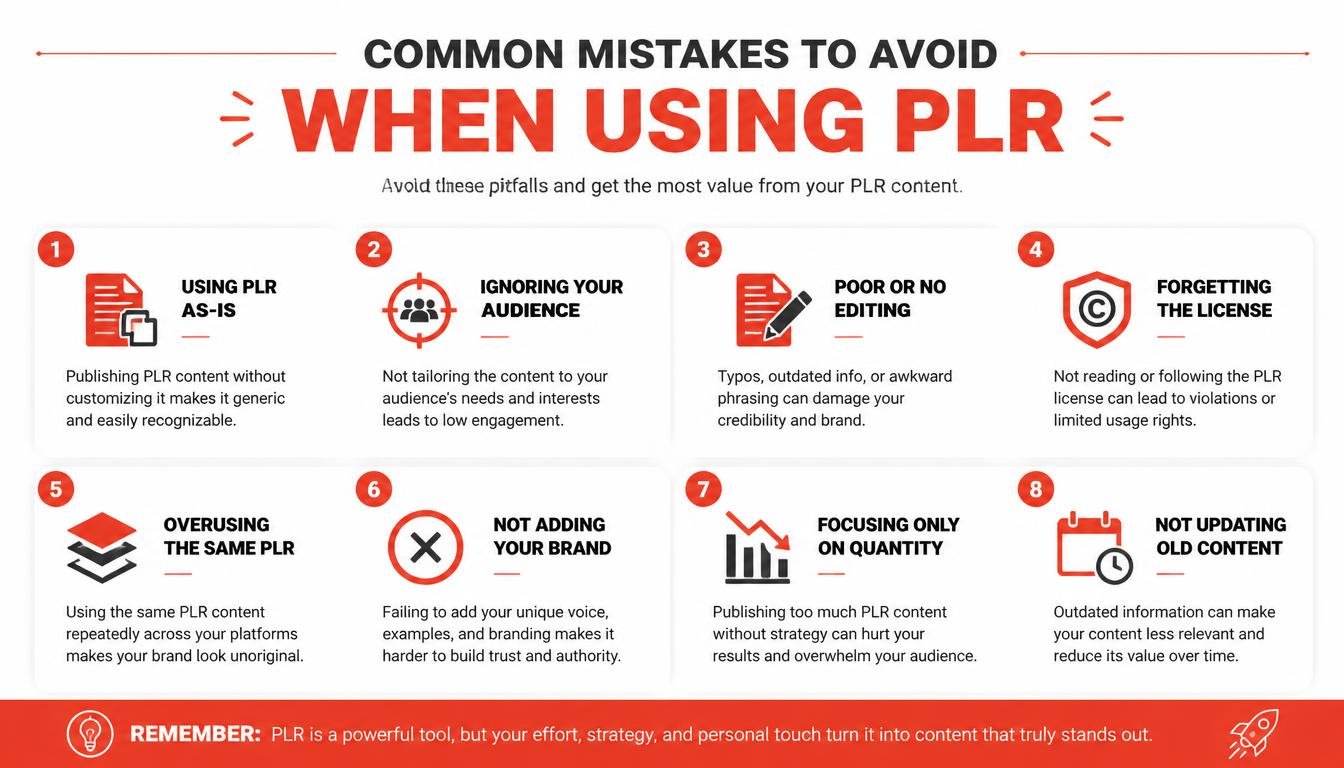

PLR content can be a powerful shortcut for creating blog posts, ebooks, lead magnets, and digital products, but using it incorrectly can lead to poor-quality content, licensing problems, weak branding, and missed opportunities. 20 Common Mistakes to Avoid When Using PLR explores the most frequent mistakes beginners and experienced marketers make when buying, customizing, publishing, and selling PLR. By understanding these pitfalls, you can make better use of your PLR content, create more original and valuable products, and build a stronger digital-content business.
1. Not reading the PLR license
2. Breaking the license terms
Another common mistake is ignoring the rules set out in the PLR license. A license may limit how the content can be sold, modified, distributed, or transferred. For example, you may be allowed to sell a customized eBook but not give your customers the original PLR rights. Always follow the specific terms of the license so you can use the content confidently and avoid unnecessary legal or business problems.
3. Selling PLR rights without permission
4. Using the content without editing it
Publishing PLR content exactly as you received it can make your product look generic and identical to other products using the same material. One of the main benefits of PLR is the ability to customize it. Rewrite sections, add your own examples, update information, improve the formatting, and include your own insights to make the final product more useful and unique.
5. Using outdated information
PLR content may have been created months or even years ago, so some information can become outdated. This is especially important for topics involving technology, laws, prices, statistics, health, marketing platforms, or industry trends. Before publishing, review the content and update anything that is no longer accurate or relevant. This helps ensure your final product provides readers with reliable and useful information.
6. Keeping the original branding
Keeping the original branding is another common PLR mistake. Leaving the previous author’s name, logo, website, colors, or business references in the content can make your product look unfinished and less professional. Replace the original branding with your own identity and make sure the final product feels like it belongs to your business or brand.
7. Using the original title
8. Using the same cover design
9. Not adding your own value
PLR content should be treated as a starting point, not the finished product. Simply changing the name and cover may not be enough to make your version stand out. Add your own examples, tips, experience, worksheets, checklists, updated information, or useful resources. Adding genuine value makes the content more helpful to readers and gives buyers a better reason to choose your product.
10. Publishing low-quality content
Publishing PLR content without checking its quality can hurt your reputation and disappoint your readers. Look for poor writing, repeated information, weak formatting, outdated sections, and unclear explanations before publishing. Take time to edit, proofread, improve, and organize the content so your final product provides real value.
11. Skipping proofreading
Skipping proofreading can leave your PLR product filled with spelling mistakes, grammar errors, awkward sentences, or formatting problems. Even good PLR content can need a final review before publication. Carefully proofread the entire product, or have someone else review it, to make sure the finished version looks professional and is easy to read.
12. Ignoring spelling and grammar errors
Spelling and grammar mistakes can make your PLR product look unprofessional and reduce the reader’s trust in your content. Even small errors can affect how polished your eBook, article, or digital product feels. Review the content carefully and correct spelling, grammar, punctuation, and awkward wording before publishing.
13. Using generic information
14. Not adding original examples
Original examples can make PLR content much more useful and engaging. Instead of relying only on the examples included in the original material, add your own realistic scenarios, case studies, tips, or illustrations. This helps readers understand the topic more easily and makes your version of the PLR product feel more unique.
15. Failing to fact-check the content
16. Using copyrighted material improperly
17. Making unsupported claims
18. Overusing AI-generated edits
19. Ignoring your target audience
PLR content may be well written, but it can still fail if it does not speak directly to the people you want to reach. Consider your audience’s needs, experience level, questions, problems, and goals before publishing. Customize the language, examples, tone, and advice so the content feels relevant and useful to your specific readers.
20. Choosing the wrong PLR product
Choosing a PLR product that does not match your audience, niche, or business goals can waste time and money. Before buying, consider whether the topic is relevant to your customers, whether the content is high quality, and whether the license gives you the rights you need. Choosing the right PLR product from the beginning makes customization and marketing much easier.
21. Publishing on too many platforms without a plan
22. Competing with dozens of identical PLR products
23. Not creating a strong product description
A weak product description can make a good PLR product difficult to sell. Your description should clearly explain what the product is, who it is for, what buyers will learn or receive, and why it is valuable. Use clear benefits, relevant keywords, and an engaging presentation to help potential customers understand why they should choose your product.
24. Using weak product branding
25. Ignoring SEO
Ignoring SEO can make it much harder for people to discover your PLR products online. Use relevant keywords in your product titles, descriptions, headings, and other appropriate areas to improve visibility. Good SEO should help your content reach the right audience without stuffing keywords or making the writing unnatural.
26. Not promoting the finished product
27. Expecting instant sales
28. Forgetting to update the product over time
29. Not keeping backup copies of your files
Losing your PLR files can cause unnecessary stress and wasted time. Keep backup copies of your original PLR files, edited versions, covers, graphics, and finished products in more than one secure location. Using cloud storage, an external drive, or another reliable backup method can help protect your work from accidental deletion, computer problems, or file corruption.
30. Treating PLR as a finished product instead of a starting point
PLR content is meant to give you a foundation, not necessarily a final product ready to publish immediately. Treat it as a starting point and improve it with your own branding, examples, insights, updated information, formatting, and useful resources. The more value you add, the more unique and professional your final product can become.

0 Comments