

Choosing the right niche is one of the most important decisions when starting an online business, blog, or digital-product brand. A good niche gives you a clear target audience, makes your content easier to create, and helps you stand out from competitors. In this article, we will show you how to evaluate your interests, audience demand, competition, profitability, and long-term potential so you can choose a niche with confidence instead of relying on guesswork. When you are done learning how to select a good niche you can make your choice from 200 Niche Ideas for Your Business.
What Is a Niche?

A niche is a specific area of focus within a broader market or industry. Instead of trying to appeal to everyone, choosing a niche allows you to concentrate on a particular group of people, their interests, needs, and problems. For example, “fitness” is a broad market, while “home workouts for busy professionals” is a more specific niche. Choosing the right niche can make it easier to create relevant content, attract the right audience, build authority, and promote products or services that genuinely match what your target customers are looking for.
Niches have Sizes
A simple way to understand how niches work is to start with a broad topic and gradually make it more specific. For example, health is a very broad market that covers countless topics, including nutrition, exercise, sleep, mental wellness, and disease prevention. Narrowing this down to fitness gives you a more focused area, but it is still quite broad. You could then choose home fitness for beginners, which targets people who want to exercise at home and are new to fitness. Taking it one step further, home fitness for busy professionals over 40 creates an even more specific niche by focusing on a particular type of person with specific needs, such as finding quick, practical workouts that fit around a demanding schedule.
Why Choosing the Right Niche Matters
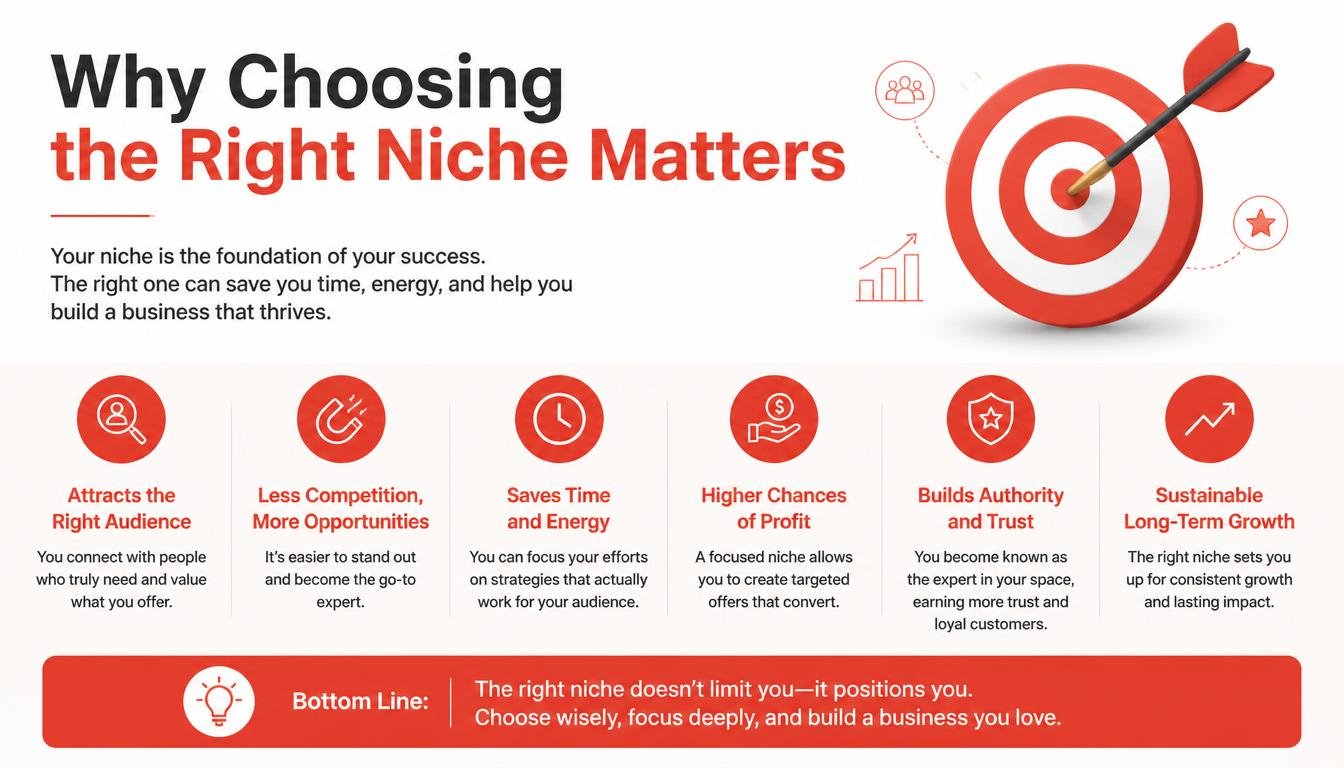
Choosing the right niche matters because it gives your business a clear direction and helps you focus your time, content, products, and marketing on the people most likely to be interested in what you offer. A well-chosen niche makes it easier to understand your audience, identify their problems, create useful content, and build trust with potential customers. It can also reduce competition compared with targeting a broad market, making it easier to establish yourself as an authority. Most importantly, the right niche gives you a stronger foundation for building a business because you are solving specific problems for a specific group of people.
Finding the Right Audience
A good niche makes it easier to identify exactly who you want to reach. Instead of trying to market to everyone, you can focus on a specific group of people who share similar interests, goals, problems, or needs. This allows you to better understand your audience and create products, content, and marketing messages that are relevant to them.
Creating Content
Having a clear niche gives you a constant source of content ideas. Once you understand what your target audience wants to learn, solve, or achieve, you can create blog posts, videos, guides, social media posts, and other content around those topics. A focused niche also helps ensure that your content stays relevant instead of becoming a collection of unrelated subjects.
Building Authority
When you consistently create useful content within a specific niche, people can begin to recognize you as knowledgeable in that area. Rather than being a general source of information, you become known for helping with particular problems or serving a particular audience. Over time, this can help build trust and establish your reputation within the niche.
Marketing
A clearly defined niche can make your marketing much more focused. You know who you are trying to reach, what problems they have, and what benefits are likely to appeal to them. This makes it easier to write advertisements, email campaigns, social media posts, and promotional messages that speak directly to your ideal customer instead of using generic marketing.
Selling Products
A good niche makes it easier to identify products and services that your audience is actually interested in buying. When you understand your audience’s specific problems and goals, you can create or promote solutions that directly address those needs. This can make your offers more relevant and increase the likelihood that visitors will become customers.
Standing Out From Competitors
Choosing a specific niche can help you differentiate yourself from businesses competing in a broad market. Instead of trying to compete with everyone, you can specialize in serving a particular audience or solving a specific problem. For example, a general fitness website competes with countless other fitness websites, while a website focused on home fitness for busy professionals over 40 has a much more specific position in the market.
How to Select a Good Niche
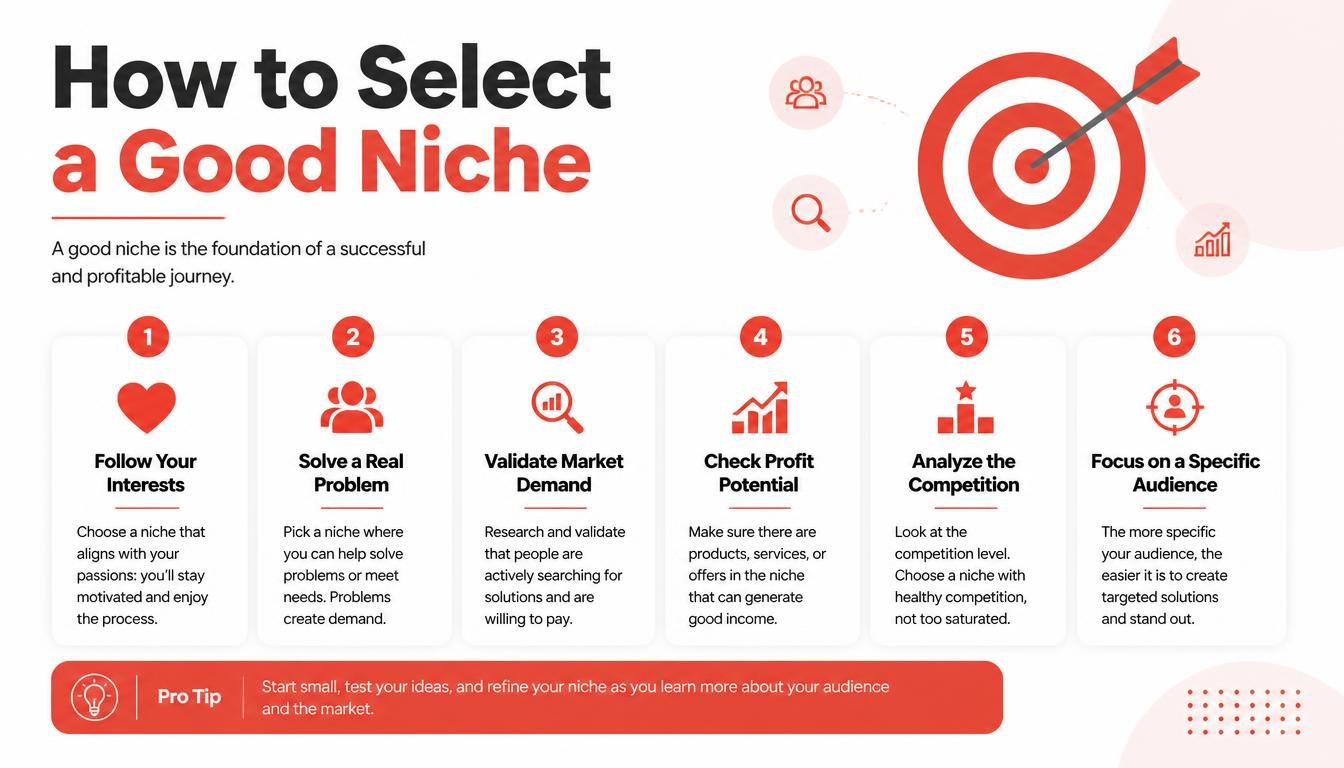
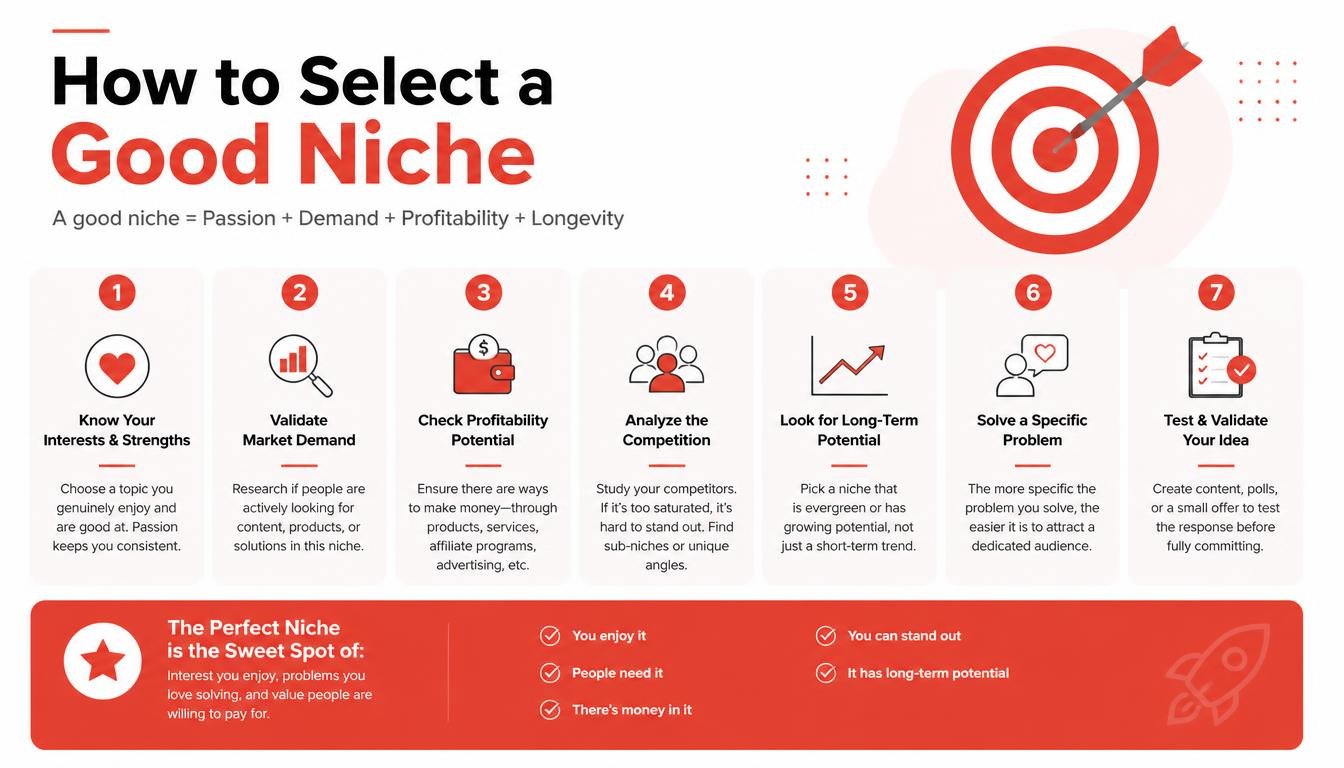
Selecting a good niche starts with finding the right balance between your interests, your audience’s needs, and the potential to build a profitable business. A niche should be specific enough to help you clearly identify your target audience, but broad enough that you have plenty of topics to create content about and products or services to offer. You should also consider whether people are actively searching for information and solutions within the niche, how much competition exists, and whether there are realistic opportunities to make money. By evaluating these factors before committing to a niche, you can choose an area with stronger potential rather than simply selecting a topic because it seems interesting.
1. Start With Your Interests and Knowledge
When choosing a niche, it is helpful to start with topics you genuinely enjoy, understand, or have experience with. Building a website or business around a subject you are interested in can make the process more enjoyable and sustainable because you are more likely to stay motivated when creating content and learning about the topic. Your existing knowledge and personal experience can also give you a head start, allowing you to provide useful insights, practical advice, and real examples that someone starting from scratch may not have. However, your niche does not have to be something you are an expert in already. A strong interest combined with a willingness to research and learn can be enough to build valuable knowledge over time.
2. Identify Problems People Need Solved
A good niche usually exists because people have a problem they want to solve, a question they want answered, a frustration they want to overcome, or a goal they want to achieve. When researching potential niches, look for topics that people actively search for online, especially questions that come up repeatedly or problems that require useful solutions. For example, someone interested in home fitness may search for “how to lose weight at home,” “best workouts for beginners,” or “quick workouts for busy people.” These searches reveal what people actually need help with and can provide valuable ideas for choosing a niche, creating content, and developing products or services that solve real problems.
3. Check Search Demand
Before committing to a niche, it is important to make sure people are actually searching for information about it. Search demand gives you an indication that there is an audience interested in the topic and looking for answers, solutions, products, or services. You can research demand by using search engines and looking at the questions and suggestions that appear as you type a keyword. Keyword research tools can also show search volume, related keywords, and other search terms people use. Look for a niche that has a consistent range of relevant searches rather than relying on a single keyword. For example, a niche such as home fitness may have hundreds of related searches covering workouts, equipment, weight loss, nutrition, and beginner routines, giving you plenty of opportunities to create content and attract visitors.
4. Research the Competition
Competition is not necessarily a bad thing when choosing a niche. In fact, competition can be a positive sign because it often shows that people are interested in the topic and that businesses are already making money within the market. The goal is not always to find a niche with zero competition, but to understand who you would be competing against and whether you can offer something different or better. Start by searching for your main keywords and identifying established websites, blogs, businesses, products, YouTube channels, social media creators, and other content creators serving the same audience. Study what they offer, what topics they cover, how they market themselves, and where there may be gaps you can fill. This research can help you find opportunities to approach the niche from a different angle and give your audience a reason to choose you instead of your competitors.
5. Look at Profitability
A good niche should have realistic ways to make money, especially if you plan to turn your website or content into a business. Look at the different monetization opportunities available within the niche, such as physical products, services, affiliate marketing, advertising, subscriptions, online courses, coaching, ebooks, and other digital products. For example, a fitness niche could generate income through affiliate links to fitness equipment, advertising, workout programs, paid memberships, or digital fitness guides. You do not need to use every monetization method, but having several potential revenue streams gives you more flexibility as your business grows. Before choosing a niche, consider whether people are willing to spend money to solve problems or achieve goals related to the topic.
6. Define Your Target Audience
Once you have a potential niche in mind, define exactly who you want to serve. A target audience is the specific group of people most likely to be interested in your content, products, or services. Consider factors such as their age, occupation, interests, experience level, goals, problems, budget, and lifestyle. The more clearly you understand your audience, the easier it becomes to create content and offers that are relevant to them. For example, instead of targeting everyone interested in fitness, you could focus on busy professionals over 40 who want simple home workouts they can fit into a demanding schedule. This level of detail gives your business a clear direction and helps you communicate more effectively with the people you want to attract.
7. Check the Niche’s Long-Term Potential
Before committing to a niche, consider whether it has enough long-term potential to support your business for years rather than only a few months. A strong niche should give you plenty of topics to write about, questions to answer, products or services to promote, and new developments to discuss. Look at whether people will continue to have problems and needs related to the niche in the future, rather than choosing a topic based entirely on a short-lived trend. For example, a niche such as personal finance can provide endless opportunities because people will always need help with budgeting, saving, investing, debt, and managing their money. Choosing a niche with depth and ongoing demand gives you more room to expand your content, reach new audiences, and grow your business over time.
8. Find Your Unique Angle
Even within a competitive niche, you can stand out by finding a unique angle that gives people a reason to choose your content, products, or services. Your unique angle could come from the specific audience you serve, your personal experience, your expertise, the format you use, your location, or the way you approach a particular topic. For example, instead of creating another general cooking website, you could focus on simple healthy meals for college students, provide recipes designed specifically for small kitchens, or use short step-by-step videos for complete beginners. The goal is not necessarily to create a completely new niche, but to find a specific way of serving the market that feels useful, relevant, and different from what competitors are already offering.
9. Test the Niche Before Fully Committing
Before investing a lot of time and money into a niche, test it on a small scale to see how people respond. You could publish a few articles, create social media posts, make short videos, start an email list, or develop a simple digital product related to the topic. Pay attention to signals such as website traffic, search impressions, social engagement, comments, questions, email sign-ups, and product sales. You do not need immediate success to prove that a niche is viable, but testing allows you to discover what your audience responds to and identify potential problems before fully committing. This approach can help you refine your niche and focus on the areas with the strongest potential.
10. Make Your Final Niche Decision
How to Evaluate a Niche
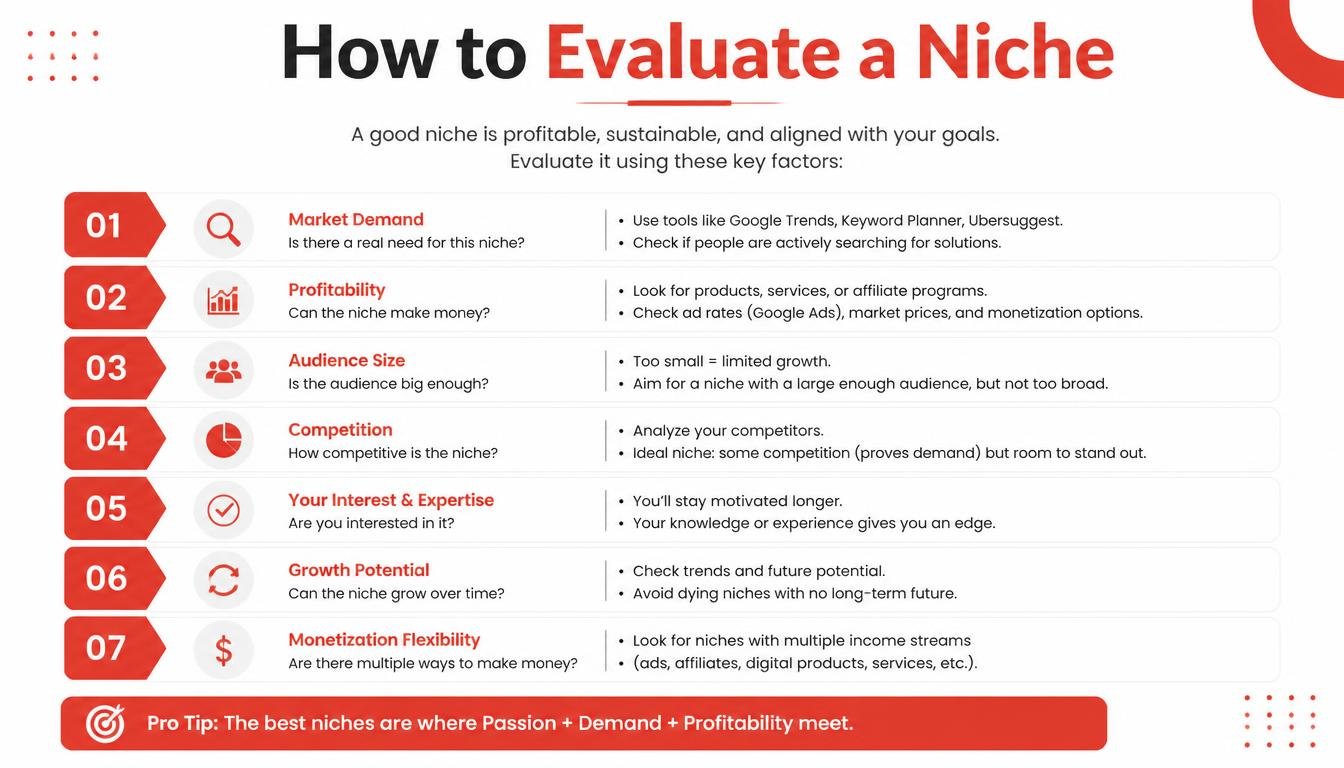
Choosing a niche is only the first step. Before building a website, creating a large amount of content, or investing money into products and marketing, you should evaluate whether the niche has enough potential to support your goals. A good niche should have an identifiable audience, consistent interest, reasonable competition, and clear opportunities to generate income. You should also consider whether you can create enough useful content and whether the niche is likely to remain relevant over time. By evaluating these factors carefully, you can avoid investing heavily in a niche that has little demand and increase your chances of building a sustainable business.
Examples of Good Niches

There are many different types of niches that can support a successful website, content business, or online store. The best niches typically combine a clear audience, a genuine need, ongoing interest, and opportunities to make money. For example, personal finance for young adults focuses on budgeting, saving, debt, and investing for a specific audience; home fitness for beginners targets people who want to exercise without joining a gym; healthy meal planning for busy families solves the problem of preparing convenient meals while maintaining a healthy diet; and gardening for small spaces helps people grow plants when they have limited room. Other potential niches include pet care for new dog owners, travel planning for budget travelers, photography for beginners, productivity for remote workers, and digital marketing for small businesses. These examples show how a broad market can be narrowed into a specific audience with particular needs and interests.
Common Niche Selection Mistakes
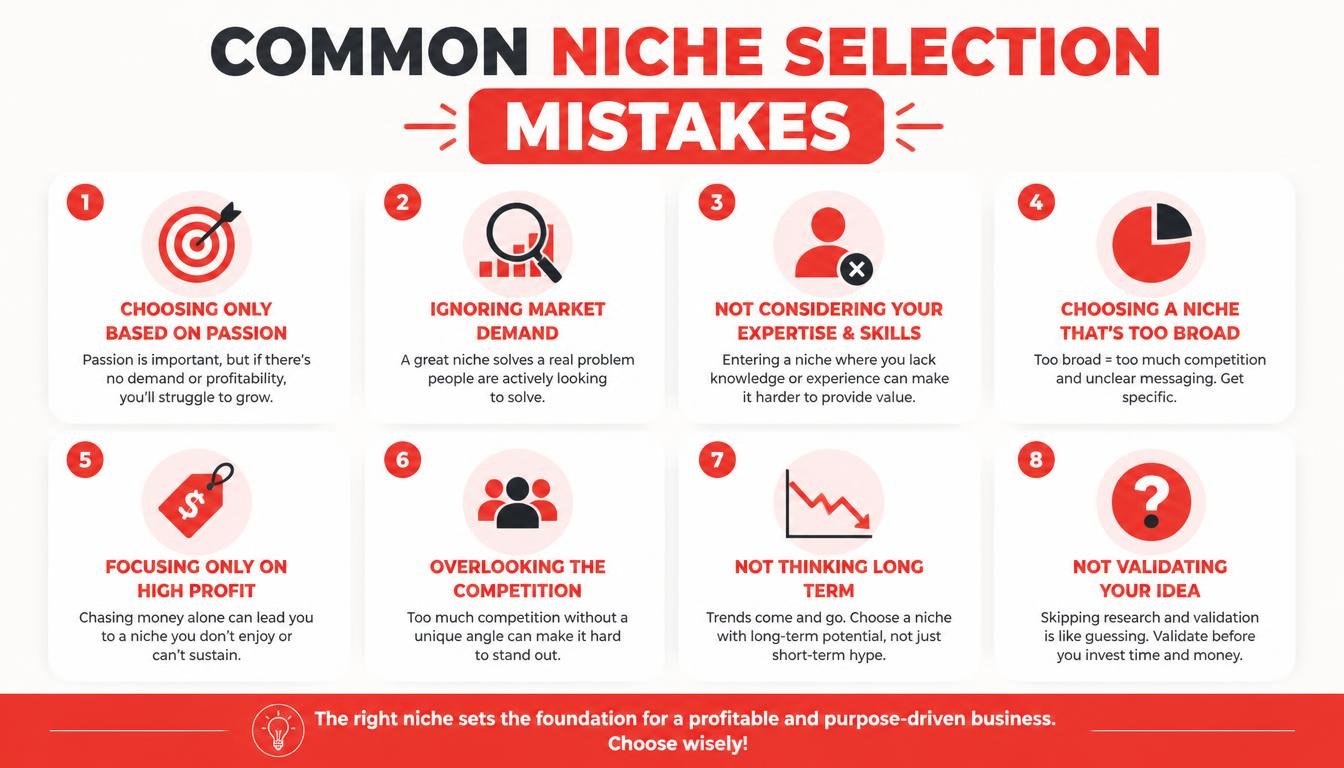
Choosing the right niche can give your business a strong foundation, but there are several common mistakes that can make building a niche much more difficult. One of the biggest mistakes is choosing a niche that is too broad, such as “health” or “technology,” because it can be difficult to define your audience and compete with established websites. On the other hand, choosing a niche with little or no demand can leave you with very few people interested in your content or products. Some people also pick a niche simply because it appears profitable, without considering whether there is enough demand, manageable competition, or genuine interest in the subject. Ignoring the competition can make it difficult to understand what you are up against or identify opportunities to stand out.
Another common mistake is choosing a niche you have no interest in, which can make it harder to stay motivated when you need to consistently create content and learn about the subject. At the same time, making your niche too narrow can limit your potential audience and leave you with too few topics, products, or opportunities to grow. Finally, many people never test their niche before fully committing to it. Publishing a few pieces of content, creating social media posts, or testing a simple product can provide useful feedback before you invest significant time and money. Avoiding these mistakes can help you choose a niche that is focused enough to stand out while still offering enough demand and opportunities for long-term growth.
How to Know When You’ve Found the Right Niche
Finding the right niche does not mean finding a topic with no competition or choosing the most popular market available. A good niche should pass several simple tests that show there is a real audience and a realistic opportunity to build something valuable. Use the following checklist before making your final decision:
✅ People are actively searching for it — There is consistent interest in the topic, with people using search engines to find information, answers, and solutions.
✅ People have problems they want solved — The audience has clear challenges, questions, frustrations, or goals that your content, products, or services can help with.
✅ There are products or services being purchased — People are already spending money in the niche, showing that there are potential opportunities to generate revenue.
✅ There is enough content to create — The niche contains enough topics, questions, subtopics, and developments to keep you creating valuable content for a long time.
✅ Competition exists but isn’t impossible to enter — Other websites and businesses are serving the market, but there are still opportunities for a new business to compete by targeting a specific audience or approach.
✅ You can add something different — You have a unique perspective, experience, format, expertise, or approach that can give people a reason to choose your content or products.
✅ You can see yourself working in the niche long-term — You have enough interest in the subject to continue learning, creating, and improving even after the initial excitement wears off.
When most or all of these points are true, you have a much stronger indication that you have found a niche worth pursuing. The goal is to find a balance between demand, profitability, competition, and personal interest so you can build something that provides value to an audience and has room to grow.
What to Do After Choosing Your Niche
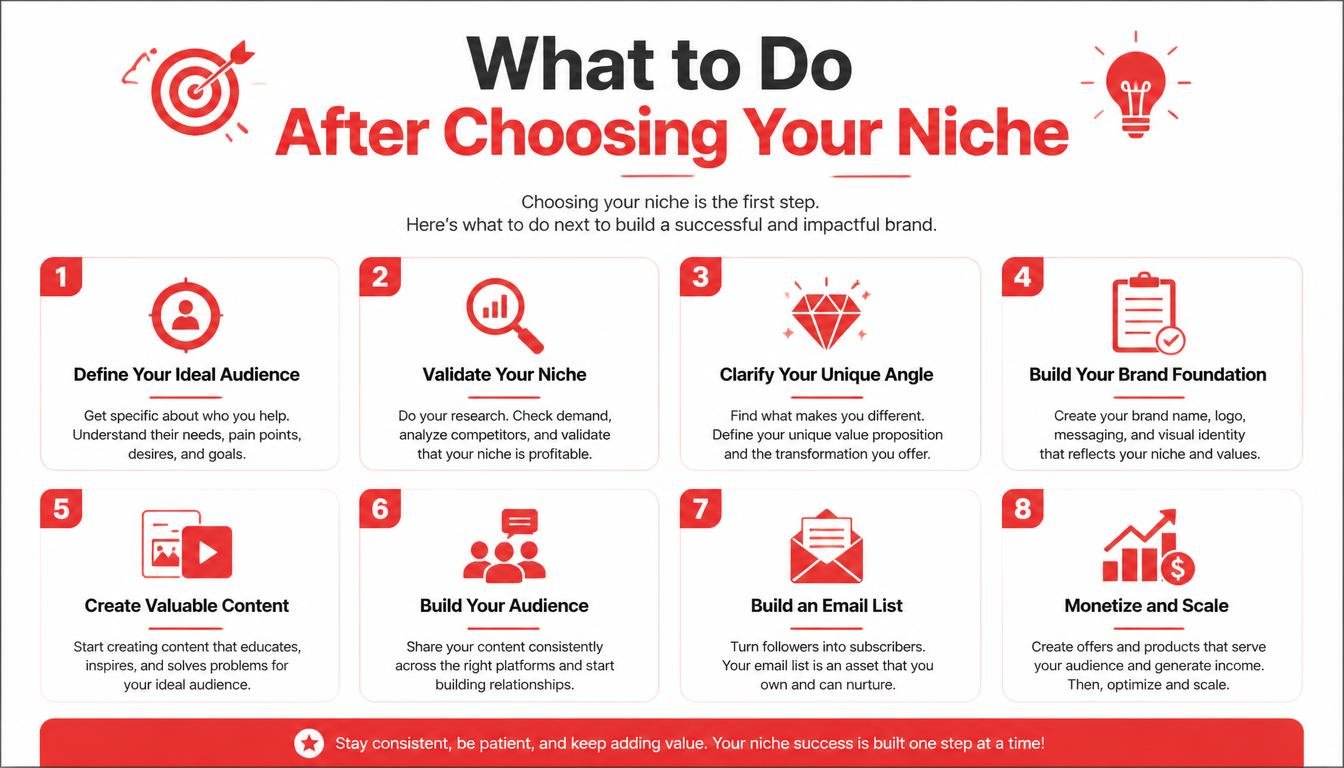
Choosing your niche gives your business a clear direction, but there is still work to do before you can start growing an audience and generating revenue. Once you have selected a niche, the next step is to turn that general idea into a focused business strategy. Start by defining your target audience so you know exactly who you are trying to reach and what they need. Then research keywords to discover what your audience is searching for and identify opportunities to attract traffic. Use this research to identify content topics that answer questions, solve problems, and provide useful information. You should also analyze competitors to understand what they are doing well and where you may be able to offer something different. Once you have a clear content strategy, create your first content and begin building your presence. Finally, look for opportunities to develop products or offers that solve specific problems for your audience and create ways to generate income from your niche.
Taking these steps turns your niche from simply an idea into a practical business plan. Rather than trying to build everything at once, focus on understanding your audience, creating useful content, and gradually developing offers that meet their needs.
Frequently Asked Questions
What makes a niche profitable?
Should I choose a niche based on my passion?
Yes, passion can be a useful factor when choosing a niche, because genuine interest can make it easier to stay motivated and consistently create valuable content. However, passion should not be the only consideration. A strong niche should also have audience demand, real problems to solve, manageable competition, and opportunities to make money. Ideally, choose a niche that combines something you enjoy with something people are actively interested in and willing to spend money on.
How competitive should a niche be?
Can I change my niche later?
Yes, you can change your niche later, especially if you discover that your original choice has limited demand, weak profitability, or isn’t a good fit. However, changing direction can become more difficult once you have built a large audience, website, or content library. It is usually best to make a well-researched decision initially, but remain flexible and adjust your niche as you learn more about your audience and the market.
How narrow should my niche be?
Your niche should be specific enough to clearly target a particular audience and solve specific problems, but broad enough to provide plenty of content and business opportunities. For example, “fitness” is too broad, while “10-minute home workouts for busy professionals over 40” may be too narrow. A better niche might be “home fitness for busy professionals,” which has a defined audience while still offering many topics, products, and services.
Is a low-competition niche always better?
No, a low-competition niche is not always better. Very low competition can sometimes mean there is little demand or limited opportunity to make money. A better approach is to find a niche with proven demand, reasonable competition, and room for you to offer something different. The goal is not to avoid competition completely, but to find a market where you can realistically compete and provide value.
How do I know if people are interested in a niche?
You can tell whether people are interested in a niche by looking for evidence of active demand. Check search engines for related keywords and questions, use keyword research tools to see search volume, examine social media discussions and communities, and look for existing websites, products, services, and content creators in the market. Consistent searches, engagement, and people spending money are strong signs that a niche has an interested audience.
Conclusion
Choosing the right niche is one of the most important decisions you can make when building a website, content business, or online business. A good niche is more than just a topic you find interesting; it should have an identifiable audience, genuine problems to solve, consistent search demand, manageable competition, and realistic opportunities to make money. You should also consider your own interests and knowledge, the niche’s long-term potential, and whether you can offer a unique angle that helps you stand out.
The process does not have to be perfect from the beginning. Research your audience, study the competition, check search demand, explore monetization opportunities, and test your ideas before investing heavily in them. Once you have chosen a promising niche, you can move on to researching keywords, planning content, analyzing competitors, and developing products or services. The goal is to find a balance between what people want, what you can provide, and what can support a profitable business over time. With the right niche and a clear strategy, you have a much stronger foundation for building an audience and growing your business.


0 Comments