
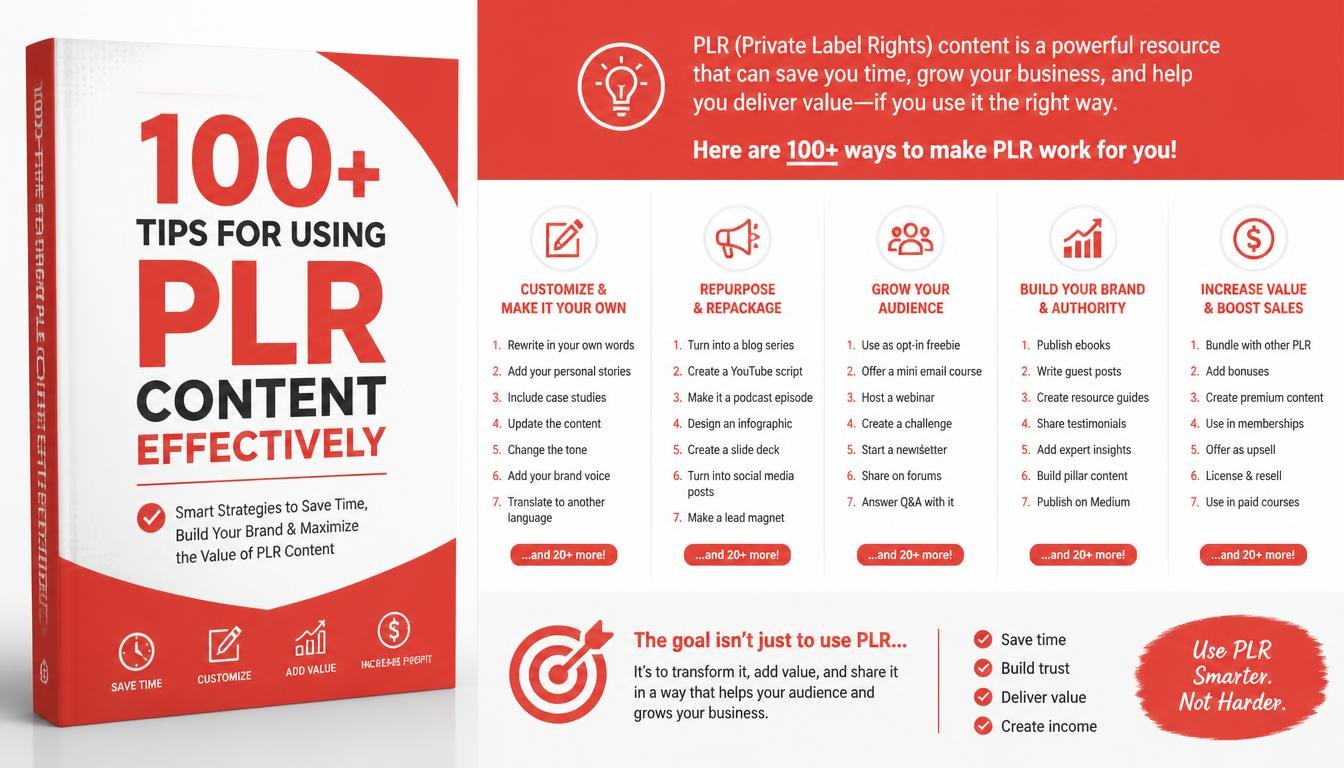

Private Label Rights (PLR) content can be a goldmine for entrepreneurs, bloggers, and online marketers—but only if it’s used wisely. Whether you’re looking to save time, grow your audience, or generate revenue, PLR gives you a head start by providing ready-made content that you can customize, repurpose, and monetize. However, simply copying and pasting PLR rarely delivers results. To truly maximize its potential, you need strategies for selecting high-quality PLR, transforming it into unique content, and leveraging it across multiple platforms. In this guide, we’ve compiled over 110 practical tips to help you use PLR effectively—covering everything from customization and repurposing to marketing, monetization, and advanced strategies—so you can turn PLR content into a powerful tool for your online business.
1. Selecting the Right PLR (1–20)
- Choose PLR that aligns with your niche or audience.
- Prioritize quality over the cheapest option.
- Verify the PLR license before purchasing.
- Avoid outdated PLR content.
- Read reviews of the PLR provider.
- Look for PLR with multimedia elements.
- Choose PLR that solves a specific problem.
- Test a sample before buying a large bundle.
- Check whether the content is overly recycled.
- Look for ready-made bonuses or templates.
- Choose PLR that can be repurposed easily.
- Check grammar and readability before purchasing.
- Make sure the content fits your brand style.
- Choose PLR from reputable providers.
- Look for opportunities to expand the content into multimedia.
- Evaluate the SEO potential of the PLR.
- Check whether the content can be updated easily.
- Verify that editable files are included.
- Prefer PLR that allows commercial use where permitted.
- Avoid overly generic PLR and look for niche-focused content.
2. Customizing PLR Content (21–40)
- Rewrite or paraphrase the content.
- Add your personal experiences or stories.
- Update statistics, facts, and examples.
- Add your own branding and voice.
- Change headlines and subheadings.
- Improve the formatting and layout.
- Split long PLR articles into smaller pieces.
- Combine multiple PLR products into one comprehensive guide.
- Translate PLR into another language where appropriate.
- Add calls to action that match your goals.
- Use bullet points and numbered lists to improve readability.
- Add images, charts, or infographics.
- Include original case studies.
- Personalize PLR emails for different subscriber segments.
- Update outdated advice and techniques.
- Add your own tips and insights.
- Turn short PLR articles into long-form content.
- Remove sections that are not relevant to your audience.
- Adapt PLR content for different platforms.
- Add quizzes, exercises, or worksheets.
3. Repurposing PLR Content (41–60)
- Turn PLR into blog posts.
- Create email newsletter sequences.
- Convert PLR into eBooks or PDFs.
- Create video scripts from PLR content.
- Turn PLR into social media posts.
- Create presentations and webinars.
- Turn PLR content into podcasts or audio lessons.
- Develop online courses using PLR as a foundation.
- Break long content into mini-posts.
- Create infographics and visual guides.
- Turn PLR into checklists and worksheets.
- Create cheat sheets from key information.
- Develop case studies or whitepapers.
- Build challenge programs from PLR content.
- Create scripts for webinars or live streams.
- Turn blog posts into social media threads.
- Reformat content for different subscriber segments.
- Transform PLR into FAQ sections.
- Use PLR to build membership-site resources.
- Create quizzes, games, or interactive content.
4. Monetizing PLR Content (61–80)
- Sell customized PLR eBooks or guides.
- Offer PLR-based email courses.
- Use PLR as bonuses for other products.
- Bundle multiple PLR products together.
- Sell customized PLR products under your brand.
- Use PLR to populate membership sites.
- Offer PLR-based content creation services.
- Sell PLR-based templates and worksheets.
- Monetize PLR-based blogs with ads or affiliate marketing.
- License customized content when the license permits it.
- Create paid newsletter series from PLR.
- Package PLR into niche-specific digital toolkits.
- Combine PLR with coaching services.
- Use PLR as part of a premium course.
- Sell customized PLR products through suitable marketplaces.
- Use PLR materials in private coaching programs.
- Build premium offers around customized PLR resources.
- Use PLR to supplement paid community content.
- Sell customized content products to relevant business customers.
- Bundle PLR with exclusive bonuses and original resources.
5. SEO and Marketing Tips for PLR (81–100)
- Optimize PLR content with relevant keywords.
- Rewrite and customize content to make it more original.
- Add useful internal and external links.
- Create SEO-friendly titles and meta descriptions.
- Promote your PLR-based content on social media.
- Use guest posting to attract relevant traffic.
- Build email funnels around your content.
- Test different headlines and calls to action.
- Repurpose content into multiple formats.
- Track performance with analytics.
- Add structured data where appropriate.
- Optimize images and media for search.
- Build topic clusters around related content.
- Localize content for regional audiences.
- Use PLR-based content to support affiliate offers.
- Experiment with different social platforms.
- Update important content regularly.
- Create landing pages from relevant PLR material.
- Use PLR as part of lead-magnet campaigns.
- Test different content and marketing approaches.
6. Advanced PLR Strategies (101–110)
- Combine multiple PLR products into a larger course or masterclass.
- Add interactive worksheets and progress trackers.
- Use PLR as inspiration rather than copying it word for word.
- Combine PLR with affiliate marketing where appropriate.
- Turn PLR into multi-day challenges or programs.
- Add your personality and brand story for authenticity.
- Create content around niche subtopics competitors overlook.
- Experiment with text, audio, video, and presentation formats.
- Customize PLR for different buyer personas.
- Keep your PLR library organized for efficient content production.
0 Comments