
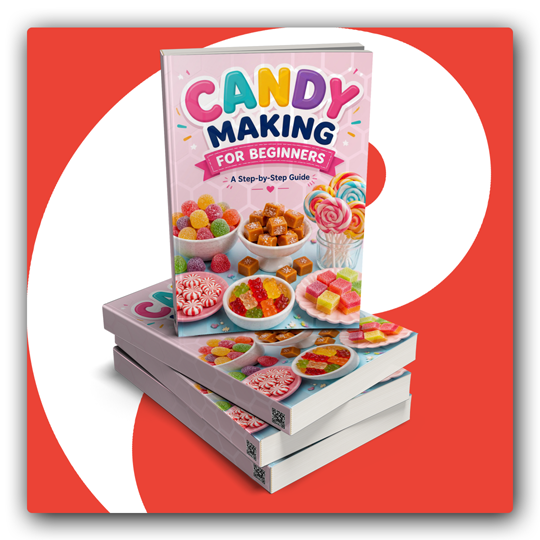
🍬 Candy Making for Beginners PLR eBook is a practical, beginner-friendly guide covering candy science, kitchen safety, tools, ingredients, sugar stages, caramels, fudge, hard candy, gummies, chocolate, troubleshooting, packaging, allergens, costing, and responsible selling. With 20 detailed chapters, useful worksheets, a 30-day action plan, and Private Label Rights included, you can edit, rebrand, publish, sell, bundle, or repurpose the content for baking, confectionery, and food-business audiences.
Candy Making for Beginners PLR Ebook – 48K Words
Original price was: $27.00.$9.99Current price is: $9.99.
50 in stock
Sale!
Full Description
🍬 Candy Making for Beginners PLR eBook
Help Beginners Understand the Science Behind Great Candy—and Turn the Content Into a Digital Product You Can Edit, Rebrand, Publish, and Sell
20 comprehensive chapters • Beginner-friendly instruction • Multiple candy styles • Troubleshooting guidance • Small-batch business basics • Private Label Rights included
Turn a Classic Kitchen Craft Into a Clear, Repeatable Learning Experience
Candy making can look deceptively simple.
Follow a recipe.
Heat the ingredients.
Pour the mixture.
Wait for it to cool.
Enjoy the finished candy.
However, even when beginners follow a recipe carefully, the results may still be:
✅ Grainy instead of smooth
✅ Sticky instead of crisp
✅ Too soft to hold its shape
✅ Too hard to cut or chew
✅ Dull instead of glossy
✅ Separated or greasy
✅ Cloudy instead of clear
✅ Difficult to remove from molds
✅ Crumbly instead of creamy
✅ Melted or damaged during storage
✅ Different from one batch to the next
Candy making is influenced by temperature, sugar concentration, crystallization, moisture, humidity, ingredient ratios, cooking time, mixing, cooling, storage, and equipment accuracy.
A recipe may explain what to do without explaining why each step matters.
Candy Making for Beginners removes much of that mystery.
This comprehensive PLR eBook teaches readers how candy ingredients and techniques work together so they can follow recipes more confidently, troubleshoot common problems, create useful batch records, improve consistency, and approach homemade candy with greater safety and control.
As the PLR buyer, you can edit the manuscript, add your branding, publish it under your name or business, sell the customized eBook, use it as a lead magnet, add it to a course or membership, or repurpose it into an entire collection of food, baking, confectionery, and small-business content according to the included license.
✨ Create a Valuable Candy-Making Product Without Writing It From Scratch
Developing a complete beginner candy-making guide requires much more than collecting recipes.
A useful resource must explain:
✅ How sugar and water behave during cooking
✅ Why temperature affects candy texture
✅ How crystallization can help or ruin a recipe
✅ Why accurate measurement matters
✅ How humidity affects hard candy
✅ Why some candies require stirring while others should remain undisturbed
✅ How dairy, fats, acids, syrups, and flavorings influence a formula
✅ Why chocolate must be handled differently from sugar candy
✅ How tempering affects chocolate texture and appearance
✅ Why cooling is part of the recipe
✅ How to identify the likely cause of a failed batch
✅ How to package different candy styles
✅ Why homemade shelf life should not be guessed
✅ How allergens and cross-contact should be managed
✅ What should be considered before selling homemade candy
With Candy Making for Beginners PLR eBook, the educational foundation has already been created for you.
Instead of starting with an empty document, you can focus on branding, design, original photographs, tested recipes, regional business information, supplier links, worksheets, bonus resources, and marketing.
🎯 What Readers Will Learn
Inside this beginner-friendly guide, readers will discover how to:
✅ Understand the major families of candy
✅ Learn how sugar, water, heat, and cooling affect texture
✅ Set up a safer candy-making workspace
✅ Handle hot syrup, steam, and melted ingredients more carefully
✅ Choose essential candy-making tools
✅ Use a candy thermometer correctly
✅ Measure ingredients by weight
✅ Understand traditional sugar stages
✅ Recognize the effects of altitude and weather
✅ Learn why unwanted crystallization occurs
✅ Encourage fine crystals when making fudge and fondant
✅ Prevent graininess in smooth candies
✅ Prepare chewy caramels and crisp toffees
✅ Make hard candy and lollipops
✅ Understand fudge and other crystalline candies
✅ Work with nuts, seeds, and brittle-style confections
✅ Explore marshmallows, nougat, and aerated candies
✅ Understand gelatin, pectin, and gelled candy systems
✅ Melt and temper chocolate
✅ Create truffles, ganache, dipped centers, and molded chocolates
✅ Combine flavors, colors, and textures
✅ Troubleshoot common candy failures
✅ Cool, cut, wrap, package, and store finished candy
✅ Create useful batch records
✅ Scale formulas more carefully
✅ Calculate ingredient and packaging costs
✅ Improve consistency across multiple batches
✅ Understand basic allergen responsibilities
✅ Prepare more responsibly for selling homemade candy
🧪 Learn the Science Without Turning the Book Into a Chemistry Textbook
Readers do not need to become professional food scientists to make better candy.
They do need to understand a few important principles.
The guide explains how:
✅ Water evaporates as syrup cooks
✅ Sugar concentration increases with temperature
✅ Higher temperatures generally create firmer finished textures
✅ Agitation may encourage crystal formation
✅ Interfering ingredients can influence crystallization
✅ Humidity may soften moisture-sensitive candies
✅ Cooling conditions affect structure
✅ Ingredient substitutions can change the finished product
✅ Chocolate can seize when exposed to small amounts of water
✅ Filled chocolates may have different storage needs from solid chocolate
These concepts are explained in practical language and connected to familiar candy styles.
Readers learn not only what a recipe asks them to do, but why timing, temperature, mixing, cooling, and storage instructions matter.
🔁 A Repeatable Process for Better Candy Making
The strongest benefit of this guide is not simply learning the names of more candies.
Readers learn a process they can apply to almost any confection:
1. Identify the Candy Family
Determine whether the recipe is crystalline, noncrystalline, aerated, gelled, chocolate-based, nut-based, or another style.
2. Understand the Functional Ingredients
Learn what the sugar, syrup, dairy, fat, acid, gelatin, pectin, chocolate, nuts, or flavorings contribute.
3. Prepare the Workspace
Set up tools, ingredients, molds, cutting surfaces, and packaging before the cooking stage begins.
4. Identify the Critical Endpoint
Understand whether success depends on temperature, appearance, texture, timing, setting, or a combination of factors.
5. Follow the Correct Mixing and Cooling Pattern
Some candies require careful stirring, while others can crystallize if disturbed at the wrong time.
6. Record the Batch
Document ingredient weights, temperatures, cooking times, weather, equipment, and observations.
7. Evaluate the Candy After Storage
Texture, flavor, moisture, appearance, and packaging performance may change after several hours or days.
This method gives beginners a practical way to improve future batches instead of repeating the same mistakes.
🔥 Candy-Making Safety Matters
Boiling sugar syrup can reach temperatures much higher than boiling water.
It may cling to skin and continue transferring heat, making sugar burns particularly serious.
The guide encourages readers to:
✅ Prepare ingredients before heating begins
✅ Keep children and pets away from the cooking area
✅ Use stable cookware with sufficient capacity
✅ Avoid leaning directly over boiling syrup
✅ Use suitable heat-resistant tools
✅ Keep pot handles positioned safely
✅ Add liquids cautiously where a recipe requires them
✅ Watch for steam when adding cream or butter
✅ Avoid touching hot candy to test texture
✅ Place hot cookware on heat-resistant surfaces
✅ Allow candy and equipment to cool before handling
✅ Keep distractions away from the active cooking area
The eBook provides general educational guidance, but readers must still follow manufacturer instructions, food-safety practices, and appropriate local requirements.
🏷️ Private Label Rights Included
This is a complete PLR eBook, allowing you to transform professionally structured candy-making content into a customized digital product.
Subject to the included license, you can:
✅ Edit or rewrite the manuscript
✅ Add your name or pen name
✅ Add your company or publishing brand
✅ Insert your logo and contact information
✅ Change the title and subtitle
✅ Design a completely new cover
✅ Apply your preferred colors, fonts, and layout
✅ Rearrange, remove, shorten, or expand chapters
✅ Add your own tested candy recipes
✅ Include original photographs
✅ Add preferred tools and ingredient suppliers
✅ Create branded recipe cards
✅ Develop batch-record worksheets
✅ Add regional food-business information
✅ Insert links to your products or services
✅ Include suitable affiliate links
✅ Publish and sell the customized eBook
✅ Use it as a premium lead magnet
✅ Add it to a membership website
✅ Include it as a course or workshop bonus
✅ Turn chapters into blog articles
✅ Create newsletters and email lessons
✅ Produce videos, podcasts, or presentations
✅ Develop worksheets, checklists, and planners
✅ Build educational social-media content
✅ Bundle it with properly licensed recipes or templates
The customized finished product may be sold according to the terms of the included license.
The underlying Private Label Rights may not automatically be transferred, resold, or passed to customers unless a separate reseller or transferable-rights license expressly permits that use.
📖 Inside the 20-Chapter Guide
Chapter 1: Candy-Making Fundamentals
Introduces the major candy families and explains how ingredients, heat, moisture, concentration, mixing, and cooling create different textures.
Chapter 2: Kitchen Safety for Hot Sugar and Melted Ingredients
Covers workspace organization, hot syrup, steam, splashes, protective habits, hygiene, cleanup, and avoiding common kitchen hazards.
Chapter 3: Essential Candy-Making Tools
Explains saucepans, thermometers, scales, spatulas, brushes, molds, frames, mats, mixers, dipping tools, and useful specialty equipment.
Chapter 4: Understanding Candy Ingredients
Introduces sugars, syrups, dairy products, fats, chocolate, nuts, fruit, gelatin, pectin, acids, salt, colors, and flavorings.
Chapter 5: Sugar Stages and Temperature
Explains classic sugar stages, temperature endpoints, recipe interpretation, thermometer accuracy, altitude, equipment, and weather effects.
Chapter 6: Understanding Crystallization
Shows why crystals are desirable in some candies and unwanted in others, including practical methods for encouraging or limiting crystal formation.
Chapter 7: Caramels and Toffees
Explores caramelization, dairy-based caramel, chewy texture, firm texture, browning, temperature control, cutting, wrapping, and common failures.
Chapter 8: Hard Candy and Lollipops
Covers hard-crack syrup, flavor and acid timing, coloring, pouring, molds, sticks, humidity, storage, and sharp-edge considerations.
Chapter 9: Fudge, Fondant, and Crystalline Candies
Explains controlled crystallization, cooking, cooling, beating, setting, cutting, cream centers, and troubleshooting grainy or soft fudge.
Chapter 10: Brittles, Pralines, and Nut Candies
Introduces nut preparation, brittle structure, seed confections, praline-style candies, clusters, moisture control, and storage quality.
Chapter 11: Marshmallows, Nougat, Divinity, and Aerated Candy
Explains how air creates texture and covers whipping, hot syrup, foam stability, mixer safety, cutting, coating, and batch control.
Chapter 12: Gummies, Fruit Jellies, and Gelled Candy
Introduces gelatin, pectin, fruit purées, acidity, setting, molding, coating, moisture, texture, and shelf-life considerations.
Chapter 13: Chocolate Basics
Explains chocolate composition, melting, tempering, working temperatures, seizing, bloom, cooling, handling, and storage.
Chapter 14: Truffles, Ganache, Dipped Centers, and Molded Chocolates
Covers ganache ratios, rolling, coating, dipping, molded shells, filled chocolates, finishing, storage, and perishable ingredients.
Chapter 15: Flavor, Color, and Creative Candy Design
Helps readers combine flavors, colors, textures, shapes, themes, and presentation ideas into more cohesive candy collections.
Chapter 16: Troubleshooting Candy Problems
Addresses graininess, stickiness, separation, dull chocolate, weak setting, excessive hardness, softness, cloudiness, bloom, and storage damage.
Chapter 17: Cooling, Cutting, Wrapping, and Storage
Explains why cooling is part of the recipe and covers portioning, wrappers, containers, moisture barriers, labeling, and storage conditions.
Chapter 18: Allergens and Food Safety
Introduces common allergens, cross-contact, hygiene, perishable ingredients, refrigeration, transport, gifting, and responsible communication.
Chapter 19: Scaling, Batch Records, and Consistency
Explains weight-based formulas, equipment capacity, production notes, quality checks, ingredient traceability, and why scaling may require fresh testing.
Chapter 20: Costing, Packaging, Labeling, and Selling
Introduces material costs, labor, overhead, waste, packaging, pricing, labeling, allergens, customer communication, and local business requirements.
📋 Practical Supporting Resources Included
The eBook contains useful resources designed to help readers practice, document, and improve their candy-making process.
These include:
✅ Detailed table of contents
✅ Educational and safety disclaimer
✅ Plain-language confectionery glossary
✅ Beginner tips throughout every chapter
✅ Practical examples
✅ Important warning callouts
✅ Common mistakes to avoid
✅ Best-practice guidance
✅ Chapter summaries
✅ Action checklists
✅ Candy-family comparison guide
✅ Kitchen-safety checklist
✅ Essential-tool checklist
✅ Ingredient-function reference
✅ Sugar-stage quick guide
✅ Thermometer-testing worksheet
✅ Crystallization troubleshooting sheet
✅ Caramel batch record
✅ Hard-candy preparation checklist
✅ Fudge troubleshooting guide
✅ Chocolate-tempering record
✅ Ganache planning worksheet
✅ General candy batch-record template
✅ Storage and packaging checklist
✅ Allergen-awareness worksheet
✅ Costing calculator framework
✅ Small-batch production checklist
✅ Frequently asked questions
✅ Complete 30-day candy-making action plan
🌟 Why This PLR eBook Is Different
Many candy-making resources fall into one of two categories.
They are either thin recipe collections that provide little explanation, or highly technical confectionery manuals that may feel overwhelming to beginners.
Candy Making for Beginners sits between those extremes.
The guide:
✅ Explains important candy science in plain language
✅ Covers multiple confectionery categories
✅ Connects principles to practical kitchen decisions
✅ Encourages accurate measurement
✅ Promotes batch records and repeatability
✅ Teaches structured troubleshooting
✅ Includes safety and allergen awareness
✅ Covers packaging and storage
✅ Introduces business considerations responsibly
✅ Avoids promising effortless success
The content does not:
❌ Promise that every recipe will work in every kitchen
❌ Treat thermometer readings as the only quality indicator
❌ Encourage touching hot syrup to test it
❌ Suggest guessing commercial shelf life
❌ Ignore humidity and storage conditions
❌ Treat all ingredient substitutions as interchangeable
❌ Guarantee legal permission to sell homemade candy
❌ Present kitchen production as automatically commercial-ready
❌ Promise guaranteed income from a candy business
Instead, readers receive a practical learning framework they can use when working with tested recipes and developing better kitchen habits.
👥 Who Is the Reader Version For?
The customized reader edition may appeal to:
✅ Complete candy-making beginners
✅ Home bakers
✅ Creative hobbyists
✅ Seasonal gift makers
✅ Chocolate enthusiasts
✅ Parents preparing supervised kitchen projects
✅ Market and fair sellers
✅ Aspiring confectionery-business owners
✅ Food-content audiences
✅ Workshop participants
✅ Membership communities
✅ Readers who want more consistent results
✅ People interested in learning confectionery principles
💻 Who Is This PLR Product For?
This PLR eBook is ideal for:
✅ PLR store owners
✅ Digital-product sellers
✅ Baking bloggers
✅ Food-content publishers
✅ Candy and chocolate suppliers
✅ Recipe website owners
✅ Course creators
✅ Membership-site owners
✅ Workshop facilitators
✅ Small-food-business educators
✅ Creative-business coaches
✅ Newsletter publishers
✅ Holiday-content marketers
✅ Baking and craft retailers
✅ Affiliate marketers
🔄 Turn One PLR eBook Into Multiple Products
The content can be repurposed into:
✅ A branded beginner candy-making eBook
✅ A 20-part confectionery blog series
✅ A candy-science mini guide
✅ A sugar-stage quick-reference sheet
✅ A candy troubleshooting workbook
✅ A batch-record template pack
✅ A chocolate-tempering guide
✅ A caramel-making mini eBook
✅ A hard-candy preparation checklist
✅ A fudge troubleshooting guide
✅ A holiday candy-planning workbook
✅ An allergen-awareness checklist
✅ A candy-packaging guide
✅ A 30-day candy-making challenge
✅ A beginner email course
✅ Workshop or presentation materials
✅ Video or podcast lesson scripts
✅ Educational social-media posts
✅ A food-business starter bundle
✅ A baking-membership content series
One comprehensive PLR eBook can provide months of useful content for your digital store, blog, mailing list, course, workshop, membership, or food brand.
✨ Customize It for Your Brand
You are not limited to publishing the eBook exactly as supplied.
You can make the finished product more distinctive by:
✅ Choosing a new title and subtitle
✅ Designing a professional cover
✅ Adding your logo and brand colors
✅ Including original candy photographs
✅ Adding your own tested recipes
✅ Creating printable recipe cards
✅ Listing preferred equipment and suppliers
✅ Including properly disclosed affiliate links
✅ Developing branded batch records
✅ Adding regional ingredient alternatives
✅ Including local food-business information
✅ Creating holiday or seasonal editions
Potential customized editions could include:
✅ Candy Making for Complete Beginners
✅ The Beginner’s Confectionery Handbook
✅ From Sugar to Finished Candy
✅ Homemade Candy Made Simple
✅ The Science of Better Candy
✅ The Complete Candy-Making Workshop
✅ Make, Package, and Sell Homemade Candy
✅ The 30-Day Candy-Making Challenge
Thoughtful customization can make the finished product more relevant, recognizable, and valuable to a specific audience.
💰 Commercial Uses
Subject to the included PLR license, the customized product may be used to:
✅ Sell as a standalone digital eBook
✅ Grow a food or baking mailing list
✅ Support a candy-making course
✅ Add value to a paid membership
✅ Promote confectionery tools and ingredients
✅ Support appropriate affiliate marketing
✅ Bundle with properly licensed recipe cards
✅ Include with a candy-making starter kit
✅ Use as workshop material
✅ Offer as a customer bonus
✅ Create a seasonal holiday product
✅ Build a baking or confectionery resource library
✅ Develop a long-term candy-making content campaign
❓ Frequently Asked Questions
Is this a PLR eBook?
Yes. The product includes Private Label Rights, allowing the licensed buyer to edit, customize, rebrand, publish, sell, and repurpose the finished content according to the included license.
Is the manuscript editable?
Yes. It is supplied in Microsoft Word DOCX format for straightforward editing and rebranding.
Does the eBook include all 20 chapters?
Yes. It covers candy science, safety, tools, ingredients, sugar stages, crystallization, major candy families, troubleshooting, storage, allergens, production, and selling.
Is it suitable for complete beginners?
Yes. Technical terms and confectionery principles are explained in clear, approachable language.
Is this only a recipe book?
No. It focuses on the principles, techniques, safety habits, troubleshooting methods, and documentation practices that help readers understand tested recipes.
Can I add my own candy recipes?
Yes. You may add original or properly licensed recipes during customization.
Can I change the title and cover?
Yes. You may rename the eBook, create a new cover, and apply your branding according to the license.
Can I add my name or business as the author?
Yes. You may add your name, pen name, company, logo, website, and contact information.
Can I sell the customized eBook?
Yes. You may sell the completed customized product subject to the terms of the included PLR license.
Can my customers receive PLR rights?
Not automatically. A separate reseller or transferable-rights license would be required.
Can chapters be reused separately?
Yes. Subject to the license, chapters may be adapted into articles, emails, videos, lessons, presentations, worksheets, and social content.
Can I include affiliate links?
Yes, provided the products are relevant, claims are accurate, and appropriate affiliate disclosures are included.
Does the eBook guarantee successful batches?
No. Results can vary because of ingredients, equipment, measurements, technique, altitude, weather, temperature accuracy, and storage conditions.
Does it provide commercial shelf-life testing?
No. Commercial shelf-life decisions may require professional food-safety evaluation, laboratory testing, or other qualified guidance.
Does it guarantee that readers can legally sell homemade candy?
No. Food-production, cottage-food, labeling, licensing, tax, allergen, insurance, and inspection rules vary by jurisdiction.
📝 Simple Customization Workflow
Use this process to transform the manuscript into a finished candy-making product:
✅ Review the included PLR license
✅ Define the intended audience
✅ Decide how the product will be sold or distributed
✅ Choose a new title and subtitle if needed
✅ Design a branded cover
✅ Add your author or business information
✅ Insert your logo, website, and contact details
✅ Add original candy photographs
✅ Include your own tested recipes
✅ Create branded batch-record worksheets
✅ Add local ingredient and supplier resources
✅ Review all safety and allergen information
✅ Verify local food-business requirements
✅ Strengthen the educational disclaimer
✅ Proofread and publish the customized product
📦 What You Receive
Your package includes:
✅ The complete Candy Making for Beginners PLR eBook
✅ 20 comprehensive chapters
✅ Beginner-friendly candy-making education
✅ Candy-science fundamentals
✅ Kitchen-safety guidance
✅ Essential equipment information
✅ Ingredient education
✅ Sugar-stage explanations
✅ Crystallization guidance
✅ Caramel and toffee information
✅ Hard-candy and lollipop education
✅ Fudge and fondant guidance
✅ Nut-candy information
✅ Marshmallow and aerated-candy education
✅ Gummy and fruit-jelly guidance
✅ Chocolate-melting and tempering principles
✅ Truffle and ganache education
✅ Flavor and texture design guidance
✅ Troubleshooting support
✅ Packaging and storage information
✅ Allergen and food-safety awareness
✅ Scaling and batch-record guidance
✅ Costing and responsible-selling fundamentals
✅ Complete 30-day action plan
✅ Practical worksheets and checklists
✅ Frequently asked questions
✅ Confectionery glossary
✅ Editable DOCX format
✅ Private Label Rights documentation
🚀 Build a Valuable Candy-Making Product Without Starting From a Blank Page
Writing a comprehensive beginner confectionery guide could require weeks or months of research, planning, drafting, testing, editing, organization, and resource creation.
With Candy Making for Beginners PLR eBook, you receive a substantial foundation that can be customized for your food, baking, craft, or small-business audience.
Use it to launch a digital product, grow your mailing list, promote confectionery supplies, support a workshop, strengthen a membership, educate customers, or create months of useful candy-making content.
Edit it.
Customize it.
Brand it.
Review it.
Publish it.
Sell it.
Repurpose it into an entire candy-making content collection.
🛒 Get Candy Making for Beginners PLR eBook Today
Start with a professionally structured, beginner-friendly candy-making resource and transform it into a customized digital product for home bakers, creative hobbyists, gift makers, chocolate enthusiasts, workshop participants, and aspiring confectionery-business owners.
GET INSTANT ACCESS TODAY
⚠️ Important Candy-Making, Food-Safety, and Business Disclaimer
This product is provided for general educational and informational purposes only.
Candy making involves boiling sugar syrup, steam, heated fats, melted chocolate, hot equipment, sharp tools, allergens, perishable ingredients, and food-safety responsibilities.
Boiling sugar can cause severe burns and may remain attached to skin. Readers should use suitable equipment, maintain an organized workspace, keep children and pets away from active cooking areas, and follow appropriate safety procedures.
The eBook does not provide legal, regulatory, medical, nutritional, allergen-management, food-science, laboratory, insurance, tax, or individualized business advice.
Ingredient quality, measurements, altitude, humidity, equipment, technique, cooking temperature, cooling, packaging, and storage conditions may affect results.
Homemade shelf life should not be guessed, especially for products containing dairy, fruit purées, cream, ganache, eggs, or other potentially perishable ingredients.
Businesses may require formal recipes, traceability records, allergen controls, validated processes, shelf-life assessment, suitable facilities, permits, inspections, insurance, compliant labels, and professional advice.
Food-production, cottage-food, labeling, allergen, tax, insurance, delivery, and sales rules vary by jurisdiction and may change over time.
PLR buyers are responsible for reviewing, testing, fact-checking, updating, customizing, and localizing the content before publication.
No food-safety, batch-success, shelf-life, customer-satisfaction, legal-compliance, business, marketing, ranking, sales, revenue, profit, or income outcome is promised or guaranteed.
🎁 Exclusive Bonuses Included!
When you grab this PLR eBook, you’ll also receive a ready-to-use sales page, a cheat sheet, and a high-quality promotional image—everything you need to sell it quickly and effortlessly!
🔥 LIMITED TIME OFFER! 🔥
Grab this complete PLR eBook for only $9.99— exclusively for the first 50 buyers! Don’t miss your chance to own this 20-chapter guide and claim full PLR rights at this unbeatable price.
License Details:
 You Can:
- Sell the product and retain 100% of the profits.
- Edit, customize, rebrand, and modify the content to suit your business.
- Divide the content into smaller reports, guides, or digital products.
- Bundle the product with other PLR products or resources.
- Include the product in a paid monthly membership site.
- Repurpose the content into videos, audio content, PDFs, or other formats.
- Use excerpts from the content in blog posts, emails, lead magnets, or free downloads.
- Transfer PLR, Resale Rights, or Master Resell Rights to others, where permitted by the applicable license.
 You Cannot:
- Sell the product for less than the minimum advertised price of $9.99.
- Give the product away for free.
- Offer 100% affiliate commissions on the product.
- Include the product in an existing paid membership that was established before your purchase without paying the applicable additional licensing fee.
PLEASE PAY ATTENTION TO THE LICENSE TERMS MENTIONED ABOVE
If you want to use the content in a way that is not specifically stated within the License, please ask if you can before you do so.
Related products
-
Sale!

Breaking Free from Anxiety Disorders PLR Ebook – 12K Words
Original price was: $27.00.$9.99Current price is: $9.99. -
Sale!
Amigurumi Mastery: A Complete Beginner-to-Expert Guide PLR Ebook – 16K Words
Original price was: $17.00.$9.99Current price is: $9.99. -
Sale!
Mastering the Art of Airbrushing PLR Ebook – 12K Words
Original price was: $17.00.$9.99Current price is: $9.99.
Reviews