
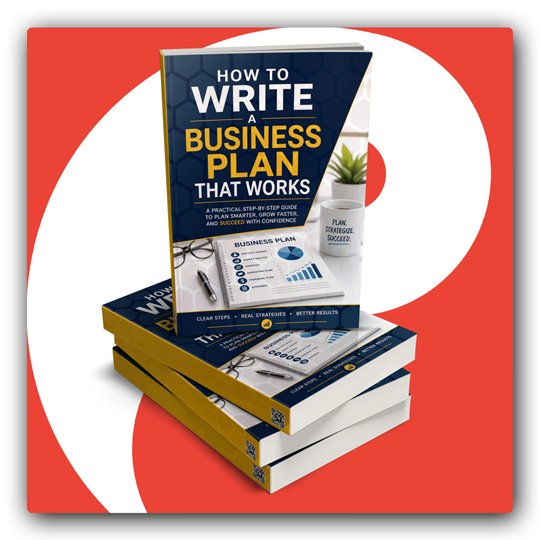
📊 How to Write a Business Plan That Works PLR eBook is a practical, beginner-friendly guide covering business models, market research, competitors, target customers, pricing, marketing, sales, operations, startup costs, funding, financial forecasts, and risk planning. With 20 detailed chapters, useful worksheets, a 30-day action plan, and Private Label Rights included, you can edit, rebrand, publish, sell, bundle, or repurpose the content for entrepreneurs, coaches, consultants, and business audiences.
How to Write a Business Plan That Works PLR Ebook – 48K Words
Original price was: $27.00.$9.99Current price is: $9.99.
50 in stock
Sale!
Full Description
📊 How to Write a Business Plan That Works PLR eBook
Help Aspiring Entrepreneurs Turn a Business Idea Into a Practical Plan—and Transform the Content Into a Digital Product You Can Edit, Rebrand, Publish, and Sell
20 comprehensive chapters • Beginner-friendly guidance • Research and financial-planning methods • Practical checklists • 30-day action plan • Private Label Rights included
🚀 Give Entrepreneurs a Clearer Way to Plan Before They Invest
Many aspiring entrepreneurs know they need a business plan.
What they often do not know is:
✅ Which planning format to use
✅ What information belongs in each section
✅ How much research is enough
✅ How to define the target customer
✅ How to analyze competitors properly
✅ How to choose a pricing model
✅ How to estimate startup costs
✅ How to create realistic sales forecasts
✅ How to separate profit from cash flow
✅ How to calculate break-even
✅ How to identify important risks
✅ How to prepare for lenders or investors
✅ How to use the plan after the business launches
Many business-plan templates simply provide empty headings.
Readers are told to write a market analysis, marketing strategy, operations plan, or financial forecast without first being shown how those sections connect.
The result may look complete while still being built on unsupported assumptions.
How to Write a Business Plan That Works provides a more practical approach.
This comprehensive PLR eBook teaches readers how to turn an early business idea into a structured decision-making system covering customers, competition, offers, pricing, marketing, sales, operations, staffing, risks, startup costs, funding, and financial forecasts.
As the PLR buyer, you can customize the manuscript, add your branding, publish it under your name or business, sell the completed eBook, use it as a lead magnet, include it in a course or coaching program, or repurpose it into an entire business-planning content collection according to the included license.
✨ A Business Plan Should Guide Decisions—Not Just Fill Pages
A useful business plan is more than a document prepared for a bank, investor, teacher, or funding application.
It should help the business owner:
✅ Clarify the business model
✅ Test assumptions
✅ Understand the customer problem
✅ Compare alternatives and competitors
✅ Estimate costs and capacity
✅ Identify operational requirements
✅ Set realistic milestones
✅ Track financial performance
✅ Recognize risk early
✅ Decide when the plan needs to change
The eBook teaches readers to treat business planning as an ongoing process rather than a one-time writing exercise.
The goal is not to predict the future perfectly.
The goal is to make assumptions visible, test them against evidence, and improve decisions as new information becomes available.
🎯 What Readers Will Learn
Inside this beginner-friendly guide, readers will discover how to:
✅ Choose between lean, traditional, and hybrid business plans
✅ Define the business concept clearly
✅ Explain how the business will create and deliver value
✅ Identify the customer problem
✅ Write a practical value proposition
✅ Research market demand
✅ Define realistic market boundaries
✅ Analyze direct competitors
✅ Identify indirect alternatives
✅ Divide a broad audience into useful customer segments
✅ Map the customer buying process
✅ Design products and services
✅ Choose pricing and revenue models
✅ Calculate contribution margin
✅ Understand unit economics
✅ Identify profit drivers
✅ Develop a clear market position
✅ Build a focused marketing strategy
✅ Design a repeatable sales process
✅ Create an operations plan
✅ Plan roles, responsibilities, and hiring
✅ Identify legal, compliance, insurance, and operational risks
✅ Calculate startup costs
✅ Estimate working capital
✅ Determine possible funding needs
✅ Build connected financial forecasts
✅ Distinguish revenue, profit, and cash flow
✅ Understand the purpose of a balance sheet
✅ Calculate break-even
✅ Build base, cautious, and optimistic scenarios
✅ Test sensitive assumptions
✅ Write the executive summary
✅ Prepare for funding conversations
✅ Turn the completed plan into a living management system
🔍 Replace Guesswork With Evidence
Business plans often become unreliable when forecasts are based on enthusiasm rather than operating assumptions.
The guide encourages readers to ask practical questions such as:
✅ How many potential customers can the business realistically reach?
✅ How many leads may become paying customers?
✅ How often might customers buy?
✅ What is the expected selling price?
✅ What does each sale cost to deliver?
✅ How much capacity is available?
✅ When will customers pay?
✅ When must suppliers and staff be paid?
✅ Which fixed expenses continue even when sales are slow?
✅ Which assumptions would cause the most damage if they were wrong?
Readers learn that financial projections should grow from the business model, customer behavior, pricing, capacity, expenses, and timing—not from an arbitrary growth percentage.
🏷️ Private Label Rights Included
This is a complete PLR eBook, allowing you to transform professionally structured business-planning content into a customized digital product.
Subject to the included license, you can:
✅ Edit or rewrite the content
✅ Add your name or pen name
✅ Add your business or brand
✅ Insert your logo and contact information
✅ Change the title and subtitle
✅ Create a completely new cover
✅ Apply your preferred colors, fonts, and layout
✅ Rearrange, remove, shorten, or expand chapters
✅ Add your own business-plan methodology
✅ Include original examples and case studies
✅ Add local startup resources
✅ Insert branded worksheets and templates
✅ Link to your products or services
✅ Include appropriate affiliate recommendations
✅ Publish and sell the customized eBook
✅ Use it as a lead magnet
✅ Add it to a membership website
✅ Include it as a course or coaching bonus
✅ Use chapters as client pre-work
✅ Turn chapters into blog posts
✅ Create newsletters and email lessons
✅ Produce videos, podcasts, or presentations
✅ Develop checklists, workbooks, and templates
✅ Build educational social-media content
✅ Bundle it with entrepreneurship products
The customized finished product may be sold according to the terms of the included license.
The underlying Private Label Rights may not automatically be transferred, resold, or passed to customers unless a separate reseller license expressly permits that use.
📖 Inside the 20-Chapter Guide
Chapter 1: What a Business Plan Must Actually Do
Reframes the business plan as a practical tool for testing assumptions, allocating resources, communicating priorities, and identifying risk.
Chapter 2: Choosing the Right Planning Format
Compares lean, traditional, and hybrid plans so readers can choose the level of detail appropriate for their business and audience.
Chapter 3: Defining the Business Concept and Model
Shows how to explain who the business serves, what it offers, how value is delivered, and how the business expects to earn revenue.
Chapter 4: Defining the Customer Problem and Value Proposition
Helps readers connect the business idea to a meaningful customer problem and communicate the proposed benefit clearly.
Chapter 5: Conducting Market Research That Supports Decisions
Introduces practical research methods for studying demand, market size, customer behavior, trends, barriers, and uncertainty.
Chapter 6: Analyzing Competitors and Alternatives
Explains direct competitors, indirect alternatives, switching barriers, comparison factors, and opportunities for differentiation.
Chapter 7: Defining Target Customers and Segments
Shows how to divide a broad market into practical groups with different needs, behaviors, economics, and buying processes.
Chapter 8: Designing the Offer, Pricing, and Revenue Model
Connects the product or service to customer value, delivery cost, revenue timing, capacity, and pricing structure.
Chapter 9: Understanding Unit Economics and Profit Drivers
Explains revenue, variable cost, contribution margin, fixed cost, customer acquisition, retention, capacity, and profitability.
Chapter 10: Positioning the Brand and Competitive Advantage
Helps readers create a market position that customers can understand and the business can consistently support.
Chapter 11: Building a Practical Marketing Strategy
Covers customer messages, channels, content, lead generation, budget, experiments, and marketing measurement.
Chapter 12: Designing the Sales Process and Customer Journey
Shows how to move prospects from awareness to qualification, purchase, onboarding, delivery, and follow-up.
Chapter 13: Writing the Operations Plan
Explains processes, suppliers, facilities, technology, inventory, quality control, capacity, and service standards.
Chapter 14: Planning the Team, Roles, and Management System
Covers responsibilities, decision-making, missing capabilities, hiring triggers, accountability, and organizational development.
Chapter 15: Addressing Legal, Compliance, Insurance, and Risk
Helps readers identify major categories of risk and recognize when qualified local advice is necessary.
Chapter 16: Calculating Startup Costs and Funding Needs
Shows how to estimate one-time costs, recurring expenses, working capital, contingencies, and total funding requirements.
Chapter 17: Building Sales, Profit, Cash-Flow, and Balance-Sheet Forecasts
Explains how connected financial projections are created from realistic operational assumptions.
Chapter 18: Using Break-Even, Scenario, and Sensitivity Analysis
Shows readers how to test the business under different prices, sales levels, costs, delays, and growth assumptions.
Chapter 19: Writing the Executive Summary and Preparing for Funding Conversations
Helps readers summarize the business logic, evidence, team, economics, milestones, and funding request clearly.
Chapter 20: Turning the Plan Into a Living Management System
Explains milestones, dashboards, review cycles, variance analysis, decision rules, and disciplined plan updates.
📋 Supporting Resources Included
The eBook contains practical resources designed to help readers move from ideas to a completed plan.
These include:
✅ Detailed table of contents
✅ Plain-language business-planning glossary
✅ Practical scenarios and beginner examples
✅ Important warnings
✅ Common mistakes to avoid
✅ Chapter summaries
✅ Action checklists
✅ Business-concept worksheet
✅ Business-model planning prompts
✅ Customer-problem worksheet
✅ Value-proposition builder
✅ Market-research planner
✅ Customer-interview questions
✅ Competitor-analysis table
✅ Customer-segmentation worksheet
✅ Offer-design planner
✅ Pricing and revenue-model comparison
✅ Unit-economics worksheet
✅ Marketing-strategy planner
✅ Sales-process map
✅ Operations-planning checklist
✅ Team and role planner
✅ Risk register
✅ Startup-cost worksheet
✅ Funding-needs planner
✅ Financial-assumption checklist
✅ Break-even exercise
✅ Scenario-planning worksheet
✅ Executive-summary checklist
✅ Business-plan quality review
✅ Complete 30-day action plan
✅ Frequently asked questions
🌟 Why This PLR eBook Is Different
Many business-planning products focus on completing individual sections without explaining the relationships between them.
How to Write a Business Plan That Works connects the complete planning system.
Readers learn how:
✅ Customer evidence affects sales assumptions
✅ Pricing affects demand and contribution margin
✅ Sales volume affects operational capacity
✅ Capacity affects staffing and equipment
✅ Staffing affects expenses
✅ Expenses affect cash requirements
✅ Payment timing affects working capital
✅ Risk affects contingency planning
✅ Funding affects milestones and ownership decisions
The guide does not present a forecast as a guaranteed result.
Instead, it teaches readers to make assumptions transparent and test how changing those assumptions affects the business.
The content also avoids:
❌ Guaranteed funding claims
❌ Guaranteed profit claims
❌ Invented success statistics
❌ Unrealistic growth projections
❌ Claims that planning removes all risk
❌ One-size-fits-all legal guidance
❌ Confusing profit with cash
❌ Treating the plan as permanently fixed
This creates a more practical, credible, and responsible resource for beginning entrepreneurs.
👥 Who Is the Reader Version For?
The customized reader edition may appeal to:
✅ First-time entrepreneurs
✅ Side-hustle founders
✅ Freelancers building a structured business
✅ Consultants developing a new service
✅ Small-business owners seeking clearer direction
✅ Startups preparing for funding conversations
✅ Students studying entrepreneurship
✅ Adult learners
✅ Creators turning skills or audiences into businesses
✅ Local business owners planning expansion
✅ Founders developing a new product or service
✅ Anyone who needs to organize a business idea
💻 Who Is This PLR Product For?
This PLR eBook is ideal for:
✅ PLR store owners
✅ Digital-product sellers
✅ Business coaches
✅ Startup consultants
✅ Entrepreneurship educators
✅ Course creators
✅ Membership-site owners
✅ Small-business publishers
✅ Marketing agencies
✅ Freelancer communities
✅ Business bloggers
✅ Newsletter publishers
✅ Lead-generation businesses
✅ Community training organizations
✅ Career and professional-development brands
✅ Virtual assistants serving entrepreneurs
🔄 Turn One PLR eBook Into Multiple Products
The content can be repurposed into:
✅ A branded business-planning eBook
✅ A 20-part business blog series
✅ A 30-day business-plan email challenge
✅ A complete business-plan workbook
✅ A lean-planning mini guide
✅ A customer-research workbook
✅ A competitor-analysis template
✅ A value-proposition guide
✅ A pricing and unit-economics mini eBook
✅ A marketing-strategy workbook
✅ A sales-process planning guide
✅ An operations-planning checklist
✅ A startup-cost worksheet pack
✅ A financial-planning companion guide
✅ A funding-preparation workbook
✅ A business-plan review service resource
✅ A workshop or masterclass
✅ Podcast or video lesson scripts
✅ Social-media planning tips
✅ A coaching or course bonus
✅ A membership content library
One comprehensive PLR eBook can provide months of educational content for your website, email list, consulting business, course, membership, digital store, or social-media channels.
✨ Customize It for Your Audience
You are not limited to publishing the eBook exactly as supplied.
You can create a more distinctive edition by:
✅ Choosing a new title and subtitle
✅ Designing a fresh cover
✅ Adding your logo and brand colors
✅ Including your business-planning philosophy
✅ Adding original case studies
✅ Creating branded worksheets
✅ Including local startup resources
✅ Linking to your consulting services
✅ Promoting a business-planning course
✅ Adding downloadable templates
✅ Recommending useful software or tools
✅ Including appropriate affiliate links
✅ Creating niche-specific editions
✅ Adding country-specific compliance guidance
✅ Including examples for local businesses
✅ Adding financial spreadsheet companions
Potential customized editions could include:
✅ The Beginner’s Business Plan Blueprint
✅ Business Planning for Freelancers
✅ The Small-Business Planning Guide
✅ How to Plan a Successful Side Business
✅ The Startup Business Plan Workbook
✅ Business Planning for Coaches and Consultants
✅ How to Write a Business Plan for Funding
✅ The Lean Business Planning Guide
Thoughtful customization can make the finished product more relevant, recognizable, and valuable to a specific market.
💰 Commercial Uses
Subject to the included PLR license, the customized product may be used to:
✅ Sell as a standalone digital eBook
✅ Grow a business or entrepreneurship email list
✅ Promote business-coaching services
✅ Generate leads for consulting
✅ Support an online course
✅ Provide pre-work for a workshop
✅ Add value to a membership
✅ Create a client-planning resource
✅ Bundle with business-plan templates
✅ Support startup-training programs
✅ Create a paid masterclass
✅ Build an entrepreneurship product bundle
✅ Offer as a bonus with financial spreadsheets
✅ Develop a business-planning content campaign
❓ Frequently Asked Questions
Is this a PLR eBook?
Yes. The product includes Private Label Rights, allowing the licensed buyer to edit, customize, rebrand, publish, sell, and repurpose the finished content according to the included license.
Is the manuscript editable?
Yes. It is supplied in Microsoft Word DOCX format for straightforward editing and rebranding.
Does the eBook include all 20 chapters?
Yes. It covers the complete planning process from choosing a format to using the plan as an ongoing management system.
Is it suitable for complete beginners?
Yes. Business-planning and financial concepts are explained in clear, practical language.
Can I change the title and cover?
Yes. You may rename the eBook, change the subtitle, create a new cover, and apply your branding according to the license.
Can I add my name or business as the author?
Yes. You may add your name, pen name, company, logo, website, and contact information.
Can I sell the customized eBook?
Yes. You may sell the completed customized product subject to the terms of the included PLR license.
Can my customers receive PLR rights?
Not automatically. A separate reseller or transferable-rights license would be required.
Can chapters be turned into other products?
Yes. Subject to the license, chapters may be adapted into articles, email lessons, worksheets, presentations, videos, workshops, and course materials.
Can the eBook be bundled with a business-plan template?
Yes. Original templates, financial spreadsheets, worksheets, and supporting resources can be added to create a larger package.
Does the eBook guarantee business funding?
No. Funding decisions depend on the business, evidence, lender or investor requirements, market conditions, financial position, risk, and many other factors.
Does the eBook guarantee profit or business success?
No. A business plan can support better decisions, but it cannot guarantee demand, customers, funding, profit, growth, or survival.
Should the legal and financial information be reviewed?
Yes. Legal, tax, accounting, employment, insurance, privacy, licensing, and funding requirements vary by jurisdiction and should be reviewed by appropriately qualified professionals.
📝 Simple Customization Workflow
Use this process to transform the manuscript into a finished business-planning product:
✅ Review the included PLR license
✅ Define the intended audience
✅ Decide how the product will be sold or distributed
✅ Choose a new title and subtitle if needed
✅ Design a branded cover
✅ Add your author or company information
✅ Insert your logo, website, and contact details
✅ Adapt the examples for your market
✅ Add original worksheets or templates
✅ Include country-specific startup resources
✅ Link to related products or services
✅ Review financial and legal language
✅ Update changing requirements
✅ Obtain appropriate professional review
✅ Proofread and publish the customized product
📦 What You Receive
Your package includes:
✅ The complete How to Write a Business Plan That Works PLR eBook
✅ 20 comprehensive chapters
✅ Beginner-friendly business-planning guidance
✅ Lean, traditional, and hybrid planning methods
✅ Business-model and value-proposition education
✅ Market and competitor research guidance
✅ Customer-segmentation strategies
✅ Offer, pricing, and revenue-model planning
✅ Unit-economics education
✅ Marketing and sales planning
✅ Operations and team development
✅ Legal, compliance, insurance, and risk awareness
✅ Startup-cost and funding guidance
✅ Financial-forecasting education
✅ Break-even and scenario analysis
✅ Executive-summary guidance
✅ Business-plan review systems
✅ Complete 30-day action plan
✅ Practical worksheets and checklists
✅ Frequently asked questions
✅ Plain-language glossary
✅ Editable DOCX format
✅ Private Label Rights documentation
🚀 Build a Valuable Business-Planning Product Without Starting From a Blank Page
Writing a comprehensive beginner business-planning guide could require weeks or months of research, planning, writing, editing, organizing, formatting, and resource creation.
With How to Write a Business Plan That Works PLR eBook, you receive a substantial foundation that can be adapted to your brand and audience.
Use it to launch a new digital product, grow your email list, promote coaching or consulting services, support a business course, strengthen a membership, or create months of entrepreneurship content.
Edit it.
Customize it.
Brand it.
Review it.
Publish it.
Sell it.
Repurpose it into an entire business-planning product collection.
🛒 Get How to Write a Business Plan That Works PLR eBook Today
Start with a professionally structured, beginner-friendly business-planning resource and transform it into a customized digital product for aspiring entrepreneurs, freelancers, startups, consultants, students, and small-business audiences.
GET INSTANT ACCESS TODAY
⚠️ Important Disclaimer
This product is provided for general educational and informational purposes only.
It does not provide legal, tax, accounting, financial, investment, insurance, employment, regulatory, lending, or other professional advice.
A business plan cannot guarantee funding, approval, customers, revenue, profit, growth, or business success.
Financial forecasts are estimates based on assumptions. Actual performance may differ materially due to demand, pricing, costs, competition, capacity, customer behavior, economic conditions, execution, and other factors.
Business registration, tax obligations, licenses, permits, employment requirements, privacy rules, insurance needs, contracts, consumer-protection duties, funding criteria, and accounting standards may vary by jurisdiction and change over time.
Readers should verify current local requirements and obtain advice from appropriately qualified professionals where necessary.
PLR buyers are responsible for reviewing, fact-checking, updating, customizing, localizing, and publishing the content in accordance with applicable laws, professional standards, platform policies, audience needs, and the included license.
No business, funding, customer, marketing, sales, revenue, profit, ranking, or income outcome is promised or guaranteed.
🎁 Exclusive Bonuses Included!
When you grab this PLR eBook, you’ll also receive a ready-to-use sales page, a cheat sheet, and a high-quality promotional image—everything you need to sell it quickly and effortlessly!
🔥 LIMITED TIME OFFER! 🔥
Grab this complete PLR eBook for only $9.99— exclusively for the first 50 buyers! Don’t miss your chance to own this 20-chapter guide and claim full PLR rights at this unbeatable price.
License Details:
 You Can:
- Sell the product and retain 100% of the profits.
- Edit, customize, rebrand, and modify the content to suit your business.
- Divide the content into smaller reports, guides, or digital products.
- Bundle the product with other PLR products or resources.
- Include the product in a paid monthly membership site.
- Repurpose the content into videos, audio content, PDFs, or other formats.
- Use excerpts from the content in blog posts, emails, lead magnets, or free downloads.
- Transfer PLR, Resale Rights, or Master Resell Rights to others, where permitted by the applicable license.
 You Cannot:
- Sell the product for less than the minimum advertised price of $9.99.
- Give the product away for free.
- Offer 100% affiliate commissions on the product.
- Include the product in an existing paid membership that was established before your purchase without paying the applicable additional licensing fee.
PLEASE PAY ATTENTION TO THE LICENSE TERMS MENTIONED ABOVE
If you want to use the content in a way that is not specifically stated within the License, please ask if you can before you do so.
Related products
-
Sale!

Abs Diet Sculpt Your Core with Nutrition and Fitness PLR Ebook – 14k Words
Original price was: $27.00.$9.99Current price is: $9.99. -
Sale!
3D Printing a Complete guide from Basics to Mastery PLR Ebook – 14k Words
Original price was: $17.00.$9.99Current price is: $9.99. -
Sale!

The Ultimate Guide to Air Purifiers Breathe Cleaner PLR Ebook – 12K Words
Original price was: $17.00.$9.99Current price is: $9.99.
Reviews