
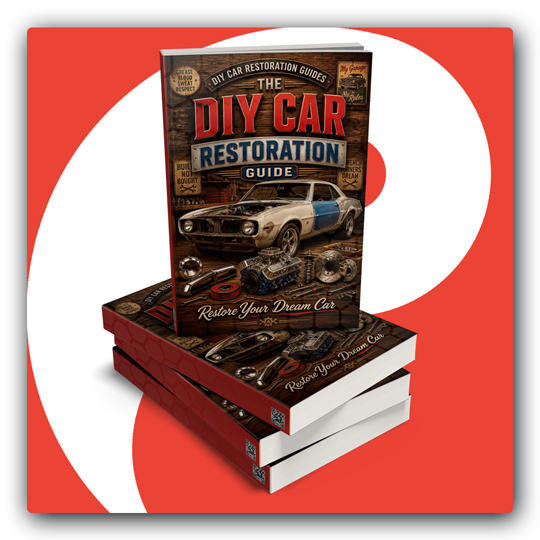
🔧 The DIY Car Restoration Guide PLR eBook is a practical, beginner-friendly resource covering project planning, vehicle inspection, budgeting, workspace safety, disassembly, rust repair, bodywork, paint, brakes, engines, electrical systems, interiors, reassembly, and long-term maintenance. With 20 detailed chapters, useful worksheets, a 30-day planning program, and Private Label Rights included, you can edit, rebrand, publish, sell, bundle, or repurpose the content for automotive, classic-car, restoration, and DIY audiences.
The DIY Car Restoration Guide PLR Ebook – 50K Words
Original price was: $27.00.$9.99Current price is: $9.99.
50 in stock
Sale!
Full Description
🔧 The DIY Car Restoration Guide PLR eBook
Help Beginners Plan, Restore, Reassemble, and Preserve a Project Car—and Turn the Content Into a Digital Product You Can Edit, Rebrand, Publish, and Sell
20 comprehensive chapters • Beginner-friendly restoration planning • Mechanical and bodywork fundamentals • Safety-focused guidance • Practical checklists • Private Label Rights included
Turn a Complicated Restoration Project Into a Clear, Structured Roadmap
Restoring an older or classic vehicle can be one of the most satisfying automotive projects a person undertakes.
It can also become expensive, disorganized, and overwhelming very quickly.
First-time restorers often begin with enthusiasm but without a complete plan for:
✅ Inspecting the vehicle
✅ Defining the desired result
✅ Creating a realistic budget
✅ Evaluating rust and structural damage
✅ Organizing tools and workspace
✅ Labeling removed components
✅ Storing parts safely
✅ Sequencing mechanical and bodywork repairs
✅ Finding replacement parts
✅ Managing specialist work
✅ Reassembling the vehicle correctly
✅ Testing completed systems
✅ Meeting roadworthiness and legal requirements
A project may stall because parts were purchased too early, the vehicle was dismantled without documentation, hidden corrosion was underestimated, or safety-critical work exceeded the restorer’s skills and equipment.
The DIY Car Restoration Guide gives beginners a more organized approach.
This comprehensive PLR eBook helps readers inspect a potential project car, define restoration goals, create a budget and schedule, build a safer workspace, document disassembly, assess major systems, understand professional handoff points, plan reassembly, and commission the completed vehicle gradually.
As the PLR buyer, you can edit the manuscript, apply your branding, publish it under your name or company, sell the customized eBook, use it as a lead magnet, add it to a membership or course, or repurpose it into an entire collection of classic-car and automotive content according to the included license.
🚘 Restoration Begins With a Definition
The word “restoration” can mean different things to different vehicle owners.
One reader may want a fully documented factory-style restoration.
Another may simply want a safe, dependable classic vehicle that retains its age and character.
The guide helps readers distinguish between:
✅ Preservation — retaining as much original material and character as practical
✅ Refurbishment — improving appearance and function without rebuilding everything
✅ Mechanical recommissioning — making a stored vehicle operational and roadworthy
✅ Driver-quality restoration — creating an attractive, usable vehicle rather than a competition-level showpiece
✅ Full restoration — rebuilding most major vehicle systems and finishes
✅ Restomod — combining classic styling with selected modern components or conveniences
✅ Custom build — modifying the vehicle beyond its original design
Defining the desired outcome affects:
✅ Budget
✅ Parts choices
✅ Project duration
✅ Originality
✅ Specialist requirements
✅ Documentation
✅ Resale expectations
✅ Legal and inspection requirements
Without a clear definition, the project can expand continuously and consume far more time and money than expected.
💰 Build the Plan Before Buying the Parts
One of the most common beginner mistakes is purchasing attractive parts before understanding the condition of the complete vehicle.
A realistic restoration budget may need to include:
✅ Purchase and transport costs
✅ Workspace preparation
✅ Tools and protective equipment
✅ Vehicle stands and lifting equipment
✅ Rust repair and metalwork
✅ Mechanical components
✅ Brake and steering parts
✅ Suspension repairs
✅ Engine and transmission work
✅ Fuel and cooling systems
✅ Electrical components
✅ Glass, seals, and trim
✅ Interior materials
✅ Paint preparation and refinishing
✅ Specialist labor
✅ Inspections and registration
✅ Unexpected repairs
✅ Storage and insurance
✅ Consumables and fasteners
✅ Shipping and import costs
The eBook encourages readers to create system-by-system estimates and maintain a contingency allowance.
The cheapest project car is not always the least expensive project.
A more complete vehicle with sound structure may cost less to restore than a heavily corroded vehicle purchased at a bargain price.
✨ Create a Valuable Automotive Product Without Writing It From Scratch
Developing a complete beginner car-restoration guide requires more than explaining how to remove parts and replace them.
A useful resource must show readers how to:
✅ Define the finished vehicle
✅ Inspect a project before purchase
✅ Identify missing or damaged components
✅ Estimate costs by system
✅ Build a realistic schedule
✅ Create a safer workshop
✅ Choose tools gradually
✅ Photograph and label disassembly
✅ Store fasteners and parts
✅ Distinguish surface rust from structural corrosion
✅ Understand body-repair boundaries
✅ Prepare metal for coating and paint
✅ Evaluate chassis, steering, suspension, and brakes
✅ Assess an engine before deciding to rebuild it
✅ Inspect fuel, cooling, intake, and exhaust systems
✅ Review the transmission and driveline
✅ Rebuild electrical systems methodically
✅ Restore interior, trim, glass, and seals
✅ Reassemble the vehicle in a controlled sequence
✅ Test individual systems before driving
✅ Preserve records and maintain the completed vehicle
With The DIY Car Restoration Guide PLR eBook, this educational foundation has already been created.
Instead of beginning with a blank document, you can focus on branding, design, vehicle-specific examples, original photographs, regional resources, specialist directories, worksheets, affiliate links, bonus products, and promotion.
🎯 What Readers Will Learn
Inside this beginner-friendly guide, readers will discover how to:
✅ Define a realistic restoration goal
✅ Compare restoration, preservation, refurbishment, and restomod approaches
✅ Evaluate a project car before purchasing it
✅ Inspect body structure, rust, mechanical condition, and completeness
✅ Assess paperwork and vehicle identity
✅ Create a system-by-system budget
✅ Build a practical project timeline
✅ Decide which work can be completed at home
✅ Identify specialist handoff points
✅ Organize a safer restoration workspace
✅ Select essential tools gradually
✅ Use lifting and support equipment responsibly
✅ Photograph and label every stage of disassembly
✅ Create an inventory of removed parts
✅ Store glass, trim, fasteners, and fragile components
✅ Recognize different types of corrosion
✅ Understand why structural rust requires special care
✅ Plan bodywork and metal repair
✅ Prepare bare metal and repaired panels
✅ Understand primer, seam sealer, coatings, and corrosion protection
✅ Develop realistic paint and refinishing expectations
✅ Inspect the chassis and mounting points
✅ Evaluate steering and suspension components
✅ Treat the braking system as a complete safety system
✅ Inspect wheels, tires, hubs, and bearings
✅ Assess an engine before dismantling it
✅ Plan fuel, cooling, intake, and exhaust work
✅ Inspect the clutch, transmission, driveshaft, and differential
✅ Diagnose electrical problems systematically
✅ Create or update a wiring diagram
✅ Restore seats, carpets, panels, glass, trim, and seals
✅ Plan final reassembly
✅ Fill and bleed fluid systems appropriately
✅ Test individual systems before the first drive
✅ Commission the vehicle through controlled stages
✅ Maintain documentation and long-term value
📸 Disassemble Without Creating a Puzzle
Taking a vehicle apart is often easier than putting it back together.
A beginner may assume that a component’s location or orientation will be easy to remember months later.
It usually is not.
The guide encourages readers to:
✅ Photograph parts before removal
✅ Capture close-ups of brackets and cable routes
✅ Label electrical connections
✅ Mark left- and right-side components
✅ Store fasteners with the related part
✅ Use clear, durable containers
✅ Record shim and spacer positions
✅ Photograph seal and trim orientation
✅ Create an inventory of removed components
✅ Note missing or damaged hardware
✅ Avoid discarding old parts before replacements are verified
A worn original component may still provide valuable information about:
✅ Dimensions
✅ Attachment points
✅ Material
✅ Shape
✅ Orientation
✅ Original finish
✅ Part numbers
Good documentation reduces frustration, duplicate purchases, incorrect assembly, and forgotten details.
🧱 Understand Rust Before Cutting Metal
Not all rust has the same significance.
Readers are introduced to the difference between:
✅ Light surface corrosion
✅ Pitting
✅ Scale
✅ Perforation
✅ Hidden seam corrosion
✅ Corrosion beneath coatings
✅ Damage to structural members
✅ Rust around suspension or seat-belt mounting points
✅ Corrosion affecting subframes or chassis rails
Rust repair should begin with inspection and an understanding of what the affected metal does.
Structural corrosion may affect:
✅ Vehicle strength
✅ Suspension alignment
✅ Door and panel fit
✅ Seat-belt anchorage
✅ Crash behavior
✅ Roadworthiness
✅ Safe lifting points
The guide explains why significant structural repair may require professional measurement, fabrication, welding, and inspection.
Cutting away damaged metal without bracing or understanding load paths can make the problem worse.
🛑 Brakes Are a Complete Safety System
Replacing one visible brake component does not necessarily restore the braking system.
Readers learn to evaluate:
✅ Master cylinders
✅ Brake boosters
✅ Hydraulic lines
✅ Flexible hoses
✅ Calipers
✅ Wheel cylinders
✅ Drums and discs
✅ Pads and shoes
✅ Parking-brake components
✅ Fittings and bleed screws
✅ Fluid condition
✅ Leaks
✅ Mounting hardware
✅ Wheel bearings
✅ Tire condition
Long-stored vehicles may contain corrosion, seized components, degraded seals, contaminated fluid, or brittle hoses.
The eBook emphasizes that braking work should be completed, inspected, bled, tested, and verified carefully before the vehicle is driven.
When the reader lacks the tools, training, or confidence to verify the system, qualified professional assistance is the responsible choice.
⚙️ Assess the Engine Before Rebuilding It
An engine that does not run does not automatically require a complete rebuild.
Before dismantling it, readers are encouraged to investigate:
✅ Whether the engine turns
✅ Oil condition
✅ Coolant condition
✅ Visible leaks
✅ Compression where appropriate
✅ Ignition operation
✅ Fuel delivery
✅ Cooling-system condition
✅ Unusual noises
✅ Smoke
✅ Oil pressure
✅ Service history
✅ Long-term storage damage
A structured assessment may reveal that the problem is associated with:
✅ Fuel contamination
✅ Wiring
✅ Ignition components
✅ Cooling faults
✅ Seized accessories
✅ Carburetor or injection issues
✅ Low battery voltage
✅ Poor grounds
✅ Starter problems
✅ Internal mechanical wear
The guide helps readers understand the difference between maintenance, repair, refreshing, machining, and a complete rebuild.
Professional machining and precision measurement are presented as planned restoration resources—not failures of do-it-yourself ability.
🔌 Rebuild Electrical Systems Methodically
Electrical faults can become especially difficult after multiple owners have modified a vehicle.
Common problems may include:
✅ Brittle insulation
✅ Corroded terminals
✅ Poor grounds
✅ Missing fuses
✅ Incorrect wire sizes
✅ Unprotected circuits
✅ Unlabeled modifications
✅ Damaged connectors
✅ Weak charging
✅ Parasitic battery drain
✅ Intermittent lighting
✅ Aftermarket accessories
Readers learn to approach the system by:
✅ Obtaining a suitable wiring diagram
✅ Identifying circuits
✅ Inspecting grounds
✅ Checking protection devices
✅ Labeling connectors
✅ Testing one section at a time
✅ Avoiding random replacement
✅ Documenting modifications
✅ Using suitable terminals and protection
Electrical troubleshooting becomes easier when the restorer follows the circuit logically rather than replacing parts based on guesses.
🚦 Commission the Car in Controlled Stages
The first drive should not be the first time every restored system is tested together.
The guide introduces a gradual commissioning process involving:
✅ Static inspections
✅ Fluid and leak checks
✅ Electrical testing
✅ Brake operation
✅ Steering movement
✅ Cooling-system monitoring
✅ Engine startup
✅ Charging-system checks
✅ Gear selection
✅ Clutch operation
✅ Low-speed movement
✅ Controlled braking tests
✅ Short local drives
✅ Reinspection after heat cycles
✅ Fastener and fluid checks
✅ Alignment and professional inspection
Readers are encouraged to avoid immediately taking an unproven vehicle into traffic, high-speed conditions, or long-distance travel.
A restoration may look complete before it is mechanically ready.
🏷️ Private Label Rights Included
This is a complete PLR eBook, allowing you to transform professionally structured car-restoration content into a customized digital product.
Subject to the included license, you can:
✅ Edit or rewrite the manuscript
✅ Add your name or pen name
✅ Add your automotive business or publishing brand
✅ Insert your logo and contact information
✅ Change the title and subtitle
✅ Design a completely new cover
✅ Apply your preferred colors, fonts, and layout
✅ Rearrange, remove, shorten, or expand chapters
✅ Add original restoration photographs
✅ Include vehicle-specific case studies
✅ Add regional suppliers and specialists
✅ Create branded inspection sheets
✅ Develop restoration-budget templates
✅ Include project-planning worksheets
✅ Add current product and tool recommendations
✅ Include appropriately disclosed affiliate links
✅ Insert links to your services or products
✅ Publish and sell the customized eBook
✅ Use it as a premium lead magnet
✅ Add it to a membership website
✅ Include it as a course or workshop bonus
✅ Turn chapters into automotive articles
✅ Create newsletters and email lessons
✅ Produce videos, podcasts, or presentations
✅ Develop checklists, planners, and worksheets
✅ Build educational social-media content
✅ Bundle it with related automotive products
The customized finished product may be sold according to the terms of the included license.
The underlying Private Label Rights may not automatically be transferred, resold, or passed to customers unless a separate reseller or transferable-rights license expressly permits that use.
📖 Inside the 20-Chapter Guide
Chapter 1: Define the Restoration You Actually Want
Helps readers choose between preservation, refurbishment, mechanical recommissioning, driver-quality restoration, full restoration, restomod, and custom-build goals.
Chapter 2: Evaluate a Project Car Before You Commit
Covers documentation, identity, completeness, structural condition, corrosion, mechanical systems, parts availability, previous repairs, and realistic purchase decisions.
Chapter 3: Build a Realistic Budget and Project Plan
Explains system-based estimates, contingency funds, schedules, project phases, storage, specialist work, shipping, tools, and controlling scope growth.
Chapter 4: Create a Safer Restoration Workspace
Covers lighting, ventilation, fire prevention, lifting areas, storage, electricity, compressed gas, chemical handling, housekeeping, and emergency preparation.
Chapter 5: Build a Restoration Tool System
Introduces essential hand tools, measurement tools, lifting equipment, electrical tools, cleaning equipment, specialty tools, calibration, maintenance, and renting.
Chapter 6: Disassemble Without Creating a Puzzle
Explains photography, labeling, containers, fastener storage, part inventories, fragile-component handling, notes, and documentation for reassembly.
Chapter 7: Understand Rust and Corrosion
Introduces surface rust, pitting, perforation, seam corrosion, hidden damage, structural areas, inspection methods, and responsible repair planning.
Chapter 8: Body Repair, Metalwork, and Welding Boundaries
Covers panel alignment, dent repair, cutting, patch panels, welding, heat distortion, structural measurement, bracing, and professional handoff points.
Chapter 9: Strip, Prepare, Prime, and Seal the Body
Explains cleaning, coating removal, rust treatment, bare-metal protection, primers, seam sealing, cavity protection, underbody coatings, and surface preparation.
Chapter 10: Paint and Refinish Realistically
Introduces preparation, spray environments, chemical exposure, equipment, color matching, base coats, clear coats, curing, defects, polishing, and professional refinishing.
Chapter 11: Chassis, Suspension, and Steering
Covers frames, subframes, bushings, ball joints, tie rods, springs, dampers, mounting points, fasteners, alignment, and geometry.
Chapter 12: Restore the Brake System
Treats brakes as a complete hydraulic and mechanical safety system involving lines, hoses, cylinders, calipers, discs, drums, fluid, bleeding, and testing.
Chapter 13: Wheels, Tires, Hubs, and Bearings
Explains wheel condition, tire age, fitment, load ratings, fasteners, hubs, seals, bearings, runout, balancing, and alignment.
Chapter 14: Assess and Restore the Engine
Covers initial assessment, compression, leaks, lubrication, cooling, fuel, ignition, startup, internal wear, machining, rebuilding, and replacement decisions.
Chapter 15: Fuel, Cooling, Intake, and Exhaust Systems
Introduces tanks, lines, pumps, filters, carburetors, injection systems, radiators, hoses, thermostats, fans, manifolds, exhausts, leaks, and ventilation.
Chapter 16: Transmission, Clutch, Driveshaft, and Differential
Covers fluid condition, linkages, bearings, seals, mounts, clutch components, universal joints, shafts, differentials, noise, vibration, and service limits.
Chapter 17: Rebuild the Electrical System
Explains batteries, grounds, charging, starting, lighting, fuses, relays, wiring diagrams, connectors, gauges, accessories, and structured fault finding.
Chapter 18: Interior, Glass, Trim, and Weather Seals
Covers seats, carpets, headliners, panels, dashboards, instruments, glass, regulators, trim, hardware, water leaks, seals, and interior safety.
Chapter 19: Reassemble and Commission the Car
Provides a staged process for assembly, torque checks, fluids, bleeding, alignment, startup, static testing, low-speed testing, inspection, and controlled first drives.
Chapter 20: Preserve the Restoration and Build Long-Term Value
Explains maintenance, records, photographs, receipts, storage, corrosion prevention, seasonal checks, careful use, future upgrades, and ownership documentation.
📋 Supporting Resources Included
The main eBook contains practical resources designed to help readers plan, document, and manage a restoration project.
These include:
✅ Detailed table of contents
✅ Automotive restoration and safety disclaimer
✅ Plain-language restoration glossary
✅ Beginner tips throughout every chapter
✅ Practical restoration scenarios
✅ Safety boundaries and warning callouts
✅ Best-practice guidance
✅ Common mistakes to avoid
✅ Chapter summaries
✅ Action checklists
✅ Restoration-goal worksheet
✅ Project-car inspection checklist
✅ Vehicle-completeness inventory
✅ Budget-planning worksheet
✅ Project schedule template
✅ Workspace-safety checklist
✅ Tool-purchase planner
✅ Disassembly photography guide
✅ Parts-labeling system
✅ Rust-assessment worksheet
✅ Professional-handoff planner
✅ Brake-system inspection checklist
✅ Engine-assessment worksheet
✅ Electrical-circuit troubleshooting sheet
✅ Reassembly checklist
✅ First-start preparation guide
✅ First-drive inspection checklist
✅ Restoration-documentation planner
✅ Frequently asked questions
✅ Complete 30-day restoration-planning action plan
🌟 Why This PLR eBook Is Different
Many restoration guides focus on dramatic transformations while underestimating the planning, documentation, safety, and specialist support required.
The DIY Car Restoration Guide takes a more responsible approach.
The content emphasizes:
✅ Inspection before purchase
✅ Planning before disassembly
✅ Documentation throughout the project
✅ Realistic budgeting
✅ Controlled project scope
✅ Structural awareness
✅ Safety-critical system checks
✅ Professional handoff points
✅ Gradual commissioning
✅ Long-term maintenance
The guide does not:
❌ Promise a cheap or fast restoration
❌ Suggest that every task belongs in a home garage
❌ Encourage unsupported vehicle lifting
❌ Treat structural welding as a beginner exercise
❌ Recommend painting without suitable safety controls
❌ Present brake repairs as casual cosmetic work
❌ Encourage immediate road use after reassembly
❌ Guarantee increased vehicle value
❌ Claim every replacement part will fit correctly
❌ Promise professional results without professional tools or experience
Instead, readers receive a flexible planning framework that can be adapted to different vehicles, budgets, skill levels, facilities, and restoration goals.
👥 Who Is the Reader Version For?
The customized reader edition may appeal to:
✅ First-time car restorers
✅ Classic-car enthusiasts
✅ Owners of older vehicles
✅ Do-it-yourself mechanics
✅ Students learning automotive restoration
✅ Hobbyists planning a long-term project
✅ People comparing restoration and restomod options
✅ Buyers evaluating project vehicles
✅ Enthusiasts inheriting an unfinished restoration
✅ Car-club members
✅ Readers preparing to work with restoration specialists
✅ Anyone wanting to understand the complete restoration process
💻 Who Is This PLR Product For?
This PLR eBook is ideal for:
✅ PLR store owners
✅ Digital-product sellers
✅ Automotive bloggers
✅ Classic-car websites
✅ Restoration businesses
✅ Parts suppliers
✅ Automotive educators
✅ Course creators
✅ Membership-site owners
✅ Workshop facilitators
✅ Car clubs
✅ Tool retailers
✅ Affiliate marketers
✅ Newsletter publishers
✅ Automotive-content creators
🔄 Turn One PLR eBook Into Multiple Products
The content can be repurposed into:
✅ A branded beginner restoration eBook
✅ A 20-part automotive blog series
✅ A project-car inspection workbook
✅ A restoration-budget planner
✅ A workshop-safety checklist
✅ A disassembly and labeling guide
✅ A rust-assessment mini eBook
✅ A restoration-tool planner
✅ A brake-system inspection guide
✅ An engine-assessment worksheet
✅ An electrical troubleshooting workbook
✅ A first-start preparation checklist
✅ A first-drive safety checklist
✅ A 30-day restoration email course
✅ A classic-car terminology guide
✅ Workshop or webinar materials
✅ Video and podcast lesson scripts
✅ Restoration-mistake social posts
✅ A membership resource library
✅ A classic-car digital-product bundle
One comprehensive PLR eBook can provide months of useful content for your digital store, automotive website, mailing list, restoration business, membership, course, or classic-car brand.
✨ Customize It for Your Automotive Brand
You are not limited to publishing the eBook exactly as supplied.
You can make the finished product more distinctive by:
✅ Choosing a new title and subtitle
✅ Designing a professional cover
✅ Adding your logo and brand colors
✅ Including original project photographs
✅ Adding vehicle-specific examples
✅ Creating branded inspection sheets
✅ Developing printable budget templates
✅ Including regional parts suppliers
✅ Listing specialist services
✅ Adding local inspection requirements
✅ Recommending suitable tools and equipment
✅ Including appropriately disclosed affiliate links
Potential customized editions could include:
✅ Car Restoration for Complete Beginners
✅ The Classic-Car Restoration Blueprint
✅ Restore Your First Project Car
✅ The Beginner’s Vehicle Restoration Handbook
✅ From Project Car to Finished Classic
✅ Plan, Restore, and Rebuild an Older Car
✅ The 30-Day Restoration Planning Guide
✅ The Smart DIY Car Restoration System
Thoughtful customization can make the finished product more relevant, recognizable, and valuable to a specific automotive audience.
💰 Commercial Uses
Subject to the included PLR license, the customized product may be used to:
✅ Sell as a standalone digital eBook
✅ Grow an automotive mailing list
✅ Support a restoration course
✅ Add value to a paid membership
✅ Promote tools and restoration parts
✅ Support appropriate affiliate marketing
✅ Generate leads for restoration businesses
✅ Bundle with project-planning templates
✅ Include with automotive workshops
✅ Use as educational course material
✅ Offer as a customer bonus
✅ Build a classic-car resource library
✅ Develop a long-term restoration content campaign
❓ Frequently Asked Questions
Is this a PLR eBook?
Yes. The product includes Private Label Rights, allowing the licensed buyer to edit, customize, rebrand, publish, sell, and repurpose the finished content according to the included license.
Is it written for complete beginners?
Yes. Restoration terminology, project stages, vehicle systems, and planning principles are introduced in clear, accessible language.
Does it teach every repair procedure step by step?
No. It explains systems, project flow, evaluation, safety limits, and decision-making. Vehicle-specific procedures require suitable service information, tools, skills, and professional support.
Can I change the title and cover?
Yes. You may rename the eBook, create a new cover, and apply your branding according to the license.
Can I add my name or business as the author?
Yes. You may add your name, pen name, company, logo, website, and contact information.
Can I sell the customized eBook?
Yes. You may sell the completed customized product subject to the terms of the included PLR license.
Can my customers receive PLR rights?
Not automatically. A separate reseller or transferable-rights license would be required.
Can chapters be reused separately?
Yes. Subject to the license, chapters may be adapted into articles, emails, videos, presentations, worksheets, checklists, and social content.
Can I include product recommendations?
Yes. You may include current tool, equipment, and parts recommendations, provided specifications, fitment, and compatibility claims are checked.
Does the eBook replace a repair manual?
No. Readers need suitable vehicle-specific workshop information, specifications, torque values, wiring diagrams, and manufacturer instructions.
Does it teach structural welding?
It explains structural considerations and professional handoff points. It does not replace formal welding training, engineering assessment, or qualified structural repair.
Does it guarantee roadworthiness?
No. Roadworthiness depends on the completed work, vehicle condition, applicable regulations, inspection, testing, and professional verification.
Does restoration guarantee a profit?
No. Restoration costs can exceed the market value of the completed vehicle, and no resale or investment result is guaranteed.
Should regional information be added?
Yes. Registration, inspections, emissions, modifications, roadworthiness, hazardous materials, paint use, waste disposal, and licensing rules vary by location.
📝 Simple Customization Workflow
Use this process to transform the manuscript into a finished car-restoration product:
✅ Review the included PLR license
✅ Define the intended reader
✅ Decide how the product will be sold or distributed
✅ Choose a new title and subtitle if needed
✅ Design a branded cover
✅ Add your author or company information
✅ Insert your logo, website, and contact details
✅ Add original restoration photographs
✅ Include regional suppliers and specialists
✅ Create branded inspection and planning sheets
✅ Add local roadworthiness information
✅ Verify product and tool recommendations
✅ Review all mechanical and safety statements
✅ Strengthen the automotive disclaimer
✅ Proofread and publish the customized product
📦 What You Receive
Your package includes:
✅ The complete The DIY Car Restoration Guide PLR eBook
✅ 20 comprehensive chapters
✅ Beginner-friendly restoration education
✅ Restoration-goal planning
✅ Project-car inspection guidance
✅ Budget and schedule planning
✅ Workshop and tool preparation
✅ Disassembly and documentation systems
✅ Rust and corrosion education
✅ Bodywork and welding boundaries
✅ Surface preparation and paint guidance
✅ Chassis and suspension information
✅ Brake-system restoration principles
✅ Wheel, tire, hub, and bearing guidance
✅ Engine-assessment education
✅ Fuel and cooling-system information
✅ Transmission and driveline guidance
✅ Electrical-system troubleshooting
✅ Interior, glass, and trim restoration
✅ Reassembly and commissioning planning
✅ Long-term preservation guidance
✅ Complete 30-day planning program
✅ Practical worksheets and checklists
✅ Frequently asked questions
✅ Restoration glossary
✅ Editable content
✅ Private Label Rights documentation
🚀 Build a Valuable Car-Restoration Product Without Starting From a Blank Page
Writing a comprehensive beginner restoration guide could require weeks or months of research, planning, drafting, editing, organizing, and resource creation.
With The DIY Car Restoration Guide PLR eBook, you receive a substantial foundation that can be customized for your automotive brand and audience.
Use it to launch a digital product, grow your mailing list, promote automotive tools and parts, support a workshop, generate leads for a restoration business, strengthen a membership, or create months of useful classic-car content.
Edit it.
Customize it.
Brand it.
Localize it.
Publish it.
Sell it.
Repurpose it into an entire car-restoration content collection.
🛒 Get The DIY Car Restoration Guide PLR eBook Today
Start with a professionally structured, beginner-friendly vehicle-restoration resource and transform it into a customized digital product for classic-car enthusiasts, do-it-yourself mechanics, project-car buyers, hobbyists, students, and automotive audiences.
GET INSTANT ACCESS TODAY
⚠️ Important Automotive Restoration and Safety Disclaimer
This product is provided for general educational and informational purposes only.
Vehicle restoration may involve heavy components, unstable vehicles, lifting equipment, compressed springs, fuel, batteries, high-current electrical systems, pressurized fluids, hot surfaces, welding, grinding, cutting, paint chemicals, solvents, dust, asbestos-containing legacy materials, sharp metal, and fire hazards.
The eBook does not provide vehicle-specific repair procedures or individualized mechanical, structural, welding, electrical, chemical, engineering, roadworthiness, legal, insurance, environmental, or safety advice.
Readers should use suitable vehicle service information, manufacturer instructions, protective equipment, correctly rated tools, stable lifting systems, and qualified professional assistance where appropriate.
A hydraulic jack alone should never be treated as secure support for working beneath a vehicle.
Structural repairs, braking systems, steering, suspension, fuel systems, safety restraints, wheel attachment, high-current wiring, painting, machining, and welding may require specialized equipment, training, facilities, inspection, or professional verification.
Older vehicles may contain hazardous coatings, insulation, friction materials, fuels, fluids, and contamination requiring appropriate assessment and handling.
Restored or modified vehicles may be subject to inspections, registration rules, emissions requirements, construction standards, roadworthiness tests, insurance disclosures, or engineering certification.
Parts availability, specifications, compatibility, legal requirements, vehicle values, and restoration methods may change over time.
PLR buyers are responsible for reviewing, fact-checking, updating, customizing, and localizing the content before publication.
No mechanical reliability, structural integrity, roadworthiness, legal compliance, restoration quality, vehicle value, resale result, customer satisfaction, business, marketing, ranking, sales, revenue, profit, or income outcome is promised or guaranteed.
🎁 Exclusive Bonuses Included!
When you grab this PLR eBook, you’ll also receive a ready-to-use sales page, a cheat sheet, and a high-quality promotional image—everything you need to sell it quickly and effortlessly!
🔥 LIMITED TIME OFFER! 🔥
Grab this complete PLR eBook for only $9.99— exclusively for the first 50 buyers! Don’t miss your chance to own this 20-chapter guide and claim full PLR rights at this unbeatable price.
License Details:
✅ You Can:
- Sell the product and keep 100% of the profits.
- Edit, rebrand, and modify the content.
- Break the content into smaller reports or guides.
- Bundle with other PLR products.
- Add to paid membership sites or courses.
- Convert into videos, audios, or PDFs.
- Use excerpts for blogs, emails, or free downloads.
❌ You Cannot:
- Pass on PLR, resale, or master resell rights to others.
- Give away the full package for free.
- Offer 100% affiliate commissions.
- Add to previously paid memberships without an extra fee.
PLEASE PAY ATTENTION TO THE LICENSE TERMS MENTIONED ABOVE
If you want to use the content in a way that is not specifically stated within the License, please ask if you can before you do so.
Related products
-
Sale!
Mastering Amazon FBA From Beginner to Bestseller PLR Ebook – 15K Words
Original price was: $17.00.$9.99Current price is: $9.99. -
Sale!

Calm Within the Storm – Understanding and Overcoming Anxiety PLR Ebook – 12K Words
Original price was: $27.00.$9.99Current price is: $9.99. -
Sale!

Powering the Future The Complete Guide to Alternative Energy PLR Ebook – 17K Words
Original price was: $17.00.$9.99Current price is: $9.99.
Reviews