
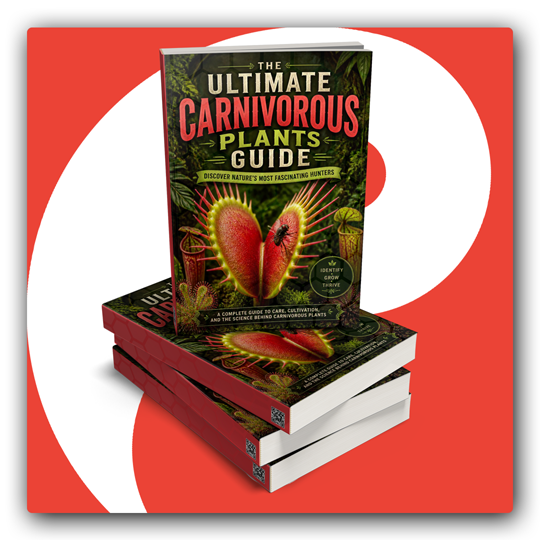
🌱 The Ultimate Carnivorous Plants Guide PLR eBook is a practical, beginner-friendly resource covering Venus flytraps, sundews, pitcher plants, butterworts, water quality, lighting, soil, feeding, dormancy, propagation, pests, indoor setups, bog gardens, and conservation. With 20 detailed chapters, useful checklists, a 30-day action plan, a printable cheat sheet, and Private Label Rights included, you can edit, rebrand, publish, sell, bundle, or repurpose the content for gardening, houseplant, nature, and hobby audiences.
The Ultimate Carnivorous Plants Guide PLR Ebook – 63K Words
Original price was: $27.00.$9.99Current price is: $9.99.
50 in stock
Sale!
Full Description
🌱 The Ultimate Carnivorous Plants Guide PLR eBook
Help Beginners Successfully Grow Venus Flytraps, Sundews, Pitcher Plants, Butterworts, Bladderworts, and More—Then Edit, Rebrand, Publish, and Sell the Content as Your Own Finished Product
20 comprehensive chapters • Beginner-friendly plant care • Species-specific guidance • Troubleshooting resources • 30-day action plan • Private Label Rights included
Turn Fascination Into a Thriving Carnivorous Plant Collection
Carnivorous plants capture attention immediately.
Their unusual traps, striking colors, fascinating feeding strategies, and otherworldly appearance make them some of the most exciting plants a beginner can grow.
Unfortunately, they are also surrounded by confusing and incorrect advice.
New growers are often told to:
✅ Plant every species in ordinary potting soil
✅ Water them with mineral-rich tap water
✅ Feed them meat or large insects
✅ Trigger Venus flytrap traps for entertainment
✅ Keep every plant inside a sealed terrarium
✅ Place tropical and temperate species in identical conditions
✅ Fertilize them like ordinary houseplants
✅ Skip seasonal dormancy
✅ Assume every black leaf means the plant is dying
These mistakes can weaken or kill otherwise healthy plants.
The Ultimate Carnivorous Plants Guide provides a clearer, more responsible approach.
This comprehensive PLR eBook helps beginners understand how carnivorous plants live, why they evolved traps, and how their natural habitats influence practical decisions involving water, light, soil, temperature, humidity, airflow, feeding, dormancy, propagation, pest management, indoor setups, and outdoor bog gardens.
Readers receive a structured path from choosing a first plant to building a sustainable long-term collection.
As the PLR buyer, you can edit the manuscript, add your branding, publish it under your name or business, sell the customized eBook, use it as a gardening lead magnet, include it in a course or membership, or repurpose it into an entire collection of plant-care content according to the included license.
🪴 Create a Valuable Specialty-Gardening Product Without Writing It From Scratch
Creating a reliable carnivorous plant guide requires more than listing general houseplant tips.
Different species may require very different growing conditions.
A Venus flytrap is not cared for in exactly the same way as a tropical pitcher plant.
A temperate sundew may require winter dormancy, while a tropical sundew may continue growing throughout the year.
Some plants tolerate standing in shallow water, while others require a more freely draining root environment.
A useful beginner resource should explain:
✅ Why ordinary potting soil can damage carnivorous plants
✅ Which low-mineral water sources may be suitable
✅ How light affects growth, color, and trap production
✅ Why humidity is not the only environmental factor that matters
✅ How airflow reduces certain growing problems
✅ When feeding is useful and when it is unnecessary
✅ Why triggering traps wastes plant energy
✅ Which species require dormancy
✅ How indoor and outdoor care differ
✅ How to diagnose pests, rot, poor lighting, and water problems
✅ How to propagate plants responsibly
✅ Why nursery-propagated plants support conservation
With The Ultimate Carnivorous Plants Guide PLR eBook, this educational foundation has already been developed for you.
Instead of starting with an empty page, you can focus on branding, design, original photographs, regional care advice, printable resources, product recommendations, email campaigns, and promotion.
🎯 What Readers Will Learn
Inside this practical beginner guide, readers will discover how to:
✅ Understand what makes a plant carnivorous
✅ Identify the major trap types
✅ Recognize common carnivorous plant groups
✅ Choose species suited to their climate and growing space
✅ Select beginner-friendly Venus flytraps
✅ Explore suitable sundews and butterworts
✅ Understand the differences between tropical and temperate plants
✅ Choose appropriate pots and containers
✅ Use low-nutrient growing media
✅ Avoid ordinary fertilized potting soil
✅ Compare rainwater, distilled water, reverse-osmosis water, and tap water
✅ Understand total dissolved solids
✅ Use the tray-watering method appropriately
✅ Provide sufficient natural or artificial light
✅ Improve airflow around indoor plants
✅ Use grow lights more effectively
✅ Feed plants without overfeeding them
✅ Avoid unsuitable foods and excessive trap stimulation
✅ Recognize natural leaf and trap decline
✅ Understand seasonal dormancy
✅ Prepare temperate plants for winter
✅ Propagate plants from seed, division, cuttings, and leaf pullings
✅ Diagnose pests and diseases systematically
✅ Build an indoor growing shelf
✅ Decide whether a terrarium is suitable
✅ Create an outdoor container bog garden
✅ Acclimate newly purchased plants
✅ Purchase plants from responsible sources
✅ Build a sustainable long-term collection
🔬 Understand the Science Behind the Traps
Carnivorous plants usually grow in habitats where soil nutrients are limited.
Their traps help them obtain nutrients from insects and other small organisms, but the plants still receive their energy primarily through photosynthesis.
This means strong, appropriate light is often more important than frequent feeding.
The guide introduces major trap types, including:
✅ Snap traps
✅ Sticky flypaper traps
✅ Pitfall traps
✅ Suction traps
✅ Lobster-pot or eel-trap mechanisms
Readers learn that carnivory developed in different plant groups through evolutionary processes that produced similar solutions to nutrient-poor environments.
This scientific foundation helps beginners understand why these plants require unusual care.
💧 Water Quality Can Determine Success or Failure
Many carnivorous plants are adapted to low-mineral environments.
Repeatedly watering them with mineral-rich water can cause unwanted mineral accumulation around the roots and in the growing medium.
The eBook explains potential water sources such as:
✅ Rainwater collected responsibly
✅ Distilled water
✅ Reverse-osmosis water
✅ Low-mineral water that has been appropriately tested
Readers are introduced to total dissolved solids meters as useful screening tools while being reminded that a single reading does not identify every substance present in water.
The guide also explains:
✅ The tray-watering method
✅ Top watering
✅ Flushing growing media
✅ Seasonal changes in water needs
✅ Why some species should remain wetter than others
✅ Why tropical pitcher plants should not automatically stand in deep water
☀️ Light Is the Plant’s Main Energy Source
Carnivorous plants do not survive by eating insects alone.
They depend on light for photosynthesis.
Insufficient light may lead to:
✅ Weak growth
✅ Pale coloration
✅ Poor trap formation
✅ Small leaves
✅ Leaning or stretched growth
✅ Reduced dew on sundews
✅ Failure to produce healthy pitchers
Readers learn how to compare:
✅ Outdoor sunlight
✅ Bright windows
✅ Supplemental grow lights
✅ Light duration
✅ Distance from artificial lights
✅ Heat buildup
✅ Seasonal changes
The guide also explains how plants may need to be acclimated gradually to stronger sunlight to reduce the risk of sudden leaf damage.
🧱 Use the Right Growing Media
Ordinary potting soil often contains nutrients, fertilizers, compost, or mineral additives that are unsuitable for many carnivorous plants.
The eBook introduces common media ingredients such as:
✅ Peat moss without added fertilizer
✅ Long-fiber sphagnum moss
✅ Silica sand
✅ Perlite without inappropriate additives
✅ Bark and airy materials for selected tropical pitcher plants
✅ Mineral-based mixtures for certain butterworts
Readers learn that there is no universal mixture for every species.
The correct medium depends on:
✅ Plant group
✅ Root structure
✅ Watering method
✅ Climate
✅ Container size
✅ Indoor or outdoor conditions
✅ The grower’s environment
🪰 Feed Responsibly Without Damaging the Plant
Outdoor carnivorous plants often catch enough prey naturally.
Indoor plants may occasionally benefit from carefully selected feeding, but feeding should not replace adequate light or proper growing conditions.
Readers learn to avoid:
❌ Raw meat
❌ Processed food
❌ Cheese
❌ Oversized insects
❌ Excessive feeding
❌ Constantly triggering traps
❌ Forcing food into unhealthy traps
The guide explains that prey should generally be small enough for the trap and appropriate for the species.
It also distinguishes between:
✅ Feeding Venus flytraps
✅ Feeding sundews
✅ Feeding butterworts
✅ Feeding pitcher plants
✅ Optional diluted fertilization approaches for advanced growers
Beginners are encouraged to master water, light, soil, and seasonal care before experimenting with more advanced feeding techniques.
❄️ Understand Dormancy Before Assuming a Plant Is Dying
Some temperate carnivorous plants naturally reduce growth during colder seasons.
During dormancy, a plant may:
✅ Produce smaller leaves
✅ Lose older traps
✅ Stop growing rapidly
✅ Form a compact resting structure
✅ Appear less colorful
✅ Require less water
This does not automatically mean the plant is dead.
The eBook explains dormancy considerations for:
✅ Venus flytraps
✅ North American pitcher plants
✅ Temperate sundews
✅ Temperate butterworts
Readers also learn that tropical species may not require the same cold resting period.
Treating every plant identically can create unnecessary losses.
🧪 Troubleshoot Problems Systematically
When a plant declines, beginners often change several conditions at once.
They may repot, fertilize, move the plant, feed it, increase humidity, and change watering methods simultaneously.
This makes it difficult to identify the original problem.
The guide teaches a step-by-step diagnostic process that examines:
✅ Species identification
✅ Water source
✅ Light level
✅ Growing medium
✅ Pot condition
✅ Drainage
✅ Temperature
✅ Humidity
✅ Airflow
✅ Seasonal dormancy
✅ Recent acclimation
✅ Pests
✅ Disease symptoms
✅ Feeding history
✅ Chemical exposure
Common problems covered include:
✅ Blackening traps
✅ Failure to produce dew
✅ Dry pitcher lids
✅ Browning leaf edges
✅ Weak growth
✅ Root or crown rot
✅ Aphids
✅ Mites
✅ Thrips
✅ Scale insects
✅ Fungus and mold
Readers are reminded that some leaf loss is part of normal plant growth.
🌿 Propagate and Expand a Collection Responsibly
Propagation can help growers:
✅ Preserve favorite plants
✅ Replace aging specimens
✅ Share plants with others
✅ Learn more about plant development
✅ Reduce reliance on wild collection
The eBook introduces:
✅ Seed collection and storage
✅ Seed sowing
✅ Cold stratification where appropriate
✅ Divisions
✅ Rhizome division
✅ Leaf pullings
✅ Root cuttings
✅ Stem cuttings
✅ Basal shoots
✅ Tissue culture as an advanced concept
Readers learn that propagation speed and success vary by species and technique.
Growing from seed may also produce genetically unique plants rather than exact copies of a named cultivar.
🌍 Support Conservation and Responsible Trade
Carnivorous plants face threats such as:
✅ Habitat destruction
✅ Wetland drainage
✅ Pollution
✅ Climate change
✅ Invasive species
✅ Illegal collecting
✅ Unsustainable trade
The guide encourages readers to:
✅ Buy from reputable nurseries
✅ Ask whether plants are nursery propagated
✅ Avoid collecting from the wild
✅ Learn applicable import and export rules
✅ Follow protected-species regulations
✅ Keep purchase records when appropriate
✅ Label plants accurately
✅ Share propagated material responsibly
Private cultivation can support conservation when it is based on legal, ethical, and sustainable sourcing.
🏷️ Private Label Rights Included
This is a complete PLR eBook, allowing you to transform professionally structured carnivorous plant content into a customized digital product.
Subject to the included license, you can:
✅ Edit or rewrite the manuscript
✅ Add your name or pen name
✅ Add your gardening, plant, or publishing brand
✅ Insert your logo and contact information
✅ Change the title and subtitle
✅ Design a completely new cover
✅ Apply your preferred colors, fonts, and layout
✅ Rearrange, remove, shorten, or expand chapters
✅ Add original plant photographs
✅ Include regional growing advice
✅ Create branded care sheets
✅ Add links to your products or services
✅ Include appropriately disclosed affiliate recommendations
✅ Publish and sell the customized eBook
✅ Use it as a premium lead magnet
✅ Add it to a gardening membership
✅ Include it as a course or workshop bonus
✅ Turn chapters into blog articles
✅ Create newsletters and email lessons
✅ Produce video, podcast, or presentation scripts
✅ Develop worksheets, calendars, and checklists
✅ Build educational social-media content
✅ Bundle it with related plant-care resources
The customized finished product may be sold according to the terms of the included license.
The underlying Private Label Rights may not automatically be transferred, resold, or passed to customers unless a separate reseller or transferable-rights license expressly permits that use.
📖 Inside the Complete 20-Chapter Guide
Chapter 1: Entering the World of Carnivorous Plants
Introduces plant carnivory, the major plant groups, beginner expectations, common myths, and the mindset needed to build a healthy collection.
Chapter 2: How Carnivory Evolved
Explains nutrient-poor habitats, natural selection, convergent evolution, trap development, and the biological costs of producing specialized leaves.
Chapter 3: Understanding Traps and Digestion
Explores snap traps, sticky traps, pitfall traps, suction traps, prey capture, digestive enzymes, and nutrient absorption.
Chapter 4: Choosing Your First Carnivorous Plants
Helps readers match species to their space, climate, experience, lighting, water access, and seasonal conditions.
Chapter 5: Water Quality and Watering Systems
Covers low-mineral water, total dissolved solids, tray watering, top watering, media flushing, drainage, and species-specific moisture requirements.
Chapter 6: Light, Temperature, Humidity, and Airflow
Explains natural sunlight, windows, grow lights, acclimation, temperature ranges, humidity myths, ventilation, and microclimates.
Chapter 7: Soil, Media, and Potting
Introduces appropriate growing media, container choices, repotting, root care, drainage, and the reasons ordinary potting soil often fails.
Chapter 8: Feeding and Fertilizing Responsibly
Explains natural prey capture, optional indoor feeding, suitable prey size, common feeding mistakes, and advanced fertilization cautions.
Chapter 9: Venus Flytraps in Detail
Covers growth cycles, trap function, daily care, cultivars, flowering, dormancy, repotting, and common Venus flytrap problems.
Chapter 10: Sundews in Detail
Explores tropical, subtropical, temperate, pygmy, tuberous, and other sundews while explaining dew production, feeding, dormancy, and propagation.
Chapter 11: Pitcher Plants in Detail
Introduces North American pitcher plants, tropical pitcher plants, cobra lilies, sun pitchers, Albany pitcher plants, and their different growing requirements.
Chapter 12: Butterworts, Bladderworts, and Other Genera
Covers butterwort growth forms, Mexican and temperate butterworts, aquatic and terrestrial bladderworts, corkscrew plants, and specialized care.
Chapter 13: Dormancy and Seasonal Care
Explains why dormancy occurs, how to recognize it, winter protection, summer dormancy, seasonal watering changes, and restarting active growth.
Chapter 14: Propagation and Growing From Seed
Covers seed handling, stratification, sowing, divisions, cuttings, leaf pullings, basal growth, recordkeeping, and cultivar considerations.
Chapter 15: Pests, Diseases, and Troubleshooting
Introduces a systematic diagnostic process for aphids, mites, thrips, scale, fungal problems, rot, mineral damage, poor lighting, and environmental stress.
Chapter 16: Designing Indoor Setups and Terrariums
Explains open growing shelves, windowsill setups, grow lights, humidity management, airflow, terrarium limitations, electrical safety, and maintenance.
Chapter 17: Outdoor Bog Gardens and Larger Collections
Covers container selection, media, water reservoirs, compatible plants, seasonal care, overflow, rain exposure, wildlife, and long-term maintenance.
Chapter 18: Conservation, Ethics, and Responsible Trade
Explains habitat threats, wild collection risks, nursery propagation, protected species, trade regulations, permits, labeling, and responsible purchasing.
Chapter 19: Advanced Care for Informed Beginners
Introduces microclimates, water chemistry, acclimation, species-specific media, environmental monitoring, selective fertilization, and collection records.
Chapter 20: Building a Sustainable Long-Term Hobby
Helps readers define collection goals, create a supply system, plan a seasonal calendar, budget responsibly, connect with grower communities, and continue learning.
📋 Supporting Resources Included
The eBook contains practical resources designed to help readers choose, grow, diagnose, propagate, and organize their plants.
These include:
✅ Detailed table of contents
✅ Educational and safety disclaimer
✅ Plain-language carnivorous plant glossary
✅ Beginner tips throughout every chapter
✅ Practical growing scenarios
✅ Important care warnings
✅ Common mistakes to avoid
✅ Best-practice guidance
✅ Chapter summaries
✅ Action checklists
✅ First-plant selection worksheet
✅ Species comparison chart
✅ Water-source checklist
✅ Total dissolved solids log
✅ Lighting assessment worksheet
✅ Growing-media planner
✅ Feeding checklist
✅ Venus flytrap care sheet
✅ Sundew care sheet
✅ Pitcher plant comparison guide
✅ Dormancy preparation checklist
✅ Propagation record
✅ Pest-inspection sheet
✅ Plant troubleshooting worksheet
✅ Indoor setup planner
✅ Bog-garden planning sheet
✅ Ethical purchasing checklist
✅ Seasonal care calendar
✅ Collection inventory template
✅ Frequently asked questions
✅ Complete 30-day implementation plan
✅ Separate printable cheat sheet
🌟 Why This PLR eBook Is Different
Many basic plant guides treat all carnivorous plants as though they require identical conditions.
The Ultimate Carnivorous Plants Guide explains the differences that matter.
The content distinguishes between:
✅ Temperate and tropical species
✅ Bog plants and tropical vines
✅ Standing-water care and free-draining conditions
✅ Natural dormancy and active growth
✅ Optional feeding and essential lighting
✅ Indoor and outdoor cultivation
✅ Normal leaf decline and serious plant problems
✅ Nursery propagation and harmful wild collection
The guide does not:
❌ Recommend ordinary fertilized potting soil
❌ Suggest that every plant belongs in a closed terrarium
❌ Encourage constant trap triggering
❌ Treat insects as the plant’s main energy source
❌ Promise that one care method works for every species
❌ Ignore dormancy requirements
❌ Encourage wild collection
❌ Guarantee that every plant will survive
❌ Present unverified pest treatments as universally safe
❌ Promise income from growing or selling plants
Instead, readers receive a flexible care framework that can be adapted to specific plants, climates, equipment, and growing environments.
👥 Who Is the Reader Version For?
The customized reader edition may appeal to:
✅ Complete carnivorous plant beginners
✅ Venus flytrap owners
✅ Indoor plant enthusiasts
✅ Gardeners exploring specialty plants
✅ Parents supervising plant projects
✅ Educators
✅ Students
✅ Hobbyists building their first collection
✅ Terrarium enthusiasts
✅ Outdoor bog-garden growers
✅ Houseplant owners seeking a new challenge
✅ Plant collectors interested in conservation
Adult supervision may be appropriate when younger growers handle electrical equipment, pest treatments, sharp tools, or online plant purchases.
💻 Who Is This PLR Product For?
This PLR eBook is ideal for:
✅ PLR store owners
✅ Digital-product sellers
✅ Gardening publishers
✅ Plant-care bloggers
✅ Indoor-gardening websites
✅ Specialty nursery businesses
✅ Course creators
✅ Membership-site owners
✅ Gardening educators
✅ Printable sellers
✅ Newsletter publishers
✅ Affiliate marketers
✅ Plant-club organizers
✅ Homeschool-resource creators
✅ Nature and science publishers
🔄 Turn One PLR eBook Into Multiple Products
The content can be repurposed into:
✅ A branded carnivorous plant eBook
✅ A 20-part gardening blog series
✅ A Venus flytrap mini guide
✅ A sundew care handbook
✅ A pitcher plant comparison guide
✅ A water-quality worksheet
✅ A total dissolved solids tracking log
✅ A dormancy preparation checklist
✅ A seasonal care calendar
✅ A plant troubleshooting workbook
✅ A beginner propagation guide
✅ A bog-garden planner
✅ A seven-day email challenge
✅ A 30-day plant-care course
✅ Workshop or webinar materials
✅ Video and podcast scripts
✅ Educational social-media posts
✅ Printable species care cards
✅ A gardening membership content series
✅ A specialty plant digital-product bundle
One comprehensive PLR eBook can provide months of useful content for your digital store, website, mailing list, course, membership, nursery, or gardening brand.
✨ Customize It for Your Audience
You are not limited to publishing the eBook exactly as supplied.
You can make the finished product more distinctive by:
✅ Choosing a new title and subtitle
✅ Designing a professional cover
✅ Adding your logo and brand colors
✅ Including original plant photographs
✅ Adding regional climate information
✅ Creating branded species cards
✅ Including grow-light recommendations
✅ Adding nursery or supply directories
✅ Including appropriately disclosed affiliate links
✅ Creating editions for indoor growers
✅ Creating editions for families or educators
✅ Adding video-demonstration links
Potential customized editions could include:
✅ Carnivorous Plants for Complete Beginners
✅ The Venus Flytrap and Pitcher Plant Handbook
✅ Grow Your First Carnivorous Plant
✅ Insect-Eating Plants Made Simple
✅ The Beginner’s Carnivorous Plant Care Manual
✅ The 30-Day Carnivorous Plant Challenge
✅ Indoor Carnivorous Plant Growing
✅ The Sustainable Carnivorous Plant Collection
Thoughtful customization can make the finished product more relevant, recognizable, and valuable to a specific plant-loving audience.
💰 Commercial Uses
Subject to the included PLR license, the customized product may be used to:
✅ Sell as a standalone digital eBook
✅ Grow a gardening mailing list
✅ Support an online plant-care course
✅ Add value to a paid membership
✅ Promote suitable gardening supplies
✅ Support appropriately disclosed affiliate marketing
✅ Bundle with plant-care printables
✅ Include with a beginner workshop
✅ Offer as a nursery customer bonus
✅ Support a science or nature program
✅ Build a specialty gardening resource library
✅ Develop a long-term carnivorous plant content campaign
❓ Frequently Asked Questions
Is this a PLR eBook?
Yes. The product includes Private Label Rights, allowing the licensed buyer to edit, customize, rebrand, publish, sell, and repurpose the finished content according to the included license.
Is the manuscript editable?
Yes. The supplied format is designed for straightforward editing, formatting, customization, and rebranding.
Is it written for complete beginners?
Yes. Plant biology, growing requirements, equipment, seasonal care, and troubleshooting are explained in clear, accessible language.
Is the guide only about Venus flytraps?
No. It covers Venus flytraps, sundews, pitcher plants, butterworts, bladderworts, and other carnivorous plant groups.
Does it include dormancy information?
Yes. Temperate dormancy and seasonal care are covered in detail.
Does it discuss indoor growing?
Yes. Windows, grow lights, open shelf systems, airflow, humidity, terrariums, and indoor maintenance are included.
Can I change the title and cover?
Yes. You may rename the eBook, design a new cover, and apply your branding according to the included license.
Can I add my name or business as the author?
Yes. You may add your name, pen name, business, logo, website, and contact information according to the license.
Can I sell the customized eBook?
Yes. You may sell the completed customized product subject to the terms of the included PLR license.
Can my customers receive PLR rights?
Not automatically. A separate reseller or transferable-rights license would be required.
Can chapters be reused separately?
Yes. Subject to the license, chapters may be adapted into articles, emails, lessons, worksheets, videos, presentations, and social content.
Can I add my own plant photographs?
Yes. You may add photographs that you created or have permission to use.
Does the guide guarantee plant survival?
No. Results vary according to species, plant condition, water, light, climate, equipment, care, pests, and grower experience.
Can readers collect plants from the wild?
Wild collection may be illegal, damaging, or subject to permits and conservation restrictions. Nursery-propagated plants from reputable sellers are generally the more responsible choice.
📝 Responsible Customization Workflow
Use this process to transform the manuscript into a finished carnivorous plant product:
✅ Review the included PLR license
✅ Define the intended audience
✅ Decide how the product will be sold or distributed
✅ Choose a new title and subtitle if needed
✅ Design a branded cover
✅ Add your author or business information
✅ Insert your logo, website, and contact details
✅ Add original or properly licensed plant photographs
✅ Include relevant regional climate advice
✅ Verify local water recommendations
✅ Review pesticide and pest-treatment information
✅ Check conservation and trade requirements
✅ Add reputable nursery and supply resources
✅ Strengthen the gardening and safety disclaimer
✅ Proofread and publish the customized product
📦 What You Receive
Your package includes:
✅ The complete The Ultimate Carnivorous Plants Guide PLR eBook
✅ 20 comprehensive chapters
✅ Beginner-friendly carnivorous plant education
✅ Trap and digestion explanations
✅ First-plant selection guidance
✅ Water-quality and watering information
✅ Light, temperature, humidity, and airflow guidance
✅ Soil, growing-media, and potting education
✅ Responsible feeding information
✅ Detailed Venus flytrap care
✅ Detailed sundew care
✅ Pitcher plant comparisons
✅ Butterwort and bladderwort guidance
✅ Dormancy and seasonal care
✅ Propagation and seed-growing instructions
✅ Pest and disease troubleshooting
✅ Indoor setup and terrarium guidance
✅ Outdoor bog-garden planning
✅ Conservation and ethical trade education
✅ Advanced care concepts
✅ Long-term hobby planning
✅ Complete 30-day action plan
✅ Practical worksheets and checklists
✅ Frequently asked questions
✅ Carnivorous plant glossary
✅ Separate printable cheat sheet
✅ Editable content
✅ Private Label Rights documentation
🚀 Build a Valuable Specialty-Plant Product Without Starting From a Blank Page
Writing a complete carnivorous plant guide could require weeks or months of research, planning, drafting, editing, species comparison, resource creation, and organization.
With The Ultimate Carnivorous Plants Guide PLR eBook, you receive a substantial foundation that can be customized for your gardening, indoor-plant, science, nature, or specialty-hobby audience.
Use it to launch a digital product, grow your mailing list, support a plant-care course, strengthen a membership, promote suitable gardening supplies, or create months of educational content.
Edit it.
Customize it.
Brand it.
Expand it.
Publish it.
Sell it.
Repurpose it into an entire carnivorous plant content collection.
🛒 Get The Ultimate Carnivorous Plants Guide PLR eBook Today
Start with a professionally structured, beginner-friendly resource and transform it into a customized digital product for Venus flytrap owners, indoor gardeners, specialty plant collectors, educators, families, and curious beginners.
GET INSTANT ACCESS TODAY
⚠️ Important Gardening, Safety, Conservation, and Licensing Disclaimer
This product is provided for general educational and informational purposes only.
Plant-care results vary according to species, cultivar, plant health, climate, temperature, light, water chemistry, growing medium, equipment, pests, diseases, and grower experience.
The content does not guarantee plant survival, propagation success, flowering, seed production, pest elimination, or commercial results.
Pesticides, fungicides, fertilizers, electrical grow lights, heating equipment, sharp tools, water-storage systems, and other growing supplies should be used according to manufacturer instructions and applicable safety requirements.
Some treatments that are safe for ordinary houseplants may damage carnivorous plants.
Readers should identify pests accurately and seek specialist guidance when appropriate.
Import, export, shipping, conservation, protected-species, invasive-species, and plant-health regulations vary by location and may change over time.
Readers and publishers are responsible for checking current local requirements before buying, selling, transporting, propagating, or distributing plants and seeds.
PLR buyers are responsible for reviewing, fact-checking, updating, customizing, professionally evaluating, and localizing the content before publication.
PLR rights to this manuscript do not grant permission to reproduce photographs, illustrations, trademarks, cultivar descriptions, research materials, or other protected content belonging to third parties.
The customized finished product may be sold according to the supplied license, but the underlying PLR rights may not be transferred unless a separate reseller or transferable-rights license expressly allows it.
No horticultural, educational, conservation, business, marketing, ranking, sales, revenue, profit, or income result is promised or guaranteed.
🎁 Exclusive Bonuses Included!
When you grab this PLR eBook, you’ll also receive a ready-to-use sales page, a cheat sheet, and a high-quality promotional image—everything you need to sell it quickly and effortlessly!
🔥 LIMITED TIME OFFER! 🔥
Grab this complete PLR eBook for only $9.99— exclusively for the first 50 buyers! Don’t miss your chance to own this 20-chapter guide and claim full PLR rights at this unbeatable price.
License Details:
✅ You Can:
- Sell the product and keep 100% of the profits.
- Edit, rebrand, and modify the content.
- Break the content into smaller reports or guides.
- Bundle with other PLR products.
- Add to paid membership sites or courses.
- Convert into videos, audios, or PDFs.
- Use excerpts for blogs, emails, or free downloads.
❌ You Cannot:
- Pass on PLR, resale, or master resell rights to others.
- Give away the full package for free.
- Offer 100% affiliate commissions.
- Add to previously paid memberships without an extra fee.
PLEASE PAY ATTENTION TO THE LICENSE TERMS MENTIONED ABOVE
If you want to use the content in a way that is not specifically stated within the License, please ask if you can before you do so.
Related products
-
Sale!

Breaking Free from Anxiety Disorders PLR Ebook – 12K Words
Original price was: $27.00.$9.99Current price is: $9.99. -
Sale!
Mastering Amazon FBA From Beginner to Bestseller PLR Ebook – 15K Words
Original price was: $17.00.$9.99Current price is: $9.99. -
Sale!

The Ultimate Guide to Aquarium Supplies PLR Ebook – 11K Words
Original price was: $27.00.$9.99Current price is: $9.99.
Reviews